
Successful completion of the iCCiEE5 project
HTWD has developed a concept for international entrepreneurship education in collaboration with partner universities from Jordan and Uzbekistan. After four years of collaboration, the DAAD-funded iCCiEE5 project is now being finalised.
The aim of the ‘Intercultural Co-Creation for International Entrepreneurship Education’ (iCCiEE) project was to develop an interculturally oriented and practice-based curriculum for entrepreneurial thinking and action. In addition to the HTWD, the German Jordanian University (GJU) and the New Uzbekistan University (NewUU) were involved.
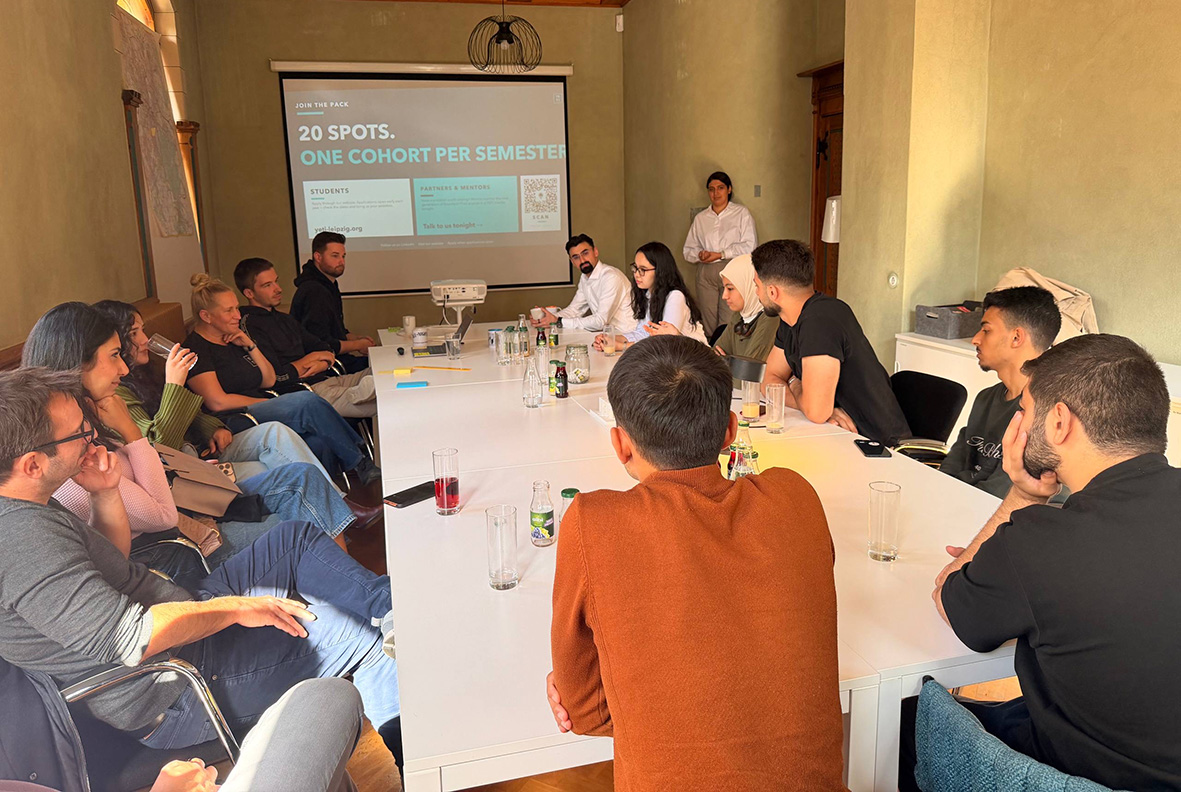
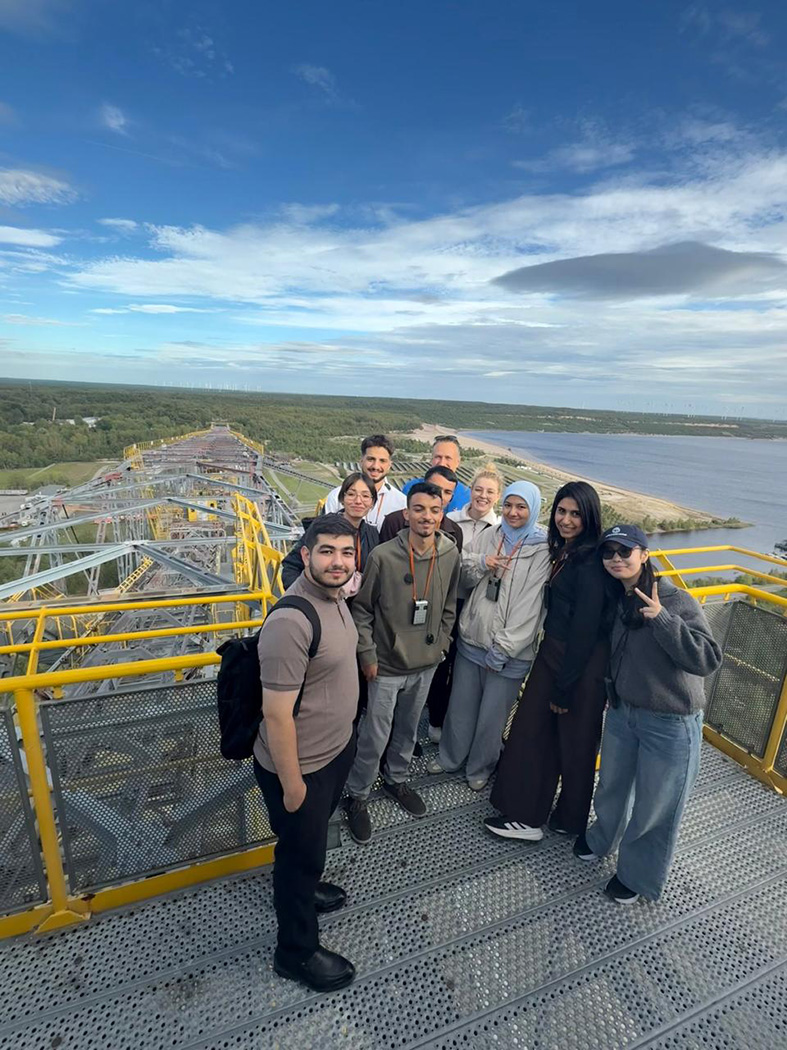
To mark the conclusion of the collaboration, lecturers and students from the three universities met in Germany in September. The winning teams from Jordan and Uzbekistan in the two previous Innovation Challenges – four-day workshops in which students were tasked with developing practical business models – were invited to further develop their entrepreneurial ideas in Germany. They gained insights into Dresden’s start-up ecosystem during a visit to the HTWD Start-up Forge and the YETI Incubator.
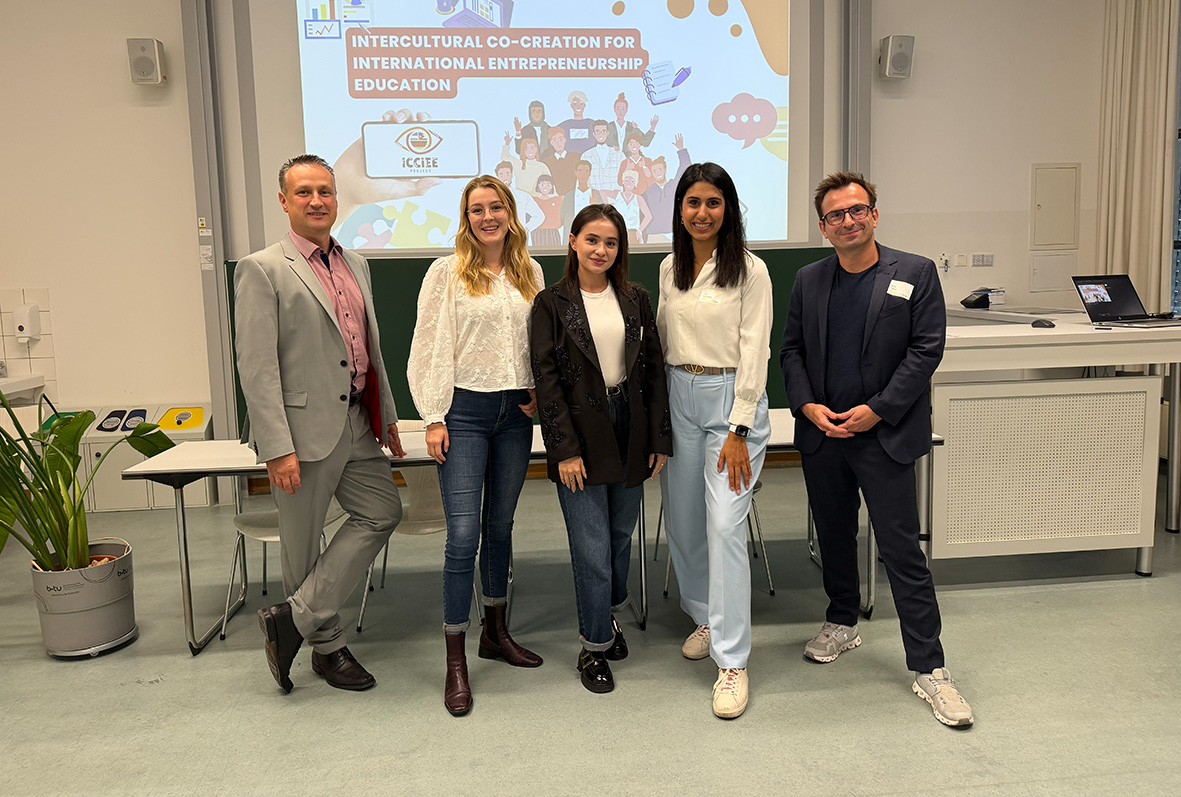
At the G-Forum, one of the largest specialist conferences on entrepreneurship and innovation in the German-speaking world, the project team presented its work. The focus was on the jointly developed approach to the adaptable design of teaching programmes in entrepreneurship education.
Impetus for international entrepreneurship education
The project was funded as part of the DAAD programme ‘University Dialogue with the Islamic World’. The aim was to prepare students for entrepreneurial challenges in a globalised economy through an intercultural and practice-oriented curriculum.
The three partner universities are implementing the jointly developed curriculum to varying degrees and with their own areas of focus. At HTWD, for example, an ‘Entrepreneurial Track’ has been integrated into the Bachelor’s degree programme in Business Administration. Another example is the ‘Innovation Sprint’ for first-year students on the Business Administration and Engineering programmes. In this programme, students tackle specific challenges faced by regional businesses. Working in interdisciplinary teams, they develop ideas for solutions, exchange views with potential users and refine their approaches based on the feedback received. In this way, they learn to think entrepreneurially and develop practical solutions.
There are plans to extend these programmes to other degree courses and to run entrepreneurship education formats on a regular basis. They are also intended to strengthen collaboration with regional partners from business and society who contribute to the development of entrepreneurial skills.