

Ultra-fast protection systems to enhance the safety of complex grid and plant structures with real-time validation (MUSTANG)
The transformation of the energy system is leading to fundamentally different requirements for grid protection. The integration of decentralised generation plants and new types of equipment, combined with a wide variety of grid connection concepts (e.g. multi-terminal line topologies), is resulting in increasingly dynamic grid operation with correspondingly dynamic short-circuit currents across all voltage levels.
These developments are pushing conventional protection systems to their technical limits. To ensure selective, rapid and, at the same time, robust network protection, further development of protection concepts and algorithms is necessary. Equally crucial are tailored testing and validation technologies to identify weaknesses and opportunities for optimisation at an early stage in both existing and novel protection systems.
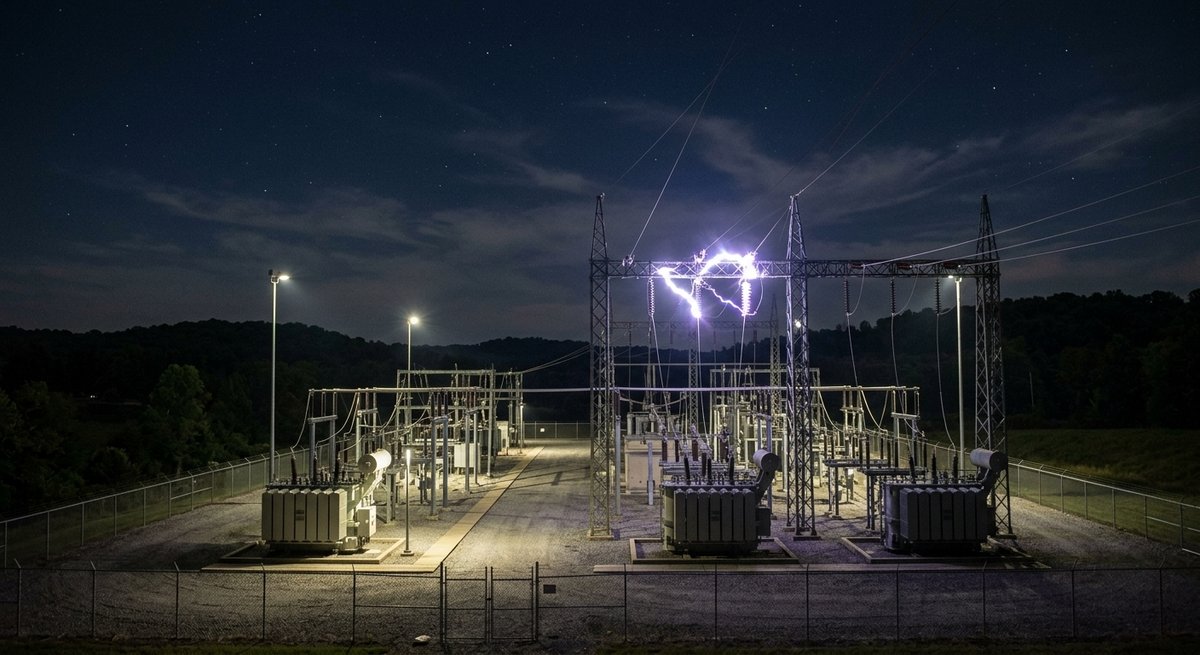
Protection technology is designed to make trip decisions in a very short time and to selectively de-energise only those plant or network sections that are actually faulty. Realistic protection tests are required to verify functionality. Conventional protection tests have so far rarely been carried out on the entire system and are usually conducted under idealised test conditions. Dynamic and high-energy fault events, as well as the influence of grid dynamics, the effect of small-signal transformers on the measurement data acquisition of protection devices, and disturbances within protection communication are often not adequately taken into account in conventional protection tests. High-current faults involving arcing are particularly critical in this context: they place a considerable strain on grid components, can lead to serious damage and pose an immediate danger to people. Such faults must be detected and resolved as quickly as possible in order to minimise the energy released and, consequently, the potential for damage.
The overall aim of the research project is to significantly increase operational safety in complex grid structures and high-power distribution systems. This is to be achieved through the development, implementation and validation of innovative protection algorithms for precise fault location and for the ultra-fast and reliable detection of arcing faults. A central component of the project is the development of detailed simulation models (model networks) that realistically represent complex grid structures and modern distribution systems. In particular, the transient system behaviour in the event of faults – such as arcing faults – is taken into account. In addition, models of novel equipment are being integrated, including non-conventional current and voltage transformers, protection communication systems and decentralised generation facilities. This enables protection systems to be comprehensively analysed under realistic conditions and the protection algorithms developed to be optimised in terms of their robustness, response speed and reliability. In parallel, the design, construction and evaluation of a real-time ‘real-world laboratory’ are taking place at TU Dresden. Here, the interaction of multiple protection systems within a model network is experimentally investigated in hardware-in-the-loop (HiL) operation. The real-time calculation of the transient system behaviour of the model networks, together with the realistic simulation of the interaction between physical protection devices incorporating modern communication interfaces, forms the basis for a dynamic and holistic analysis. This enables, for the first time, a systematic assessment of the interaction between multiple protection systems in complex network structures.
Prof. Dr.-Ing. Jörg Meyer
- Z 450B
- +49 351 462 2642

M.Sc. Jonathan Kluge
- A 205
- +49 351 462 2345
