

First year project
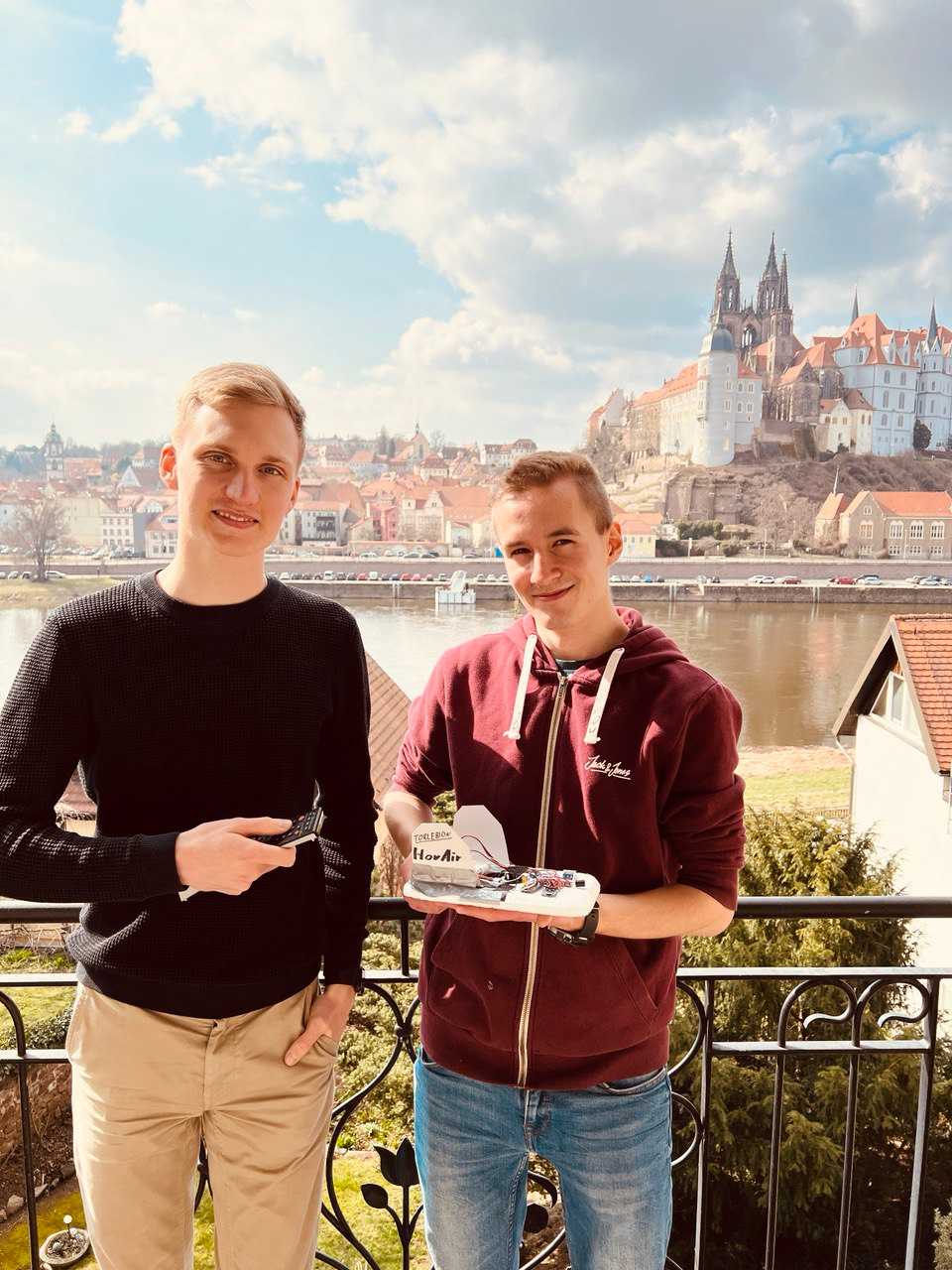
"HovAir" hovercraft
As part of the first semester project, we learnt the basics of programming, such as controlling servo motors and LEDs as well as reading out light and temperature sensors using the Arduino IDE. Previous knowledge of the programming environment and hardware components was not required to realise the project.
Introductory events on how to realise such a project in a meaningful way motivated us to implement our own Arduino project. The necessary tools and basic components were made available to us.
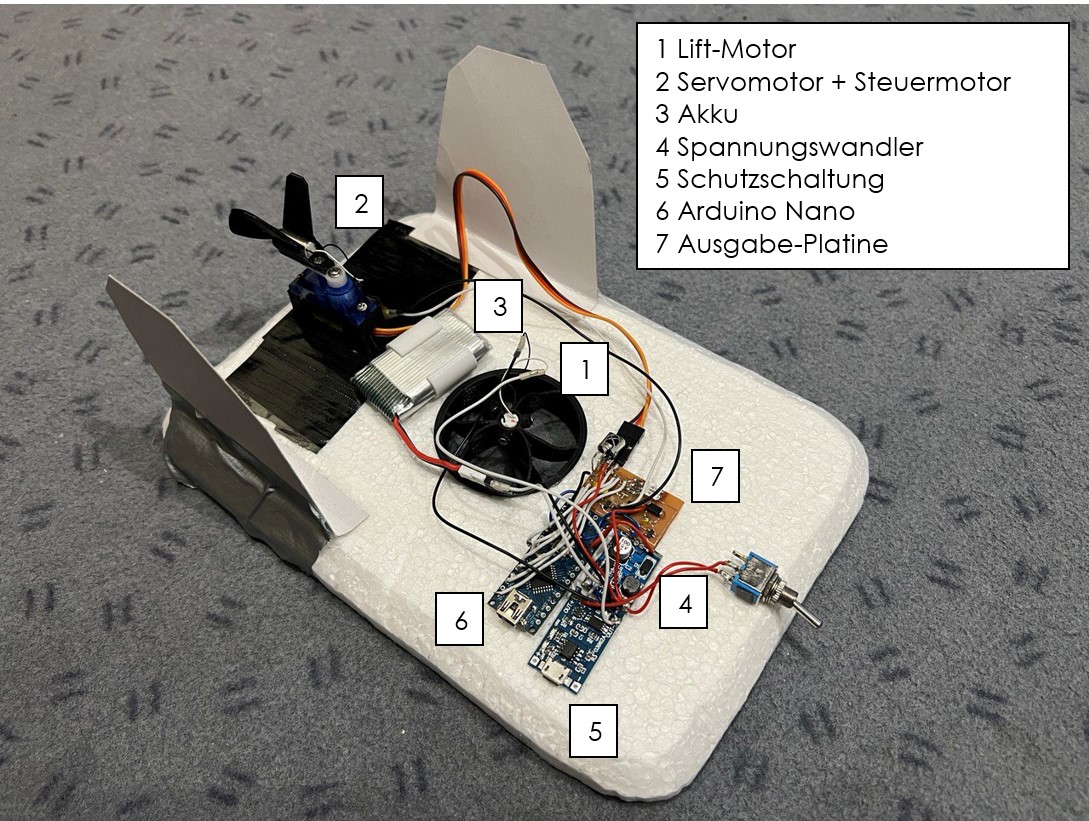
After experimenting with the existing servo motors, we came up with the idea of building a remote-controlled hovercraft ourselves. Due to this rather complex project idea, it was necessary to use additional components to those already provided. Our boat is controlled by an Arduino Nano, two coreless motors with rotors for propulsion and lift as well as a servo motor to determine the direction and is powered by a LiPo battery.
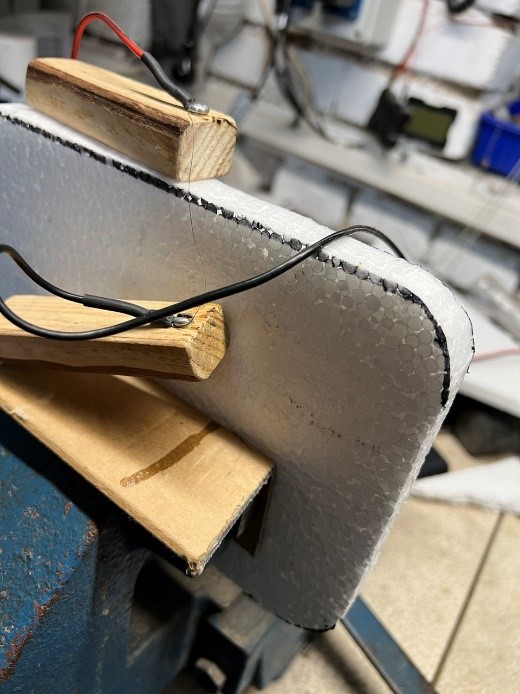
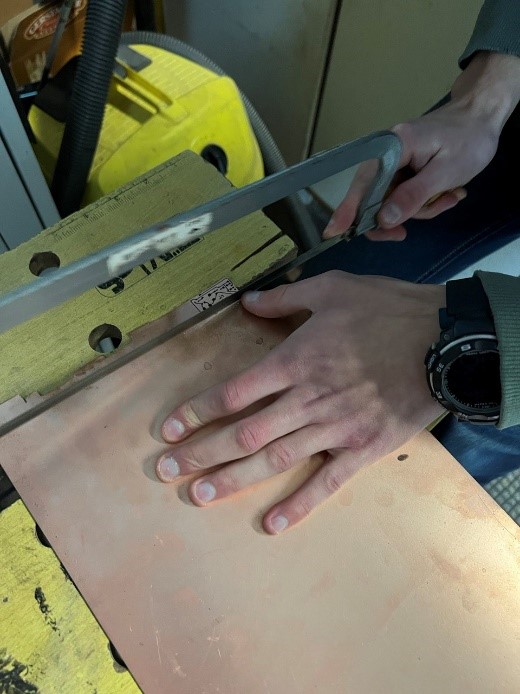
At the beginning of the design phase, we tested the control of the motors and the function of the infrared receiver. To test the function of the air cushion generation of the motors, we built an initial model out of polystyrene. With our previous knowledge of 3D printing, we were able to design brackets for the motors. The project gave us the opportunity to train ourselves in the field of PCB design. We created our own design for controlling the MOSFETs.
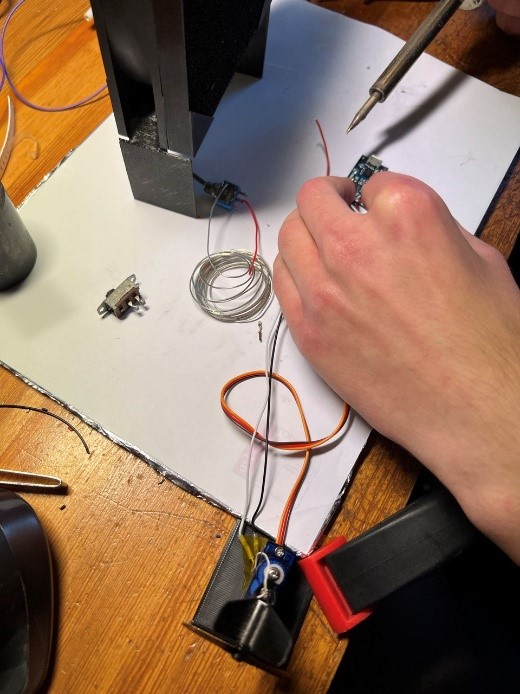
In the next step, we were able to apply the skills we had learnt during the device design practical in soldering the components.
In the final step, we programmed the Arduino and a first functional test revealed a few errors. Despite fluctuating motivation during the troubleshooting, it was worth working on the solution! The moment when everything worked was very relieving! :-)
The project was a lot of fun, we were able to expand our previously acquired knowledge and delve deeper into the world of Electrical Engineering. The professors were always approachable and very helpful.
Tobias Jordan & Leon Sägling
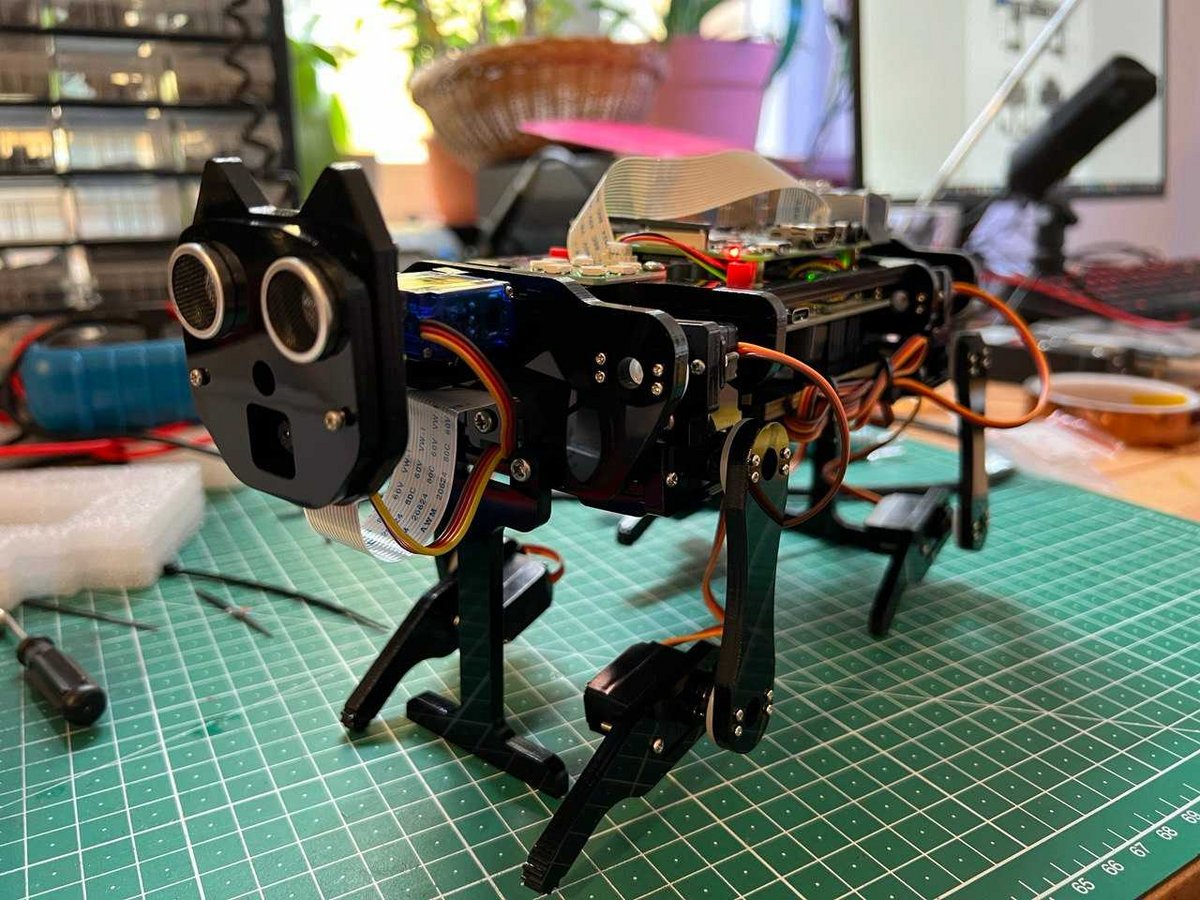
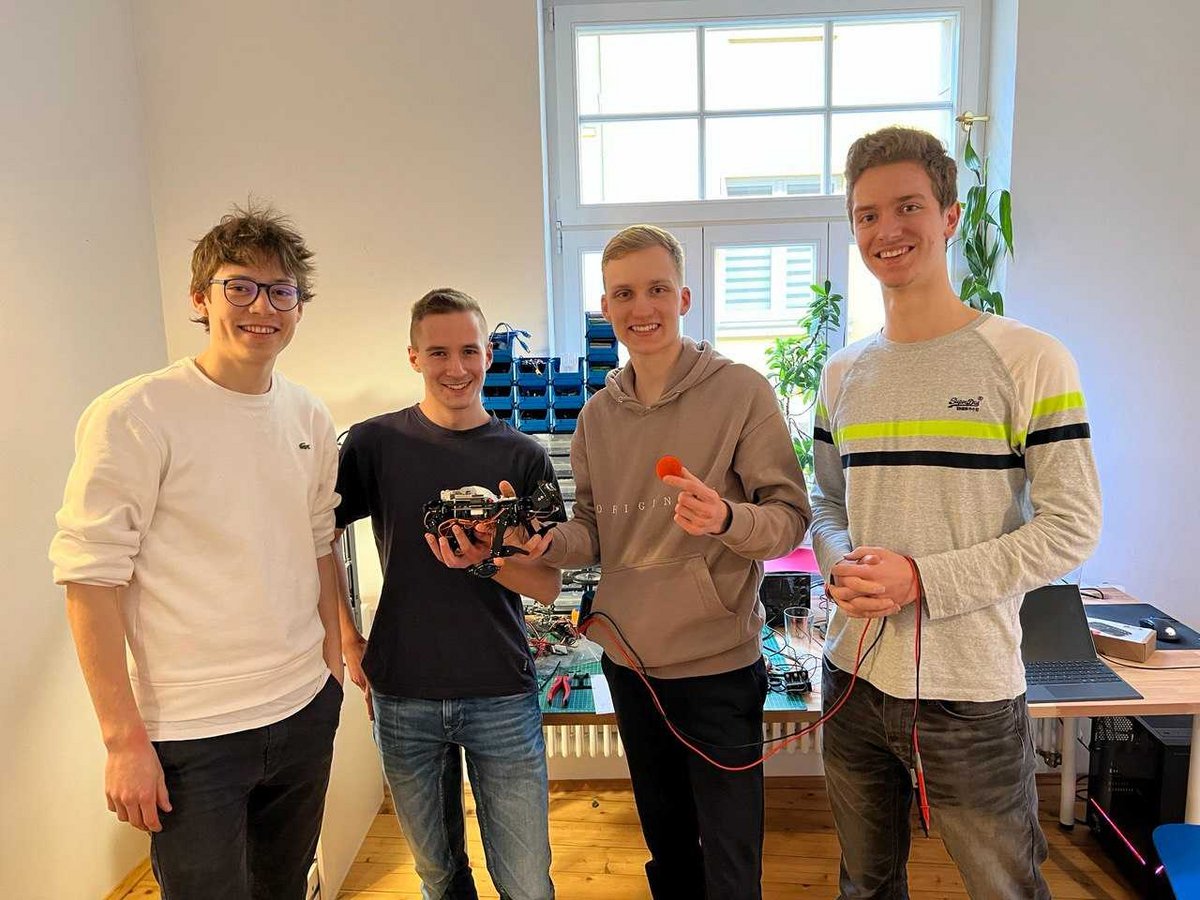
The four winners of this year's first semester project also used the semester break to tinker together and gain further experience. The two prizes provided by the company voice INTER connect GmbH offered a wide range of opportunities for this. The basic functions of the Robot Dog Kit are now working well. Next, the four of them want to get to grips with voice control. We are looking forward to the result!
Kristina Kelber
Contact