-
Young Scientists Award 2022: A new process secures drinking water supplies in rural developing regions
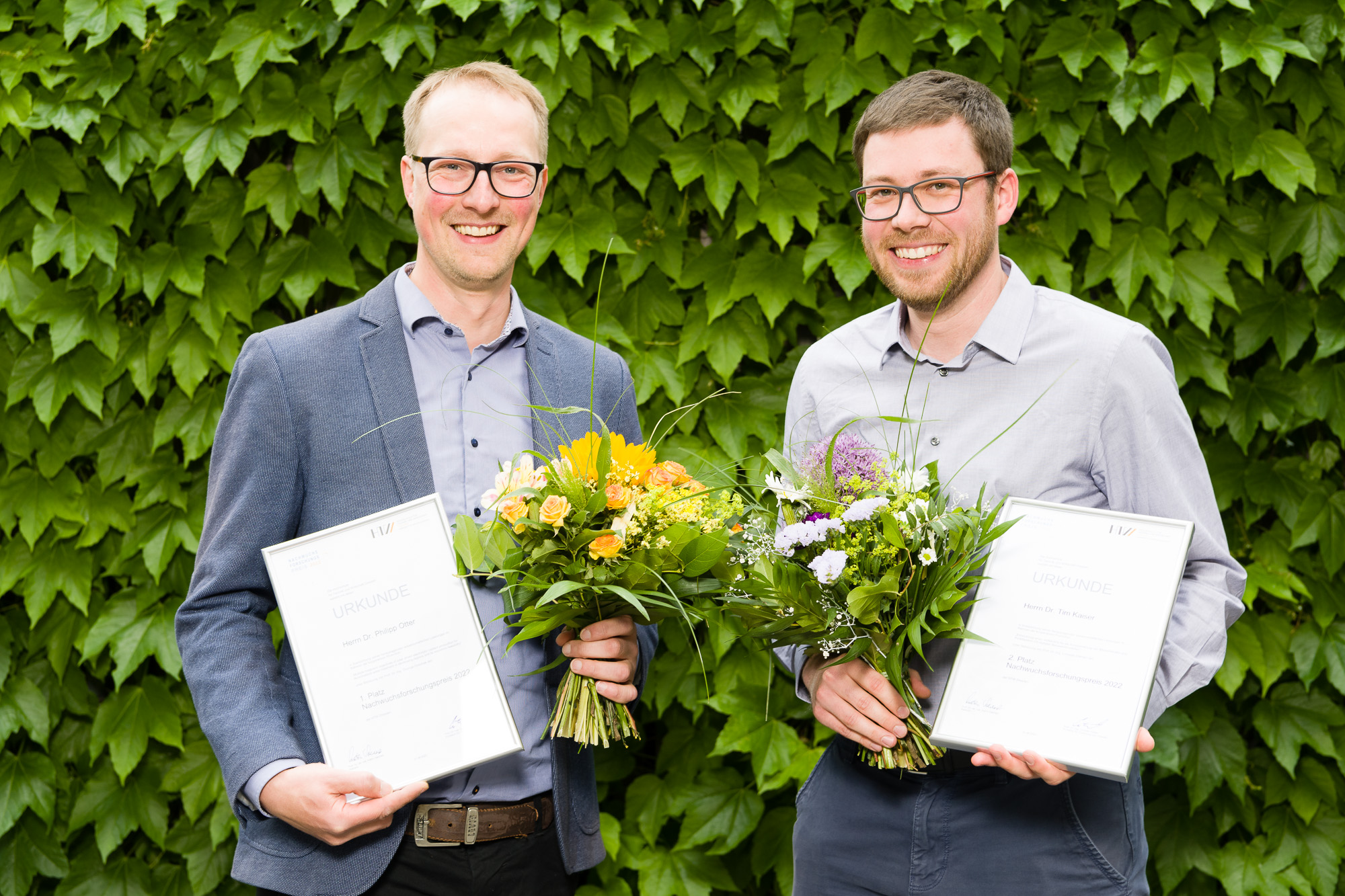
07.06.2022The lack of disinfection of drinking water in rural developing regions is one of the greatest challenges for a safe drinking water supply. The use of chlorine as an effective disinfectant fails to a large extent due to a lack of functioning technical solutions for drinking water treatment. In his work, Mr. Otter developed a water treatment process that eliminates the error-prone delivery and dosing of chlorine solutions. In a solar-powered chlorine production system, all the water to be treated is passed through an electrolysis cell and the chlorine is formed from the water's natural chloride content. The water quality is permanently ensured. With the presentation of his dissertation topic, the civil engineer convinced the jury not only in the first evaluation stage. His specially created explanatory film, which he presented as part of the Young Scientists Symposium, struck a chord with the audience with its concise content and emotional storytelling. "My sincere congratulations to the winner," congratulated Professor Göbel, Prorector Research and Transfer. "His work is a compelling example of applied research and a success for the transfer of science into practice." Philipp Otter earned his doctorate in a cooperative process with the Technical University of Dresden and the Faculty of Civil Engineering at HTW Dresden under the supervision of Professor Thomas Grischek. Dr. Tim Kaiser qualified in second place with his doctorate on the topic of "Development of a procedure for coregistration of image lattices and point clouds with digital building models." This year, for the first time, this prize was endowed with 500 euros. The geoinformatician also demonstrated a high qualitative standard with the presentation of his research work, which he also vividly illustrated with a short film. In his work, he explains how to create digital twins of buildings in a simplified way. Tim Kaiser earned his doctorate in a cooperative process with the Technical University and the Faculty of Geoinformation at HTW Dresden under the supervision of Professor Christian Clemen. The award ceremony took place for the eighth time at HTW Dresden. During the Dies Academicus on June 1, 2022, the winners were honored by Professor Salchert and Professor Göbel. Already in the morning, the two young researchers had answered the questions of the large and interested audience at the Young Scientists Symposium. The Young Scientists Award at HTW Dresden The Young Scientists Award honours outstanding achievements at HTW Dresden in the field of applied research. Researchers at HTW Dresden and ZAFT e.V. who have started a cooperative doctoral project or completed their doctorate no more than one year ago are eligible to apply. The jury consists of the members of the Senate Commission for Research of HTW Dresden.
-
Hanna Liebrecht: "I study in my hometown with a perspective on the world."
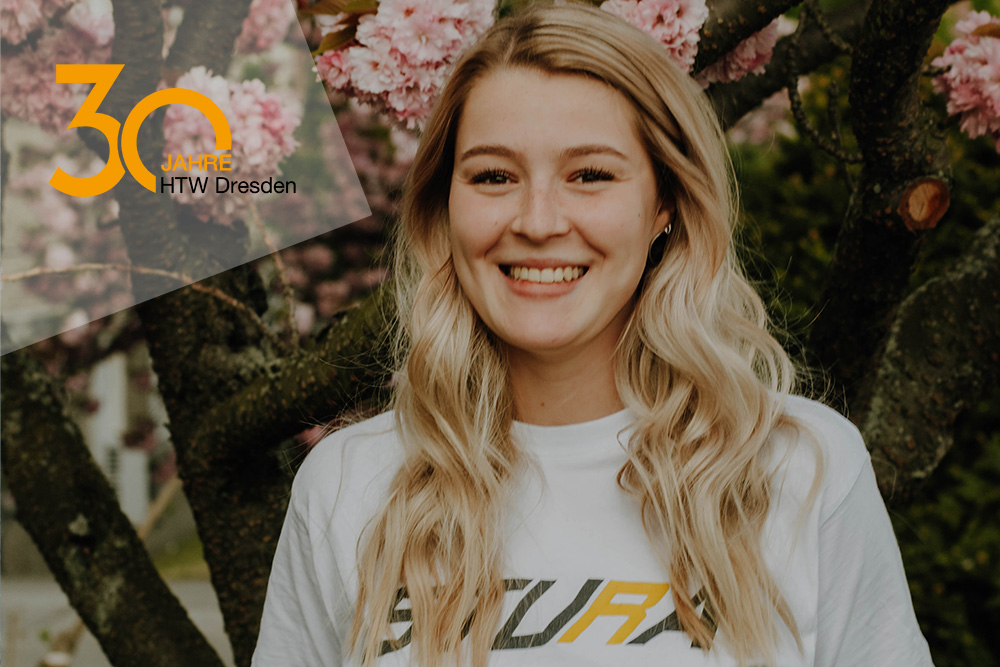
19.05.2022Hanna Liebrecht is in her 8th semester of International Business at the Faculty of Business and Economics. In addition to her studies, she has been involved in the Student Council (StuRa) of the university since her second semester. She has already been involved in various areas and has taken on positions such as head of the International Affairs Department or chairwoman. After her semester abroad in Nice, she is now doing an internship in Luxembourg. Her journey with us is not over yet. Hanna plans to start her Master's degree in Management of Medium-Sized Enterprises in March and will also become more active in the StuRa. What connects you to HTW Dresden? Dresden is my hometown and studying at HTW Dresden has allowed me to stay local in this beautiful city and at the same time have a view of the big world through my field of study. Would you like to share your fondest memory with us? As mundane as it may sound, it was the normal days in the S and Z building with my fellow students. Sitting together in class and somehow trying to understand the material while actually exchanging ideas over the weekend and going for a coffee together afterwards - that's what my three semesters before Corona looked like and I wouldn't trade them for anything in the world! Describe the university in three words Past, present, future What do you wish for the future of the university? Personally, I hope to start the double master's programme Management of Medium-Sized Enterprises with the Université Paris Nanterre in exactly one year's time, and in general I wish that this hustle and bustle of chatting students in the corridors of the university will continue. Where on campus do you get your best ideas? Somewhere between the tables of the library, where you have a view of the inner courtyard, and the rooms of the StuRa in the A building, which by now are not only my second home on campus, but also offer a very special mix of such different people that new perspectives are constantly emerging. More portraits will be published on our anniversary page in the coming weeks: www.htw-dresden.de/30jahre
-
German-French Double Degree Programme in Management Mittelständischer Unternehmen with the Université Paris Nanterre
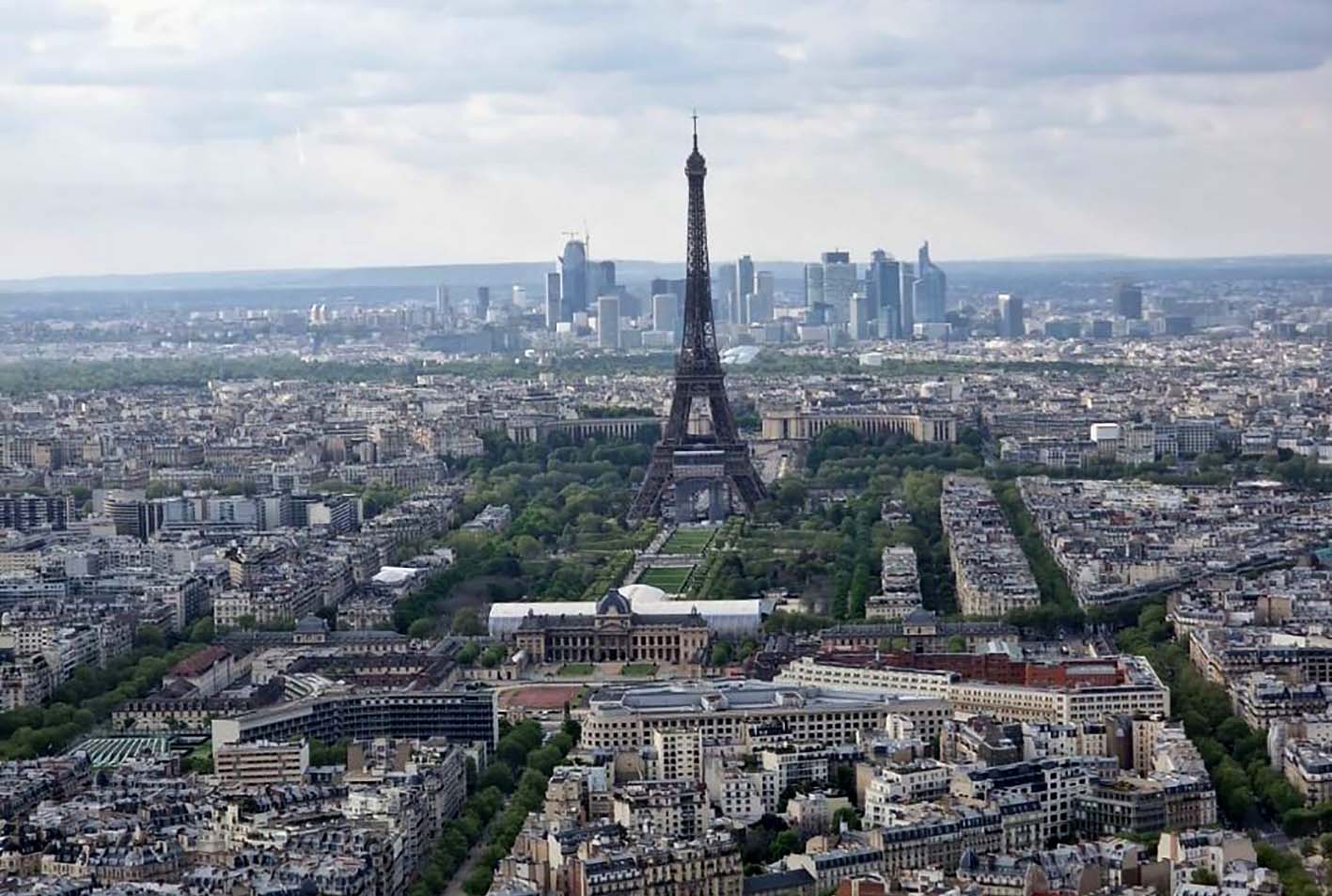
12.05.2022This will provide participating students with mobility grants for the study abroad semesters as well as the opportunity to take part in intensive language courses before their studies abroad. The Franco-German University is a network of affiliated universities from France, Germany and other countries. It develops, coordinates and funds study programmes between French and German higher education establishments. For more information about the double degree programme: https://www.htw-dresden.de/en/university/facultys/business-administration/studies/double-degree-programmes/paris
-
Pia Bielitz: "I especially appreciate the personal atmosphere."
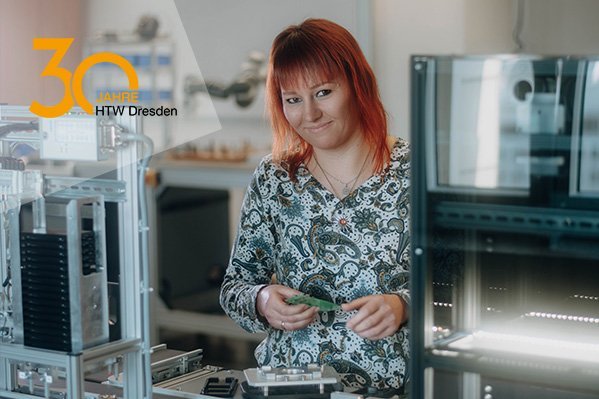
03.05.2022Pia Bielitz is a research assistant at the Faculty of Mathematics/Computer Science and conducts research on digitalisation and IoT applications in industry in the Smart Production Systems working group. The engineer is currently in charge of Lab X - the newly founded start-up lab is an ideas workshop where prototypes can be made and further developed. She also works in a junior research group on the topic of "adaptable production systems". Once a month she shares her knowledge with interested people from business and research during a guided tour of the Model Factory 4.0. Today she reveals more about her connection to HTW Dresden in a conversation with us. What connects you to HTW Dresden? On the one hand, I was born in Dresden and therefore have a special connection to this city. Secondly, I successfully completed my Bachelor's degree in industrial engineering at HTW Dresden and know the university very well. I then completed my Master's degree at TU Dresden. This allowed me to directly compare the two institutions of knowledge. What I particularly like about our university is that the studies and work are much more personal and practice-oriented. For these reasons, I was very happy to come back and feel very comfortable with it. What experience has had a particular impact on you? A sum of different experiences has left a positive mark on me. On the one hand, there is always the possibility of a good, professional exchange, whether it was with my fellow students and professors during my studies or now with my colleagues in the working group. It's especially nice to get together at various events, such as our annual hiking day or inter-university events like the Long Night of the Sciences. Describe the HTW DD in three words. informal, open, practice-oriented What do you wish for the future of the university? That the administrative processes become a little more digital and that existing processes and regulations are regularly scrutinised and then also adapted. Which laboratory at HTW Dresden do you not know, but would like to get to know? So far I haven't had the chance to see the automotive technology labs in the K building. I would be very happy if there is an opportunity for a tour.
-
Study trips and summer schools 2022
27.04.2022Participating in the short-term programmes is an uncomplicated way to expand your language skills, immerse yourself in a specific topic outside of the curriculum and make new contacts in the process.On our website you will find a wide range of study trips offered by HTW Dresden to our partner universities as well as exciting offers for summer schools from our partner universities. Do you have any questions about the offers? Feel free to contact us! More information
-
Prof. Ralf Boden: I can share my knowledge with young, enquiring people".
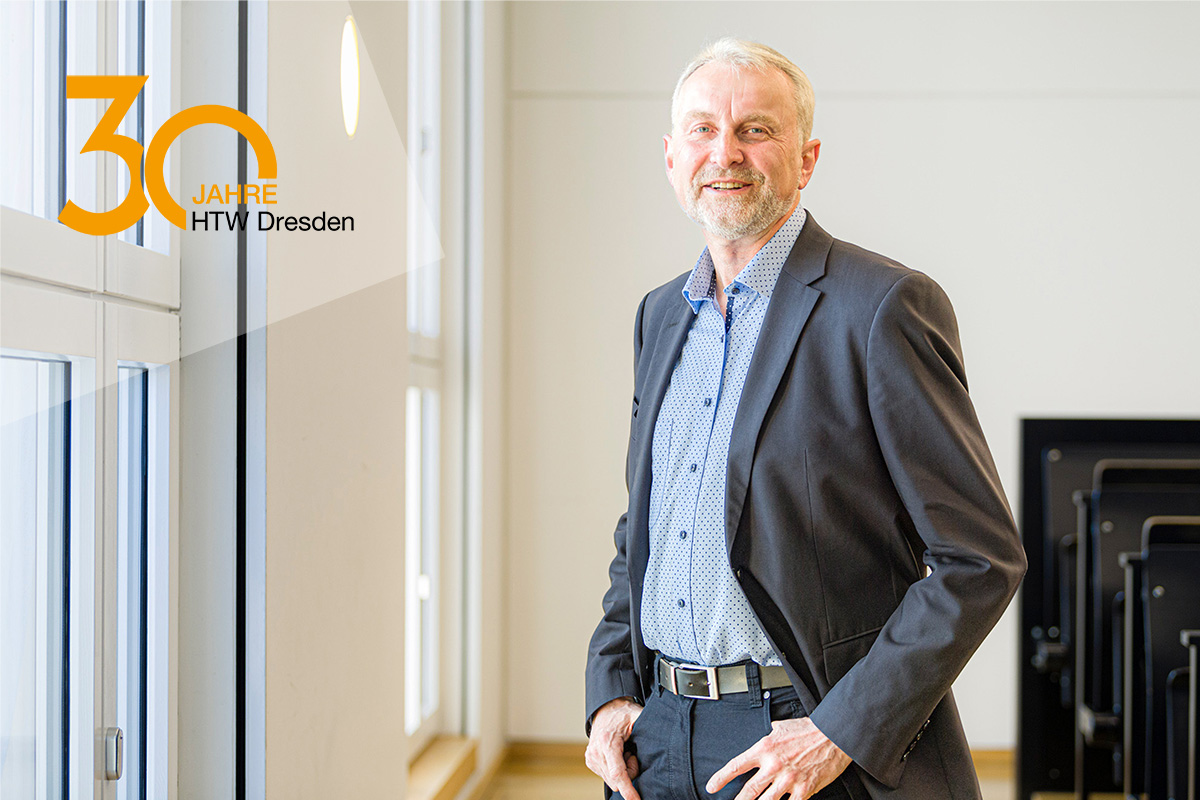
14.04.2022Professor Ralf Boden worked in research and development at regional communications technology companies for almost 18 years. In May 2009, he was called to the HTW Dresden to take over the professorship "Signal Processing and Electronic Measurement Technology" in the Faculty of Electrical Engineering. In addition to teaching courses in this field, which is his most important task, his research includes energy-efficient data transmission in home networks and broadband communication via LED lighting. As a senator, he actively shapes the further development of our university in the interests of all stakeholders. What connects you with HTW Dresden? The joy in the second half of my professional life of being able to share the know-how I have acquired in industrial practice with curious young people, but also the opportunity to address new scientific and technical challenges in teaching and research. Describe the university in three words. Competence, commitment, cooperation What do you wish for the future of the university? That we succeed in training more students in STEM fields, especially in electrical engineering and information technology, to become capable and motivated graduates who will help alleviate the shortage of skilled workers in the engineering sector and thus maintain and expand international competitiveness as the basis of our prosperity. I would like to see us strengthen our cooperation with schools and regional business and industry and work even more closely together in the future. Which place on campus could become your favourite? Currently, I feel most comfortable in the faculty area with the associated laboratories, because I very much appreciate the collegial cooperation and consider the joint implementation of internships and projects very important for the transfer of skills to our students. But I am also excited about the opportunities the new laboratory building will offer us for this in the future. More portraits will be published on our anniversary page in the coming weeks: www.htw-dresden.de/30jahre
-
Carolin Schaufel: "Developing the university as a place of diversity."
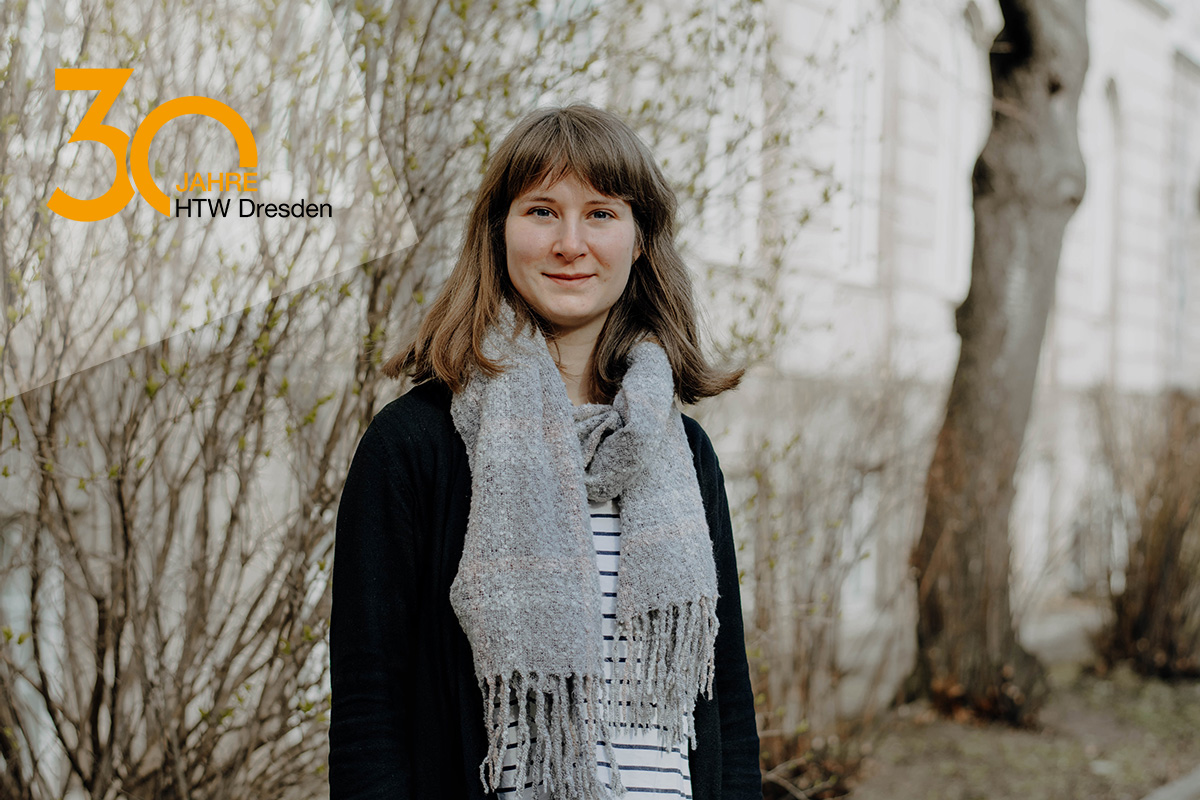
28.03.2022Carolin Schaufel has been working on the topics of equality, inclusion and family justice at our university since last year. Previously, she was responsible for the Deutschlandstipendium at TU Dresden. The move to HTW Dresden offers her the opportunity to further develop the content of the topic of diversity for our students, staff and researchers and to further develop the university as a place of diversity. You are new to us at HTW Dresden. What are your tasks? Since November, I have been in charge of measures and projects in the areas of equality, inclusion and family justice at our university. This includes, for example, organising career programmes for female students and academics, equipping a parent-child room and holding information events. Within the framework of the female professors programme, my special focus is on inspiring young women to take up the STEM professions and creating equal opportunities for all in academic careers. What are you currently working on? At the moment I am planning Girls' Day, which will take place on 28 April. On this day, schoolgirls can visit our university and take part in exciting workshops in science and technology. What are your plans for developing your projects? In the future, I would like to develop HTW Dresden even further into a place to study and work where diversity is lived and encouraged. The more perspectives we include in studies and research, the more creative the solutions to scientific and social challenges can be. How would you describe the university in three words? Practical, networked, personal Which place on campus could become your favourite? The library. I love books and like the concentrated, quiet atmosphere there. More portraits will be published on our anniversary page in the coming weeks: www.htw-dresden.de/30jahre Equality at the university HTW Dresden understands gender equality as a cross-sectional task and wants to create equal opportunities for all university members in their studies, research and work. Find out more about our measures, networks, events, funding opportunities and advisory services:
-
André Kabella: "I was lucky enough to be part of the development of the Faculty of Design from the very beginning."
16.03.2022André Kabella teaches computer animation, digital video and interaction at the Faculty of Design. His path at our university already began with his design studies in 1994, at that time still in the Design Department. Since 2020, he has also been a member of staff in the faculty and accompanies students in their projects. What connects you to HTW Dresden? I got to know the university in 1993. I was incredibly fascinated by the then new degree programme "Product Design" of the newly founded Department of Design. The content of the course and the project-oriented way of working were exactly what I was looking for. The dynamic of a new beginning was palpable. I began my studies here in 1994 and graduated with a diploma (FH) in 1998. The subsequent stay abroad to study for a Master's degree in England made me experience the stark contrast between international design ideas and education strategies and appreciate all the more the opportunities offered at HTW Dresden. I have also been working at our university since 2000. The Department of Design has become the Faculty of Design; the diploma course in Product Design has developed into the degree courses "Design: Product and Communication" (BA) and "Design: Products and Interactions" (MA). The number of students has increased significantly. The faculty has grown. I was able to experience and help shape this process from almost the beginning. What experience has had a particular impact on you? There were several enlightening moments during my studies. With Prof. Gerd Flohr, for example, we discussed the arrangement, width and course of the parting lines of housing parts, and Prof. Rainer Groh lectured on the aesthetics of weld seams. Among other things, my basic aesthetic understanding was developed through such influences. The combination of sensible function, comprehensible form, comprehensible behaviour, technical accuracy and quality craftsmanship down to the smallest detail have since formed the basis of my understanding of design. Describe HTW Dresden in three words. "design - study - now" What do you wish for the future of the university? Courage and vision should play a major role in future decisions on the further development of HTW Dresden. A university has a social responsibility, must be an innovative pioneer, understand and promote change in a positive sense, dare to experiment. Which place on campus is your favourite? Besides the Interaction Studio, which I mainly supervise, there are two other places on campus that mean something special to me. One is the rose garden between the S-building and the library; an idyllic place for a summer lunch break in the shade of the trees. The other place I want to mention is the side staircase in the S-building between the 1st and 2nd floors. Unlike most of the other public transport areas of the university, it is very small and winding; it doesn't quite seem to fit in with the rest of the university architecture. For me, this makes it a surprising gem. More portraits will be published on our anniversary page in the coming weeks: www.htw-dresden.de/30jahre
-
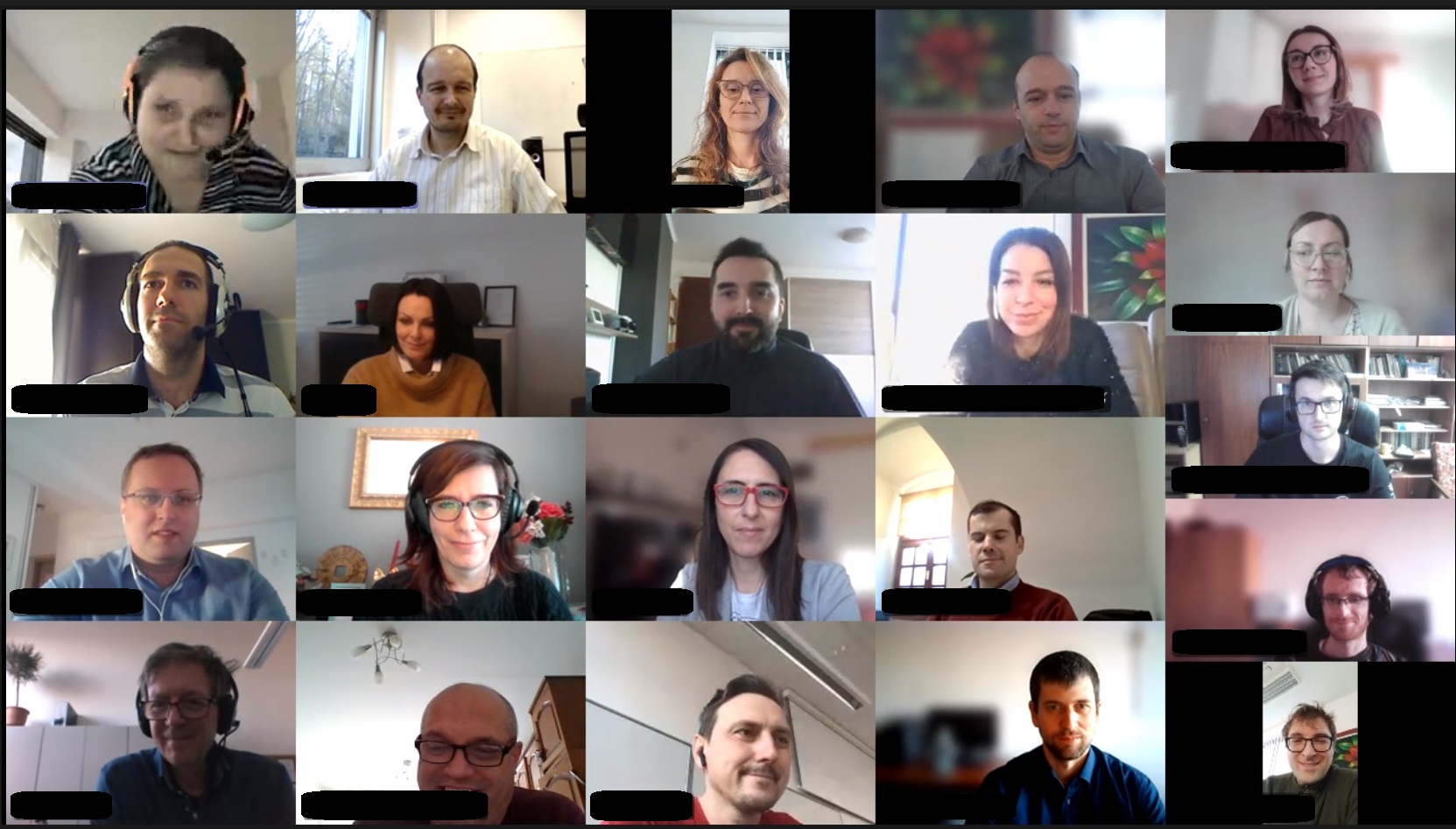
International project on new ways in programming education at schools
04.03.2022The aim is to develop a teaching concept for programming courses and projects at grammar schools that gives pupils an intuitive and playful approach to programming. In particular, the aim is to convey a desire for programming and to make the young people fit for later professional development in the STEM field. To this end, the universities work together with local schools. HTW Dresden's project partner is the Dresden-Plauen grammar school. New teaching concepts are being tested and evaluated together with teachers. New curricula for IT courses will be developed and innovative teaching methods that promote agile working, communication skills and teamwork will be tested. The Object Oriented Programming for Fun (OOP4FUN) project is funded by the EU through Erasmus+ for 32 months.
-
Solidarity with Ukraine
03.03.2022We have been following the events of the last few days with great dismay. The invasion of Ukraine by Russian troops is an attack on peace in Europe and the world, on our freedom and democracy and a violation of existing international law. HTW Dresden strongly condemns this war and stands in great solidarity with the people of Ukraine. We maintain links with universities in Ukraine and Ukrainian students are enrolled at the university. We are currently contacting them to find out how we can best support them. We are also in the process of establishing contact with our Ukrainian partner university, the National Agrarian University in Bila Tserkva. We are in active exchange with the Saxon Ministry of Science, Culture and Tourism and the other Saxon universities to discuss and organise support services for affected students. We are considerably restricting academic relations and cooperation projects with the Russian Federation until further notice. In doing so, we agree with the statement of the DAAD. Individual scholarships for Russian students, teachers and researchers who are already in Germany will continue to be funded. Because one thing is important to us: we are a cosmopolitan university where people from Ukraine, Russia and many other nations study, teach and research. We will continue to preserve this community. It is an important cornerstone for peace and the basic understanding of our teaching, research and work.