-
Sustainability Week 2026: Your ideas for the programme
08.04.2026We are looking for contributions – ranging from workshops, (open-air) lectures and discussions to campus bike tours, exhibitions and hands-on activities. Topics from all aspects of sustainability and academic disciplines are welcome. Sustainability Week is designed as an open, participatory event and is aimed equally at the wider community and interested members of the public. Whether it’s a small project or a larger initiative: every idea counts. Programme ideas can be submitted to klimaschutz(at)htw-dresden.de by 17 April to raise the profile of sustainability at HTW Dresden. Your organising team led by Florian Reß, Prof. Christoph Scope and Josefina Peisl

-
HTWD expands cooperation with Indian partners
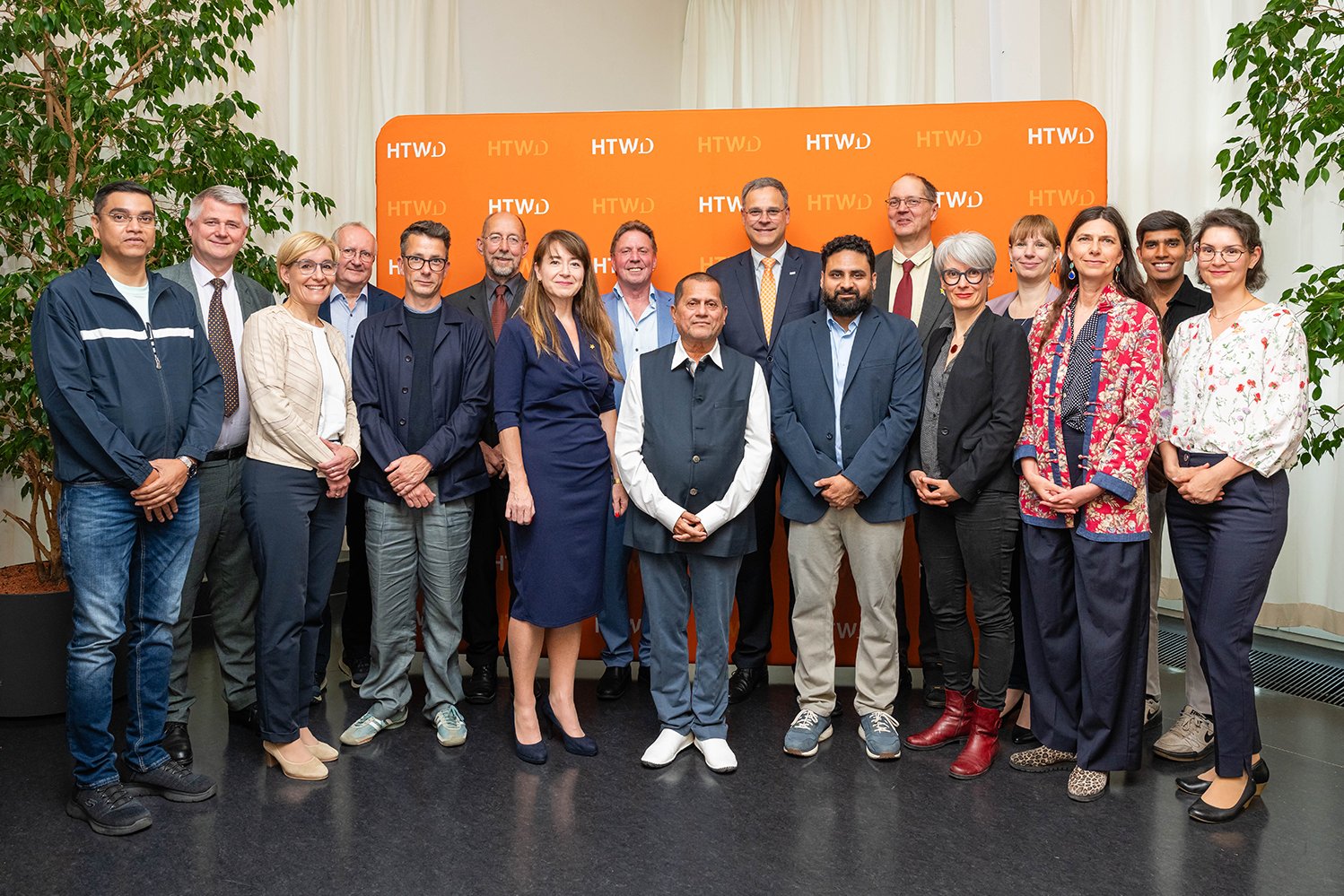
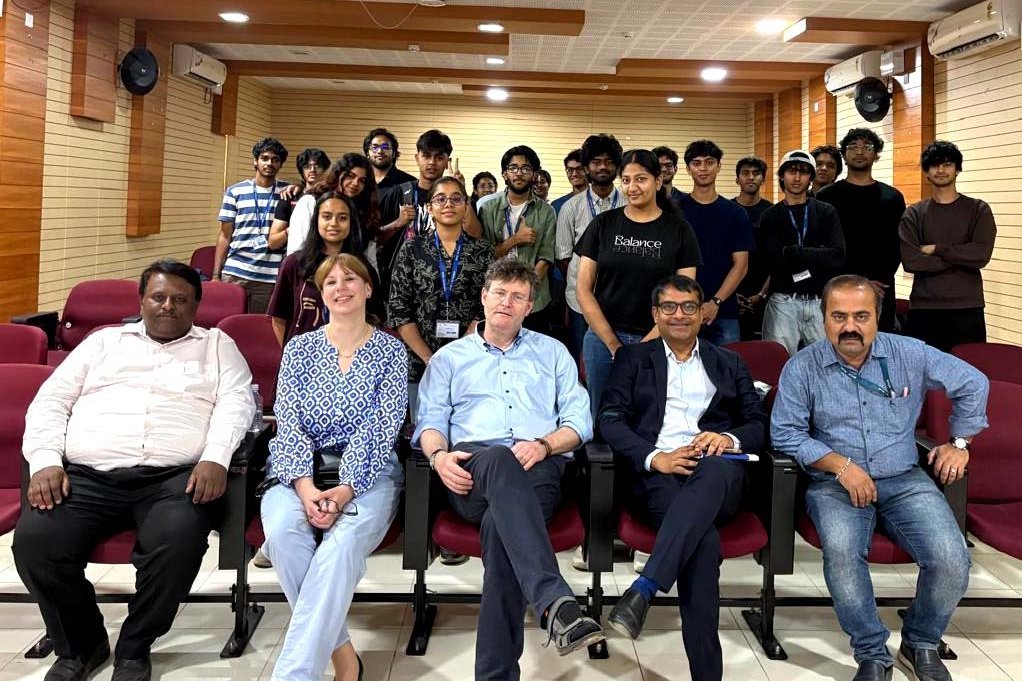
27.03.2026To this end, Prof Ralf-Dieter Rogler and Prof Julia Maria Engelbrecht from the Faculty of Electrical Engineering travelled to India at the beginning of March. On site, they held talks with representatives of the RV CE and VIT. The focus was on the further development of the content of the study programme, coordination with the faculties and new approaches to cooperation in teaching and studies. The aim is to strengthen the bi-national Bachelor's degree programme in Electrical Engineering and to attract more Indian students to study at the HTWD in the future. From the winter semester 2027, a larger group of Indian students will come to the HTWD. The aim is to further intensify the exchange between the two universities and consolidate it in the long term. The trip also provided an opportunity for direct dialogue with students, whether in lectures, laboratories or German lessons. The programme was complemented by insights into student initiatives, such as a visit to a university racing team, as well as discussions with local German students. "India is a country full of opportunities and contrasts. The trip gave me many new insights, both professionally and personally, especially through the exchange with students and colleagues. I would like to expand my collaboration with the RV College and the VIT in the coming years," says Prof Julia Maria Engelbrecht, summing up the trip.

-
Data Rooms, AI, and Manufacturing-X: The 5th IIoT Innovation Brunch brings Research and Industry together
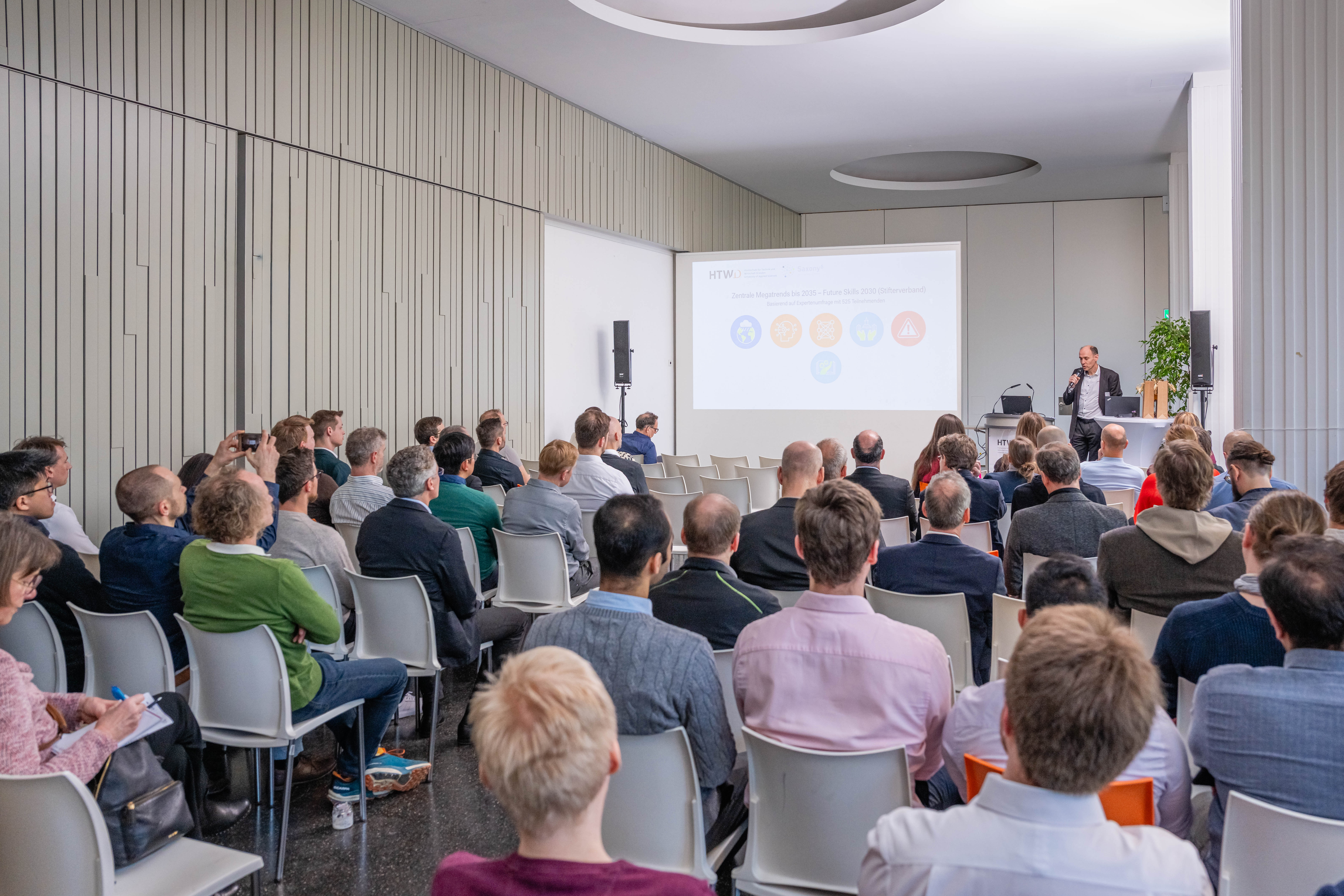
17.03.2026The event, funded as part of the Saxony⁵ consortium project, brought together more than 60 partners from academia, industry, and politics. Together, we discussed current developments in industrial data ecosystems, data rooms, and artificial intelligence. A particular highlight was the announcement of a new IDTA AAS Research Hub by Professors Dirk Reichelt, Leon Urbas, and Matthias Bölke. This initiative will further strengthen research on the Asset Administration Shell (AAS) at our university and foster international collaboration. This technology is considered a key component for the digital networking of machines and systems in Industry 4.0. Perspectives from Politics and Research In his presentation, Peter Ittenbach from the Federal Ministry for Economic Affairs and Energy provided fascinating insights into future funding initiatives in the field of industrial data ecosystems and their significance for industrial applications of artificial intelligence. Particular emphasis was placed on data rooms and their role in ensuring a secure and interoperable industrial data economy. Practical Insights from Industry In addition to strategic perspectives, the focus was on practical insights from industry. Haris Avgoustinos of EXPO21XX GmbH presented how the Manufacturing-X initiative is driving digitalization across various manufacturing industries. Key topics include data spaces, data and process interoperability, cybersecurity, compliance, and new data-driven business models. Stefanie Hammer of algorismic GmbH used examples from the semiconductor industry to demonstrate how the supply infrastructure of semiconductor fabs can become a key driver of efficiency for sustainable production through interoperable interfaces, end-to-end data integration, and open data spaces. Marian Klee from Brighter AI provided another practical insight. He presented modern approaches to data-protection-compliant image and video anonymization, which open up new possibilities for data-driven analysis and AI applications. Discussions and demonstrations from research projects In addition to the presentations, the brunch offered numerous opportunities for personal interaction. In particular, the demonstration of various prototypes from current research projects, including OSHOP and SEMICONDUCTOR-X, generated significant interest and led to in-depth discussions about specific use cases and future collaborations. For us at the Professorship for Information Management, the IIoT Innovation Brunch is an important platform for actively fostering the exchange between research and industrial practice. We are delighted by the participants’ keen interest and the lively discussions, and we would like to extend our sincere thanks to all the speakers, our industry partners, and everyone who supported the event and helped make it a success.
-
HTWD students receive scholarships from the Christian and Dorothee Bürkert Foundation for their exchange studies in China
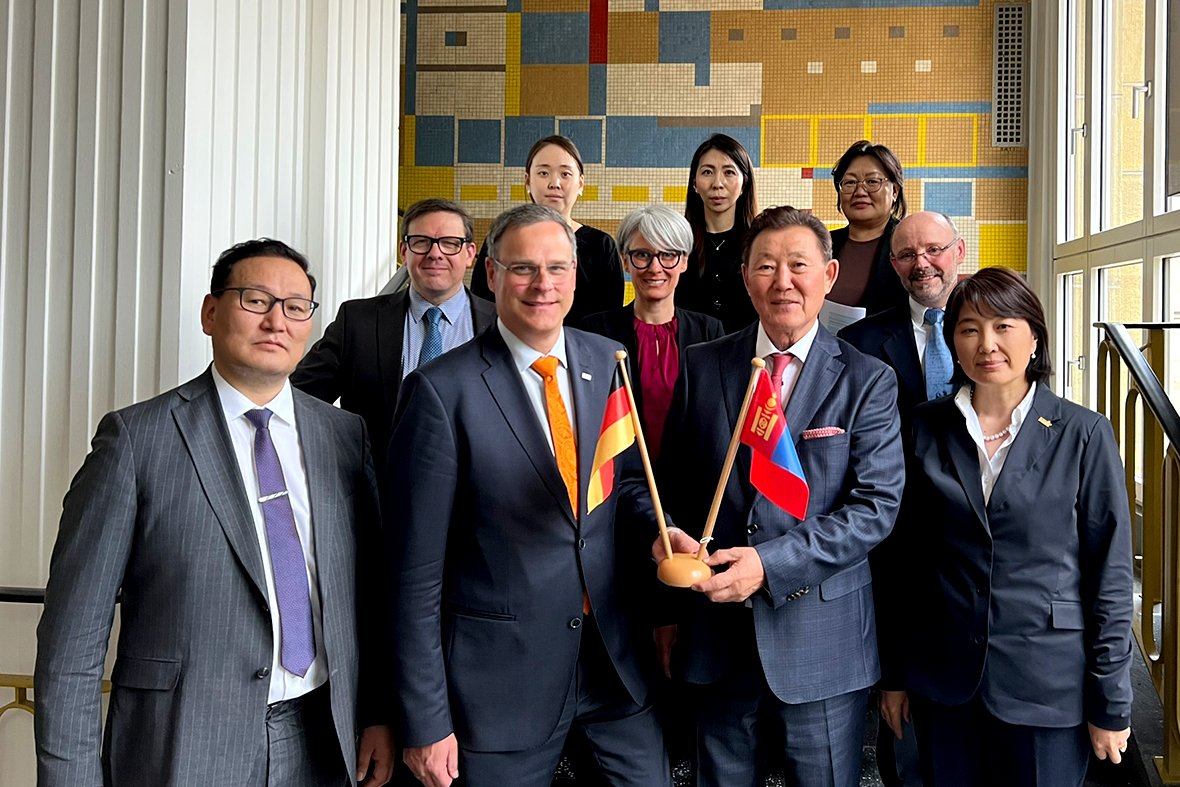
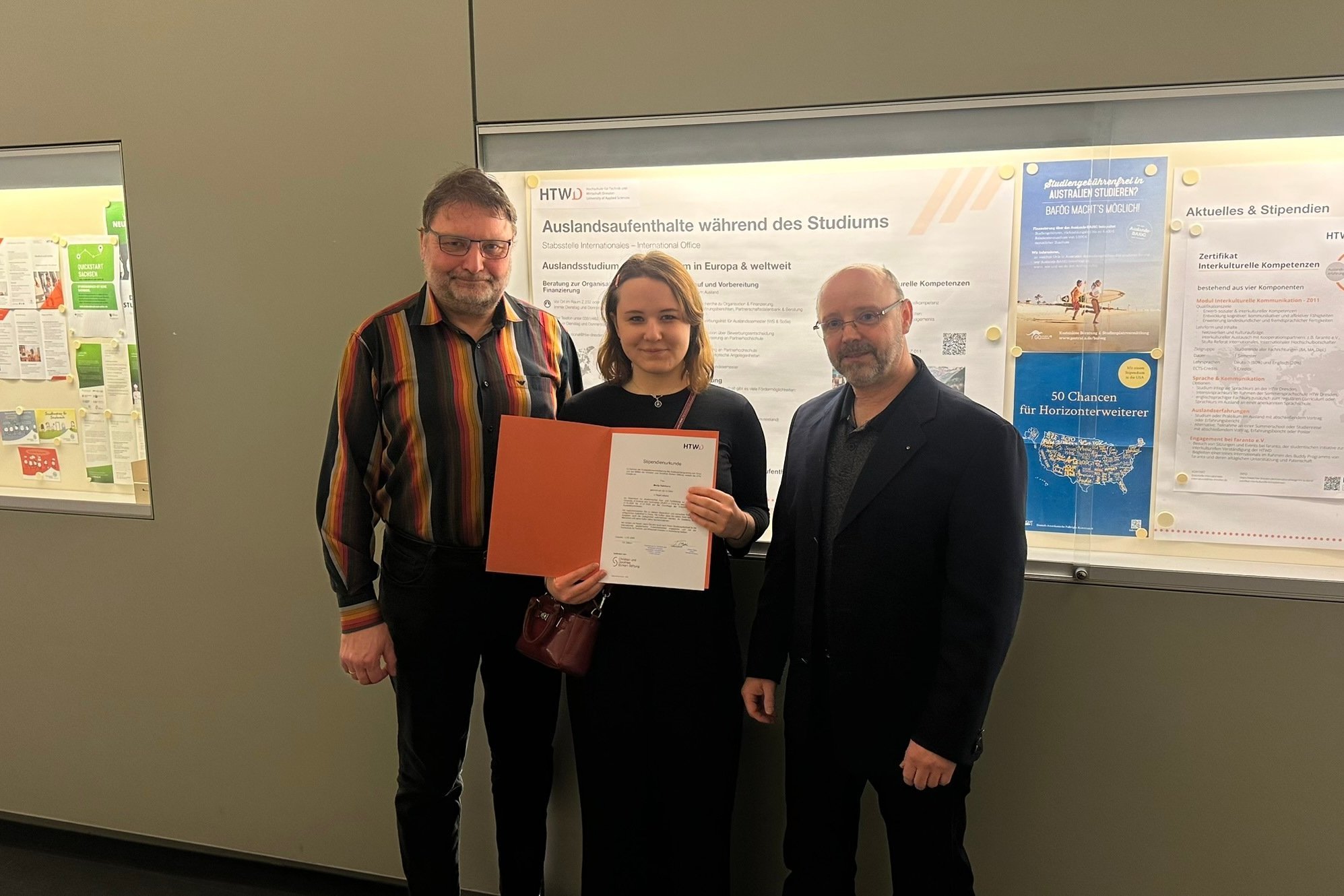
05.03.2026Ms Marija Ratnikova is studying media informatics at HTW Dresden and will be spending her fifth semester at HTWD's partner university, Zhejiang University of Science and Technology (ZUST) in Hangzhou, starting in March 2026. Ms Ratnikova: "I decided to spend a semester abroad to broaden my academic and personal horizons. I deliberately chose China for my stay abroad because it is an extraordinary country with a rich history and dynamic development." She is receiving financial support in the form of a scholarship from the Christian and Dorothee Bürkert Foundation. Another scholarship holder, Mr Maximilian Müller, an HTWD student of electrical engineering, is currently writing his master's thesis at ZUST in the field of industrial applications of humanoid robotics. World-leading companies in the fields of artificial intelligence and humanoid robotics, such as Unitree and Deep Robotics, have their headquarters in Hangzhou. The Chinese-German cooperation between HTWD and ZUST has been in place for around 30 years. The HTWD faculties of Mechanical Engineering, Computer Science/Mathematics and Economics are involved in this cooperation. The attractive scholarship from the Christian and Dorothee Bürkert Foundation is available not only to German students for their studies in China, but also to Chinese students for their studies in Germany. For this reason, a selection process will take place at ZUST in March, in which 19 ZUST students will apply to continue their studies at the HTWD Faculty of Mechanical Engineering. This will take place on a contractual basis as part of a 2+3 cooperation programme. This means that they will study for the first two years at their home university, ZUST, and then complete their studies at HTW Dresden after a further three years. Graduates will therefore receive their bachelor's degree certificate from both ZUST and HTWD.

-
Portrait of doctoral candidates: Xuemin Yang
05.03.2026In 2025, five early-career researchers began their doctoral projects at HTW Dresden with the support of the ESF Plus doctoral scholarship. In this interview, scholarship recipient Xuemin Yang, supervised by Prof. Dr. rer. nat. Michael Katzberg (Faculty of Agriculture, Environment and Chemistry), shares insights into her academic journey and career path. Would you please tell me something about yourself and your doctoral project. My name is Xuemin Yang, I’m from Shanghai, China. Now I’m a first year PhD student working with Professor Katzberg. I got my Master’s degree in 2013 and I have worked for over 10 years. How did you come up with the idea of pursuing a doctorate and what motivated you? I have worked for 10 years and I always find myself busy and working late into the night leaving little time for reflection. Over time I realized that I need to deepen my knowledge and to improve myself further. Additionally, during a discussion with my friend about the green issue of electronic waste, I learned about the relevant research being conducted at HTW Dresden. I was drawn to the institution because of it‘s focus on application oriented, interdisciplinary research, its strong networks of companies and research institutions. So, I was thrilled to have opportunity to pursue my PhD at HTW in cooperation with the TU Dresden. Which resources and networks help you in your research? My research is supported by a variety of resources and networks. First, HTW Dresden provides access to extensive databases as well as a rich library collection and it frequently organizes lectures and seminars offering the possibility to interact with experts and peers in my field. Also, the collaborative program between HTW Dresden and TU Dresden provides a broader network. My supervisor offers me professional advice. My prior work experience also helps me solve problems. How does a typical day during your research look like? A typical day balances my responsibilities as a researcher and a mother, because I have a four years old son. As a mother I dedicate time daily for caring for my child, including taking him to and from kindergarden and communicating with him, playing with him and helping him learning. As a researcher, I spend time conducting my experiments and reviewing literature at the University. Also, I need to discuss my research with my supervisor. At the end of the day, I needed to summarize the problems that I encountered and explore potential solutions. What would you have liked to know earlier or before starting the PhD? Before starting I had a few concerns. HTW Dresden is a prestigious University. I've been worried about potential gaps in understanding due to my limited German proficiency and culture differences. Another concern was balancing my responsibility as a mother effectively. Most importantly, I was anxious about tackling my research and the complexity of my research, because it's a global issue. Do you already know what you plan to do afterwards? I don't have a concrete plan yet. I wish to use my knowledge to for sustainable development. After my four-year PhD, my family and I want to stay here, as my child enjoys the environment and the food here. Dresden is a quiet place with many friendly people and advanced research capabilities. I hope to contribute to Sachsen and I'm very grateful to ESF for this PhD opportunity. About the ESF PLUS doctoral programme The EU and the Free State of Saxony use the ESF Plus programme to fund projects in areas such as doctoral studies. The aim of the ESF doctoral scholarships is to harness the individual educational potential of academic professionals — especially women — by enhancing their skills in support of a stable, green, sustainable, and digital economy in the Free State of Saxony. Eligible projects include state innovation doctorates, industrial doctorates, projects aimed at reconciling family life and academic careers, as well as combinations of industrial doctorates with family-career reconciliation. These projects may last up to four years. Each basic scholarship is funded with €1,700.00 per month.

-
30 per cent discount on APCs at MDPI
23.02.2026Publishing in the journals of the open access publisher MDPI will be significantly cheaper for HTWD members in 2026!

-
Portrait of doctoral candidates: Florian Meerheim
20.02.2026In 2025, five young researchers were able to start their doctoral projects at the university. One of them is Emanuel Schütz who is being supervised by Prof. Dr. rer. nat. Frank Dziock (Faculty of Agriculture/Environment/Chemistry). We asked him a few questions to get to know him and his research better. Tell us briefly about yourself and your PhD topic. I studied Environmental Monitoring here at the HTW Dresden for my Bachelor's degree and Landscape Development for my Master's degree. It then made sense to continue my Master's thesis in the form of a doctorate. I am working on passive acoustic monitoring of biodiversity - which is based on automatic audio recording devices – especially with the analysis of the data with various methods and their implementation in software. How did you come up with the idea of doing a doctorate and what motivated you to do it? Ultimately, it was the professor supervising my Master's thesis who drew my attention to the ESF+ scholarship and as I was looking for a way to continue my Master's thesis anyway, especially in software development, it was a great opportunity for me I caught after thinking about it for a while. What resources and networks help you the most during your doctoral studies and research? At the moment, I still often draw on the network I built up during my studies. I also have contact with individuals from the field, e.g. from environmental planning and nature conservation. I think establishing contacts with people from my specialism is something that I can still expand significantly. What does your typical day look like at the moment? Since I have two children, my day is usually quite structured. I start my day early and try not to let it end too late. Within a day, I simply do the most unpleasant thing right in the morning according to the motto ‘eat the frog’. Then it's done and you feel like you've already done something. Otherwise, there's a lot of movement in my day. What would you have liked to have known earlier or before the doctorate? I underestimated the amount of bureaucracy involved and how it sometimes pushes me to my limits. But it's also good that nobody told me that, otherwise I might have changed my mind. Do you already know what you want to do afterwards? Not really, at the moment I'm in the here and now. Of course, I have very rough ideas about myself and the world, but it's all very vague.

-
Want to read something different at the end of term?
20.02.2026Books can now be exchanged for other people's literature at the book exchange shelf in the Interim Library in the Z building, room Z 136 C.

-
13 February in Dresden: human chain as a sign of democracy and cohesion
09.02.2026Every year on 13 February, Dresden commemorates the consequences of contempt for humanity, dictatorship and nationalism. Numerous events commemorate war, violence and destruction and at the same time set an example against any political instrumentalisation of this day. The human chain in Dresden city centre has been a central element for many years. This year, the human chain is being organised under the motto "Taking a stand together. Every day". At 5 p.m., the citizens' singing will begin in front of the Kulturpalast. Afterwards, Lord Mayor Dirk Hilbert, the Rector of TU Dresden, Prof Ursula Staudinger, and Rachel Lancaster, Lord Mayor of the twin city Coventry, will speak. The human chain is formed at 6 pm. Several thousand people then encircle the city centre hand in hand. The action will be accompanied by the ringing of bells from Dresden's churches. The university management of HTW Dresden supports the call for participation. Rector Prof. Ingo Gestring explains: "13 February reminds us how important it is for civil society to stand together and take a joint stance in favour of peaceful coexistence. We all have a responsibility to defend our democratic values. These include tolerance, diversity and freedom of teaching and research." Further information, background information and the route of the human chain can be found on the website of the state capital Dresden . The human chain is part of an extensive programme on the culture of remembrance in Dresden. The complete accompanying programme is also available online .

-
Experience Franco-German friendship in Metz
03.02.2026A varied programme of short films, music and a craftsmen's exhibition focused on Franco-German relations and impressively linked the past and the future. Clara Däbritz from the HTWD was involved in the organisation of this Franco-German exchange. As part of her studies, she and her team organised a regional market "Marché du terroir", where French-German traders presented and sold their products. Clara Däbritz is studying International Business in her 5th semester and is the first HTWD student to take part in the Erasmus programme at the Université de Lorraine/IAE School of Management. A strong word for Europe Warm, dynamic, motivating - the Journées de l'amitié franco-allemande in Metz. If you would like to take part next year, you can apply for the Erasmus programme.