-
Excursion to Taiwan
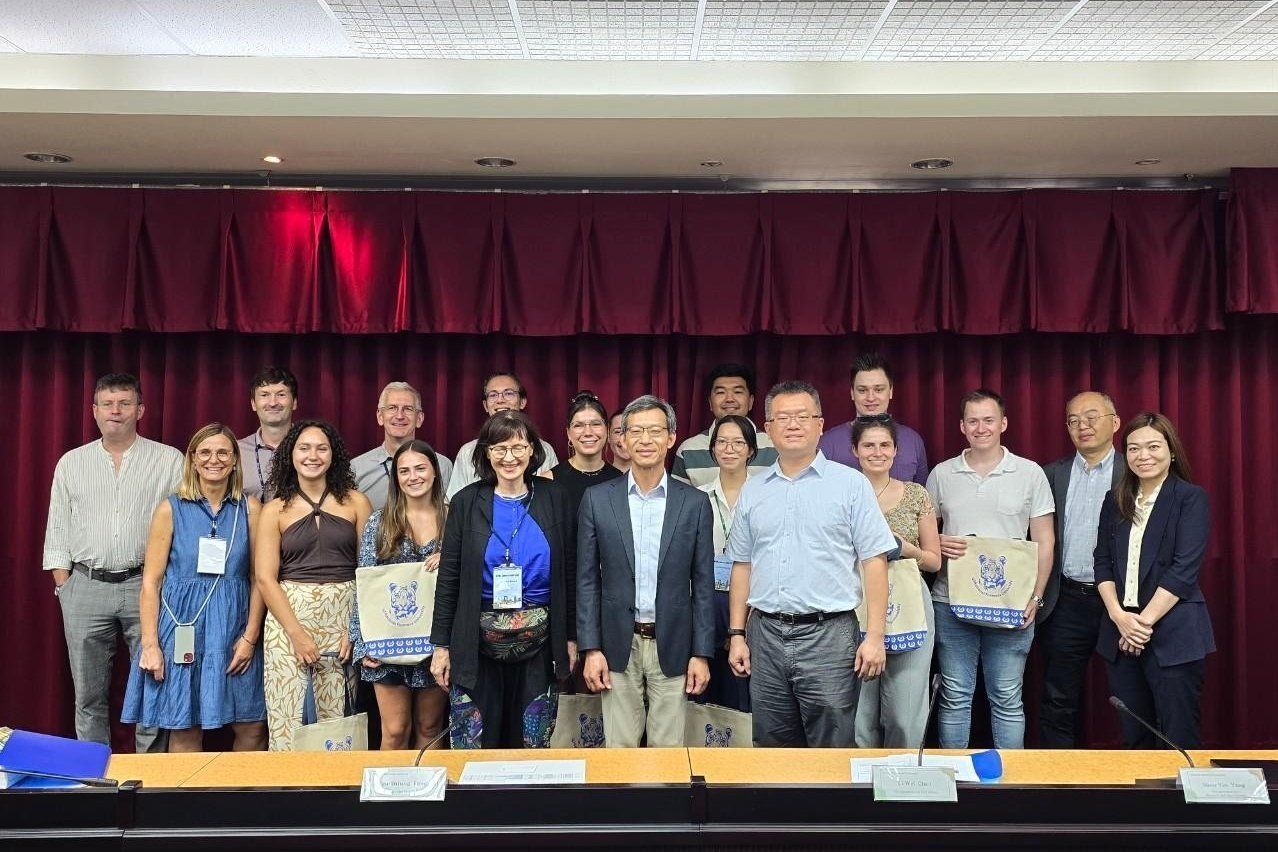
08.10.2024In addition to getting to know the partner universities, the programme included language courses in Mandarin, interdisciplinary specialist courses, lectures on studying and living in Taiwan, intercultural workshops and activities with Taiwanese students. In November, the presidents of the Taiwanese universities and the recruiting managers of TSMC will visit the HTWD. Cooperation between German and Taiwanese universities Since 2017, the six German universities of applied sciences Berlin University of Applied Sciences, Darmstadt University of Applied Sciences, Dresden University of Applied Sciences, Esslingen University of Applied Sciences and Karlsruhe University of Applied Sciences have been cooperating with the six Taiwanese universities National Taiwan University of Science and Technology (Taiwan Tech), National Taipei University of Technology (Taipei Tech), National Chin-Yi University of Technology (NCUT), National Yunlin University of Science and Technology (YunTech), National Formosa University and National Kaohsiung University of Science and Technology (NKUST) in the HAWtech-TAItech alliance. The collaboration primarily involves the exchange of students and the organisation of internships, summer schools and laboratory collaborations. In future, student mobility is to be increased and cooperation in the field of research expanded.
-
DAAD Prize for Elvira Akhmadieva
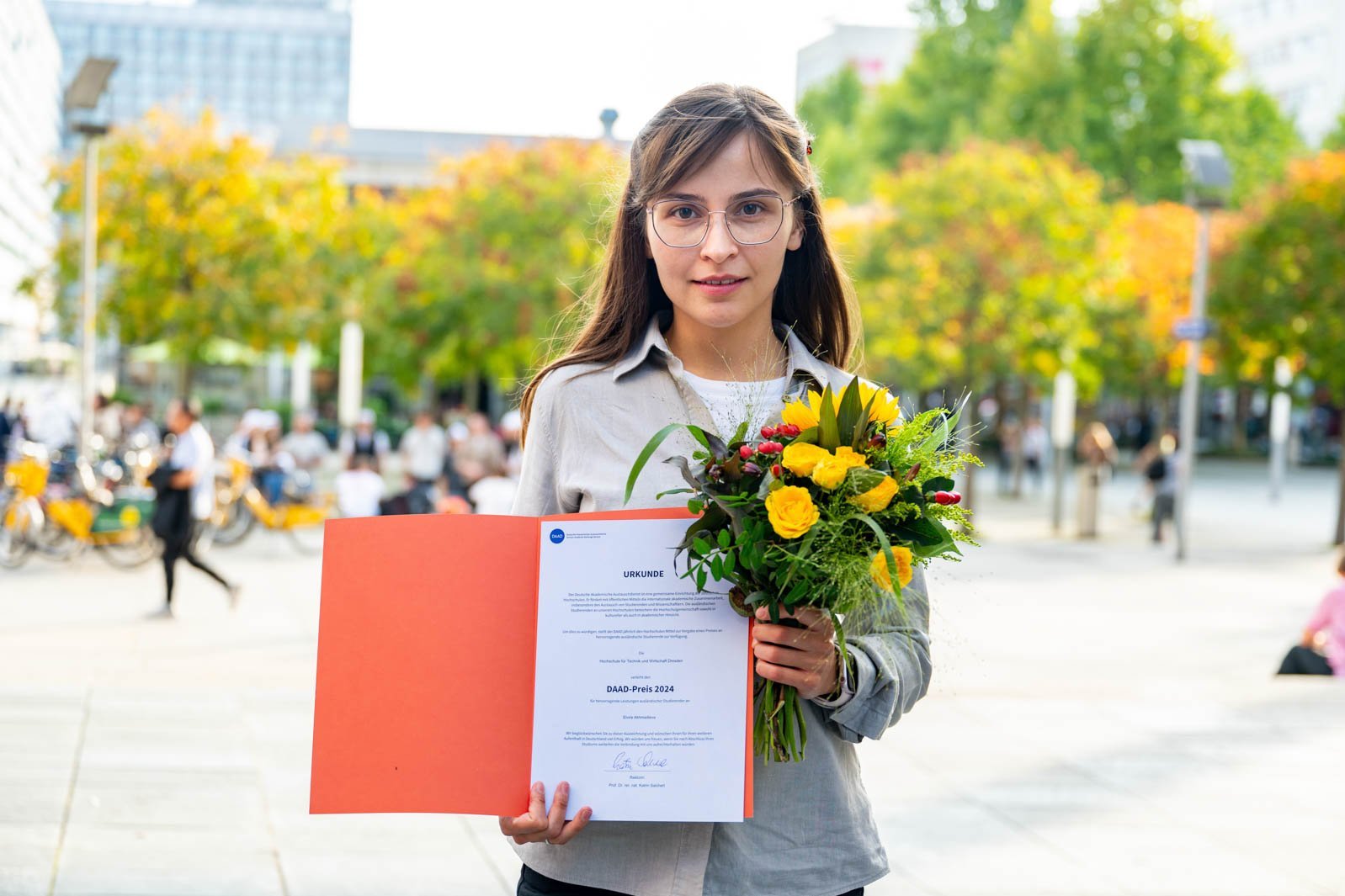
30.09.2024Elvira Akhmadieva is in her fourth semester on the Master's degree programme in Environmental Engineering. She is currently working on the research project ‘The impact of solar parks on the soil water and vegetation’ at the Chair of Engineering Hydrology at HTWD. Here, the engineer works together with the German Weather Service, among others. The student came to Dresden in October 2022. She had previously studied civil engineering in Kazan (Russia). She deliberately chose the international degree programme: ‘I have a great interest in environmental topics, especially in how we can bring about positive changes in the environment. The programme at HTWD was my first choice because it covers many different areas. Here you can learn how environmental processes work, how people influence and shape the environment. You also learn about tools and methods for measuring the current state of the environment, forecasting future developments and, above all, how we can improve the current state of the environment and take future challenges into account.’ She has now been honoured with the German Academic Exchange Service (DAAD) prize for her excellent performance during her studies. The jury particularly emphasised that Elvira Akhmadieva works very independently and efficiently. She is also extremely committed to taking part in discussions and presentations and supports her fellow students with both subject-related questions and the organisation of social activities. Since her second semester, Akhmadieva has been working with the Engineering Hydrology working group, which supports her in research projects and in preparing teaching content, as well as in working with pupils (Junior Doctor Programme). After graduating, the young woman would like to stay in science and continue researching environmental topics. She is particularly interested in how people influence various environmental processes through their actions and what measures can be taken to steer processes in favour of the environment. The student really appreciates studying at the HTWD. She particularly likes the high practical component: ‘Many partner companies are involved in the study process. This makes the degree programme more interesting and opens up opportunities for further career development. I also particularly like the fact that the professors are very motivated and take a keen interest in their subject areas. They are always open to discussion and an exchange of opinions. This creates a motivating learning atmosphere.’ About the DAAD Prize The DAAD Prize, which is endowed with 1,000 euros, honours foreign students who are studying in Germany and who stand out for their special academic achievements and remarkable social commitment, as well as for building bridges between countries. The prize has been awarded for more than ten years and is intended to help give the many international students at German universities faces and connect them with stories. This makes it clear that every single international student takes a piece of Germany back home with them and leaves something of themselves in Germany - an enrichment for both sides.
-
Start of the semester at the HTWD
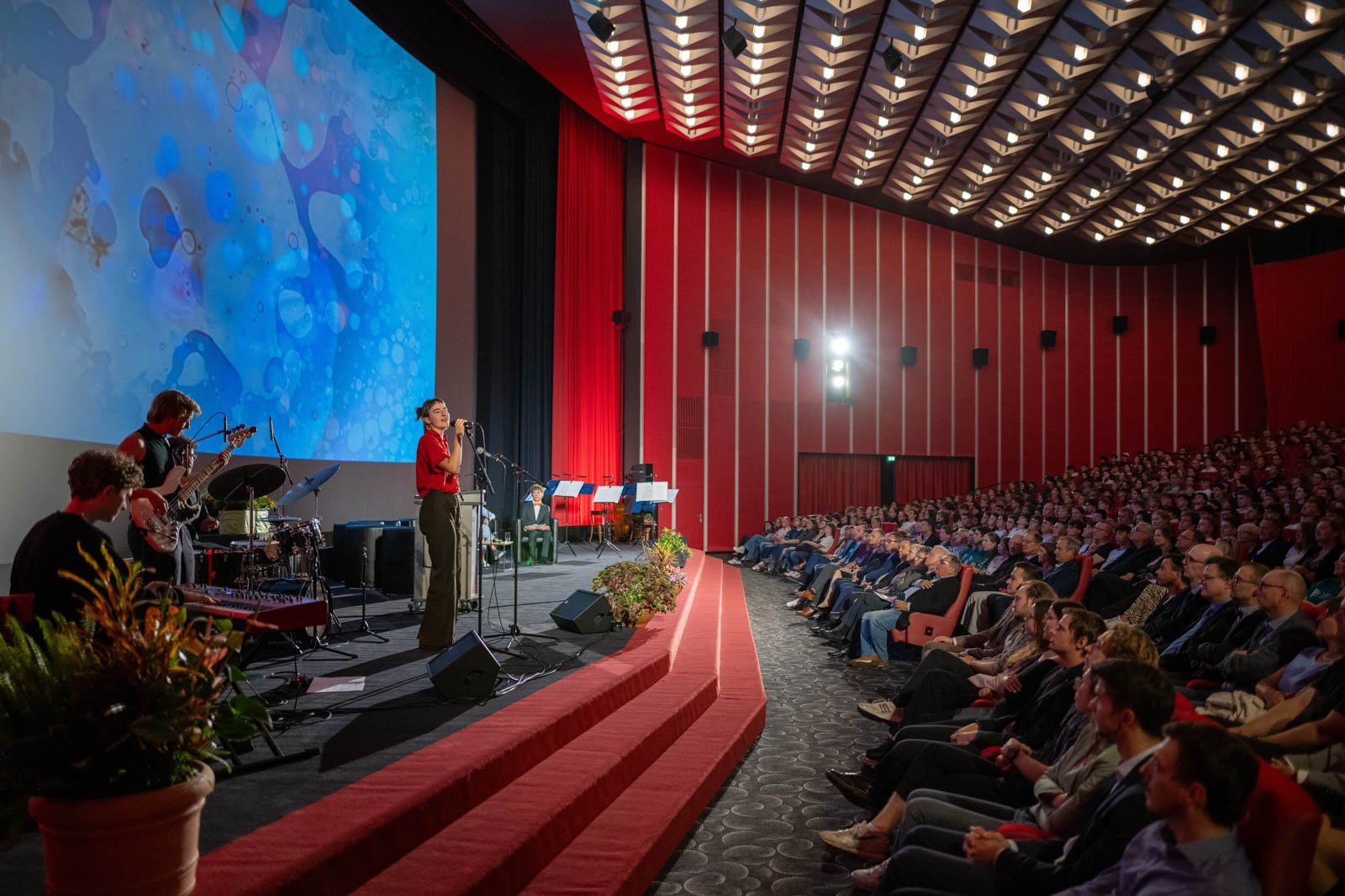
25.09.2024The welcome week for new students at the HTWD started on Monday. Around 1,200 first-year students are starting their studies at HTW Dresden at the beginning of the semester. The first-semester students were welcomed at the beginning of the week in the Rundkino Dresden cinema with a ceremonial enrolment and welcomed into the university's academic community. Welcome by the Rector: ‘Maturing through education’ Rector Professor Katrin Salchert warmly welcomed the first-semester students: ‘Today you are at the beginning of one of the most beautiful and exciting times of your lives, with a high level of personal responsibility for your actions, a thirst for knowledge and a zest for life. Take advantage of the opportunities you have been given! You will also notice changes in yourself - at the end of your studies you will leave the university as a person who has matured in many ways. Above all, you will mature through education: Because education is a fundamental part of your personal development. It doesn't just mean acquiring knowledge, it also means a sense of responsibility, a willingness to compromise and the ability to form opinions and take a stand on current political, economic and social developments.’ The Rector encouraged students to broaden their personal horizons and go abroad during their studies: ‘Gain international experience. Get to know new languages and other cultures and cultivate the European idea. Live cosmopolitanism and interculturality!’ Tools for your career The Saxon Minister of State for Science, Sebastian Gemkow, also welcomed the students to the academic community at HTW Dresden: ‘Here you will get the tools you need for a successful career in a Saxon company. HTW Dresden is closely connected to the economy and is always close to the needs of modern and innovative companies in teaching and research.’ Commitment and community The Chairman of the University Council, Professor Peter Joehnk, emphasised the importance of the two university committees, the Student Council and the University Council, as important companions of the university and invited the students to participate: ‘We always need alert and critical minds to positively influence the development of our society.’ Tino Köhler, Chairman of the Student Council, gave his future fellow students two habits to take with them: ‘Take a practical, active part in university life - whether in university sports, language learning or committee work. [...] See yourselves as a university community and work together.’ In the ‘Welcome to Dresden’ panel discussion, the first Lord Mayor of the City of Dresden, Jan Donhauser, the head of the Student Union, Michael Rollberg, student counsellor Mira Höfler, sports coordinator Nick Breuer and the chairman of the student association Faranto, Victor Parade, spoke about the opportunities and challenges of studying. ‘Be brave and try things out!’ Hanna Liebrecht and Pepe Funk, who both study at HTW Dresden, hosted the programme. At the end of the programme, Hanna gave the first-year students the following advice: ‘All doors are open to you during your studies. New friendships, voluntary work, exciting projects, new experiences abroad. So make the most of this time, be brave and try things out. And even if not everything works right away, remember: the proof of the pudding is in the eating. The event was accompanied by music from the chamber orchestra without a conductor. There were also live acts by students from the jazz class at the Dresden University of Music (HfM), accompanied by videos by design students on a large cinema screen. The two pieces are the result of a joint study project between the HFM and the HTWD last summer semester. Honouring the best students Every year, the university honours the best graduates of each faculty from the previous year as part of the matriculation ceremony. Robin Koller (Mechanical Engineering), Elisa Kallisch (Geoinformation), Selina Schober (Economics), Jakob Putz (Civil Engineering), Anne Christin Teuser (Agriculture/Environment/Chemistry), Janis Kowalick (Computer Science/Mathematics), Paul Simon Sossalla (Electrical Engineering) and Severin Göbel-Groß (Faculty of Design) were honoured. Maximilian Frost from the Faculty of Business Administration and Economics received the HTW Dresden Sponsors' Association Award for outstanding academic achievement. In addition, the German Academic Exchange Service (DAAD) sponsorship prize was awarded to Elvira Akhmadieva from the Environmental Engineering degree programme as the best foreign student. Extensive programme to get to know each other The enrolment ceremony marks the start of the introductory week for first-year students. For the following days, the Student Council (StuRa), the Student Advisory Service and the faculties have prepared an extensive programme for the new students to get to know the university. There are also numerous offers for the 135 international students starting at the university in the winter semester - from barbecues and city rallies to a hike in Saxon Switzerland. The International Week is organised by Faranto e.V. and the International Office.
-
Hackathon driver assistance
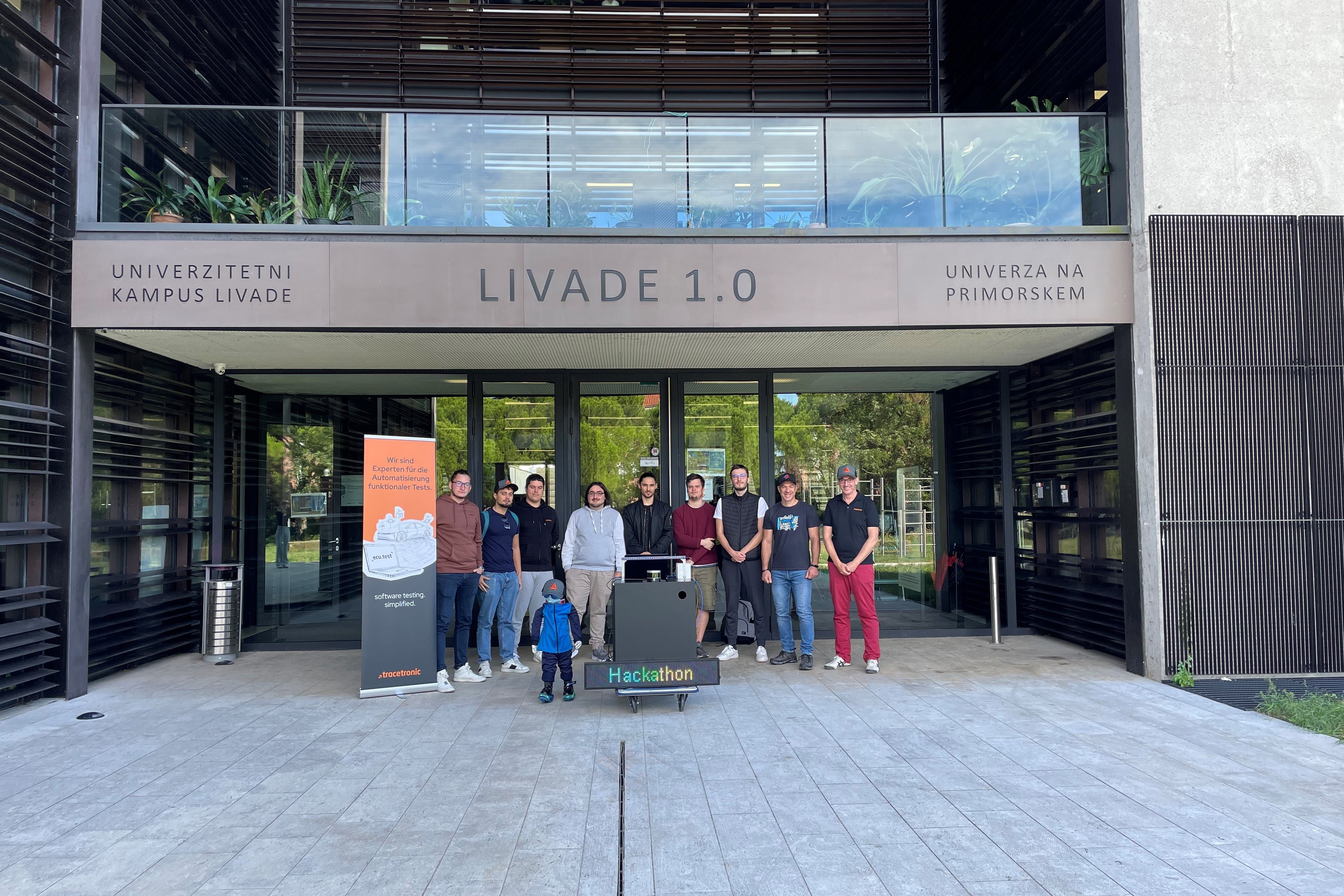
19.09.2024The week-long hackathon took place last week at the University of Primorska in Izola. The event was supervised by Professor Toralf Trautmann (Faculty of Mechanical Engineering, HTWD) and Professor Branko Kavsek (Faculty of Mathematics, Natural Sciences and Information Technologies, UP FAMNIT). The nine computer science students, who had formed three teams, presented their results in short presentations on the final day. Two teams developed new display concepts for warning of critical situations based on an LED light strip (NeoPixel). The third team utilised an existing machine learning method in Matlab (ACF - Aggregate Channel Features) for camera-based detection of speed information. The Matlab programmes created will be published on the Mathworks File Exchange platform: https://www.mathworks.com/matlabcentral/fileexchange/ The hackathon will then take place at HTW Dresden in September 2025. Here, the developments will be extensively tested in real vehicles on the HTWD test field. This will give participants a comprehensive insight into the entire vehicle software development process. Further information on the process and the use of the results can be found at https://mechlab.de/famnit_htwd_hackathon/ .
-
Over 200 participants at the fourth Summer School Computer and Geoscience in Archaeology
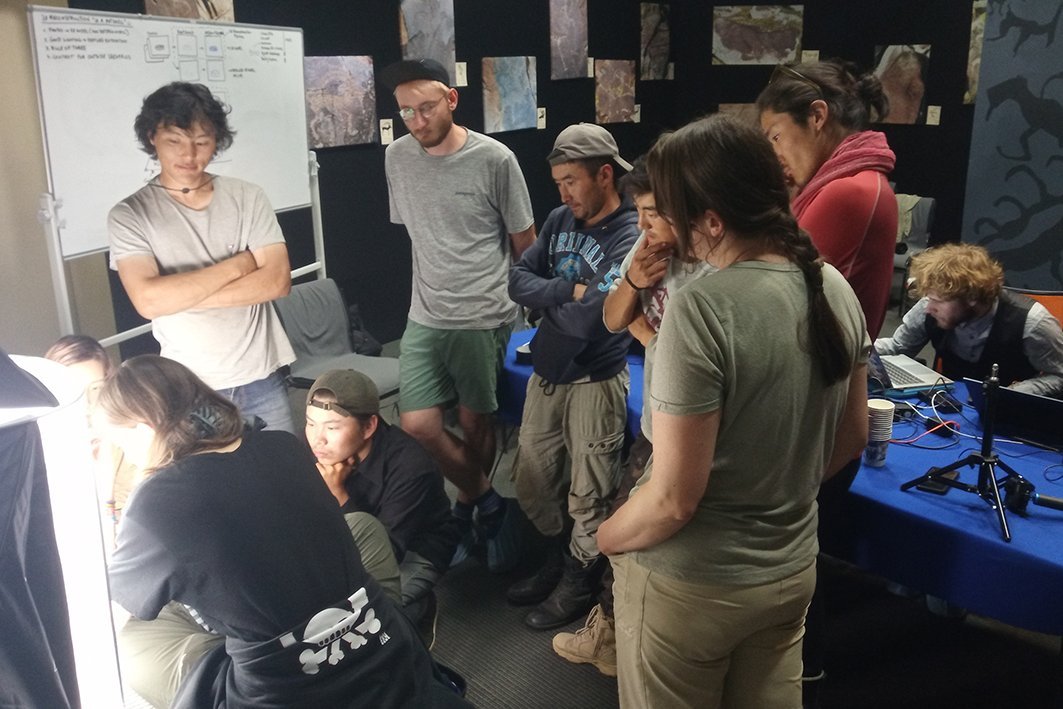
08.07.2024Important training objectives are the safe handling of digital data, reliable data collection in the field and in the laboratory, data management, the acquisition and processing of 3D data, evaluation and analysis as well as media preparation and presentation. The necessary tools are taught in the faculties of Computer Science/Mathematics and Geoinformation in a broad and application-oriented manner, while many graduates of archaeological degree programmes have a great need for training and further education in this area. HTW Dresden is meeting this need with the new programme. All topics are always taught in the context of archaeological data and projects in cooperation with partners from the field of archaeology. In view of the overwhelming number of more than 300 applications from 54 countries, the event was extended to an online course at short notice, so that more than 200 interested parties were ultimately able to take part. After a welcome from the organisers, Dr Benjamin Ducke, Head of IT at the German Archaeological Institute, gave an insight into everyday life and the reality of archaeoinformatics and emphasised the relevance of skills in this area. Britta Weber from the International Office then presented HTW Dresden and the application process for foreign students. During the two-week event, video lectures, self-study phases and feedback sessions alternated. The following courses were part of the Summer School: Introduction to Digital Archaeology (Dr. Hendrik Rohland, Gastprofessor für Archäoinformatik) Foundations in Mathematics and Computer Science (PD Prof. Marco Block-Berlitz, Professor für Computergraphik; Dr. Tim Karberg, ebenfalls Gastprofessor für Archäoinformatik) Remote Sensing (Prof. Dr. Martin Oczipka, Professor für Fernerkundung und digitale Bildverarbeitung; Tim Karberg) 3D-Documentation (Prof. Block-Berlitz) Applied and Computational Archaeo-Astronomy (Dr. Karberg) Geographic Information Systems in Archaeology (Dr. Rohland) In the final evaluation survey, it became clear that this corresponds to the needs of many people working in archaeology. Many of the participants expressed the wish to take up such an offer if it could be reconciled with their other commitments, e.g. through distance learning and part-time programmes. It is therefore clear to the course team that, following the start of the course in the coming winter semester, the next task is to develop a high-quality distance learning and part-time programme in order to meet the increasing demand for technical and mathematical skills in archaeology.
-
HTWD exchange students study in China with a scholarship from the Christian Bürkert Foundation
08.07.2024Sina Neubert and Wilhelm Gloer, two Bachelor students of Industrial Engineering and Management at HTWD, have decided to spend their 5th semester studying at the partner university Zhejiang University of Science and Technology (ZUST) in Hangzhou. They are being financially supported by a scholarship from the Christian Bürkert Foundation. As part of his semester abroad, Mr Gloer will also complete an industrial internship in Shanghai at the Bürkert subsidiary there. The German-Chinese cooperation of the ZUST has existed for almost 40 years and was established by the HTWD with Professor Dietrich as one of the first honorary professors of the ZUST. The attractive scholarship from the Christian Bürkert Foundation is not only available to German students studying in China, but also to Chinese students studying in Germany. In August, the Faculty of Mechanical Engineering is expecting the next Chinese students to complete their mechanical engineering studies at the HTWD as part of the 2+3 cooperation programme. The graduates will receive their degree certificates from both the ZUST and the HTWD.

-
The Chair of Information Management welcomes international students
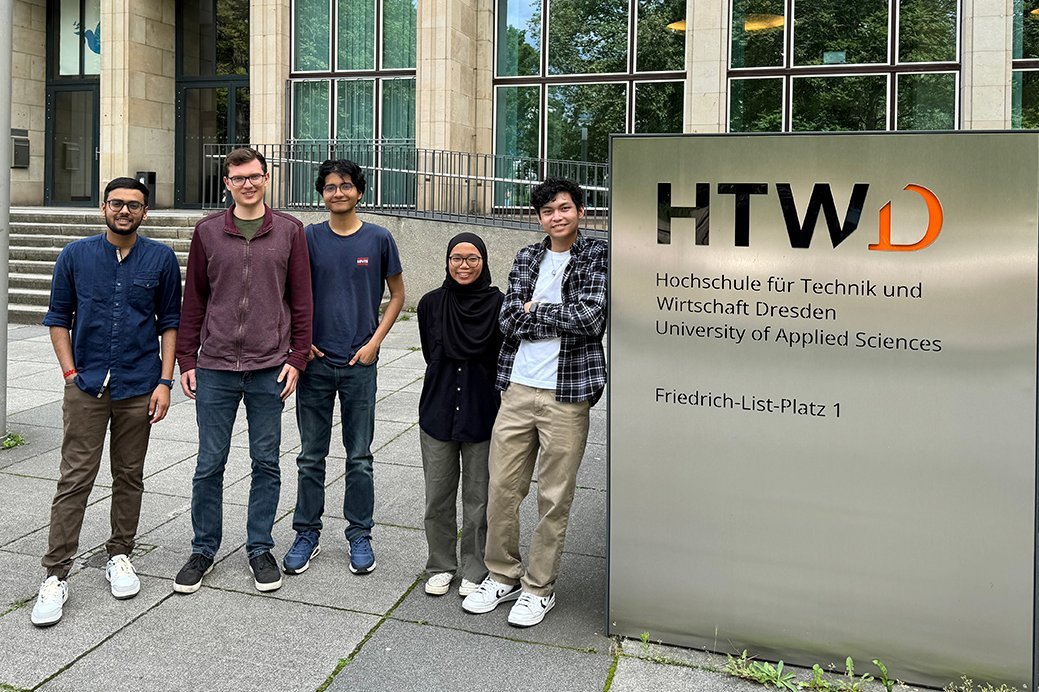
25.06.2024This summer, HTW Dresden will welcome five new international students who will enrich our campus. During their stay, they will have the opportunity to learn about new technologies using our Industry 4.0 testbed . Of course, they will also get to experience the city and its surroundings, as well as the local culture. We're looking forward to having them with us and offering them an unforgettable experience. In the following, our international guests introduce themselves in a few words!
-
Variety of science: that was the #LNDWDD
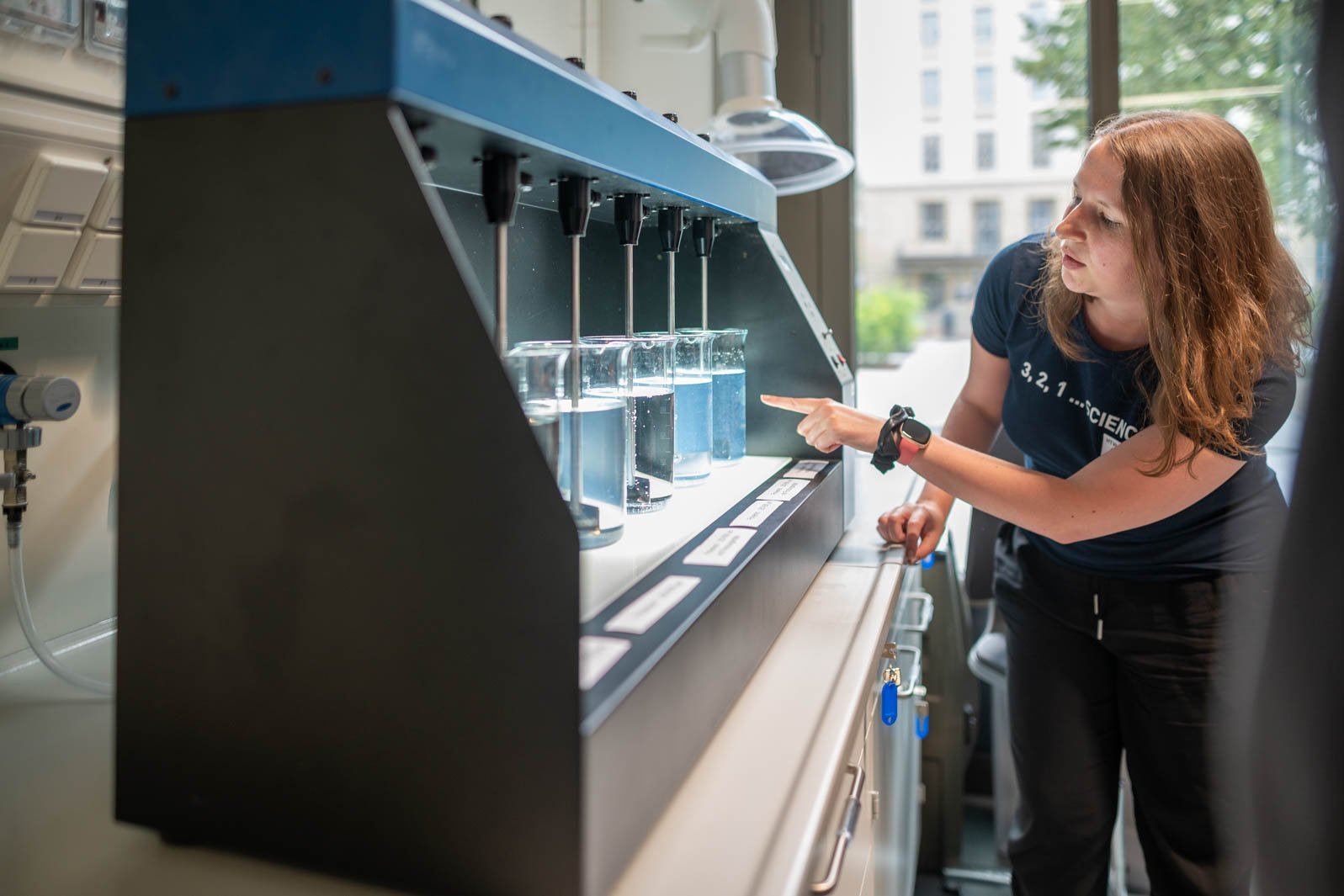
18.06.2024This year, the HTWD was a central venue of the LNdW and impressed with more than 60 events on the city centre campus at Friedrich-List-Platz alone. From 5 p.m., guests flocked to the site and could look forward to experimental shows, lab tours, live demonstrations, hands-on experiments, specialist lectures and much more. The topics ranged from open source, artificial intelligence, fake news, e-mobility, bridge construction, vehicle safety and flood protection to design, climate protection, animal welfare and agriculture. As a special highlight, the HTWD's teaching and laboratory building, which opened just a few weeks ago, opened its doors to the public. Among other things, visitors were able to marvel at experiments to detect microplastics in the water laboratory and project work by the Faculty of Design. Numerous other research institutions and companies were represented on the HTWD city centre campus. The Helmholtz Centre Dresden Rossendorf (HZDR) occupied the entire second floor of the main building, while the Fraunhofer IPMS, the Saxony Police University, the Goethe Institute and companies such as VON ARDENNE and Leybold Dresden also presented their latest developments in the university's teaching buildings. The Green Forum on the Pillnitz campus offered numerous events relating to nature, the environment and agriculture. Those interested were able to visit the agri-photovoltaic system and learn how climate change affects beer production. A special highlight for sports enthusiasts was the broadcast of the opening game of the European Championship on a large LED screen in front of the HTWD library. This event attracted numerous football fans who were able to watch the game in a relaxed atmosphere. ABOUT THE LNDWDD Dresden's universities, non-university research institutions and science-related companies open their buildings, laboratories, lecture theatres and archives to the public for the Long Night of Science. Interested parties can experience science and technology, research and innovation, art and culture in a variety of lectures, experiments, guided tours, exhibitions and films.
-
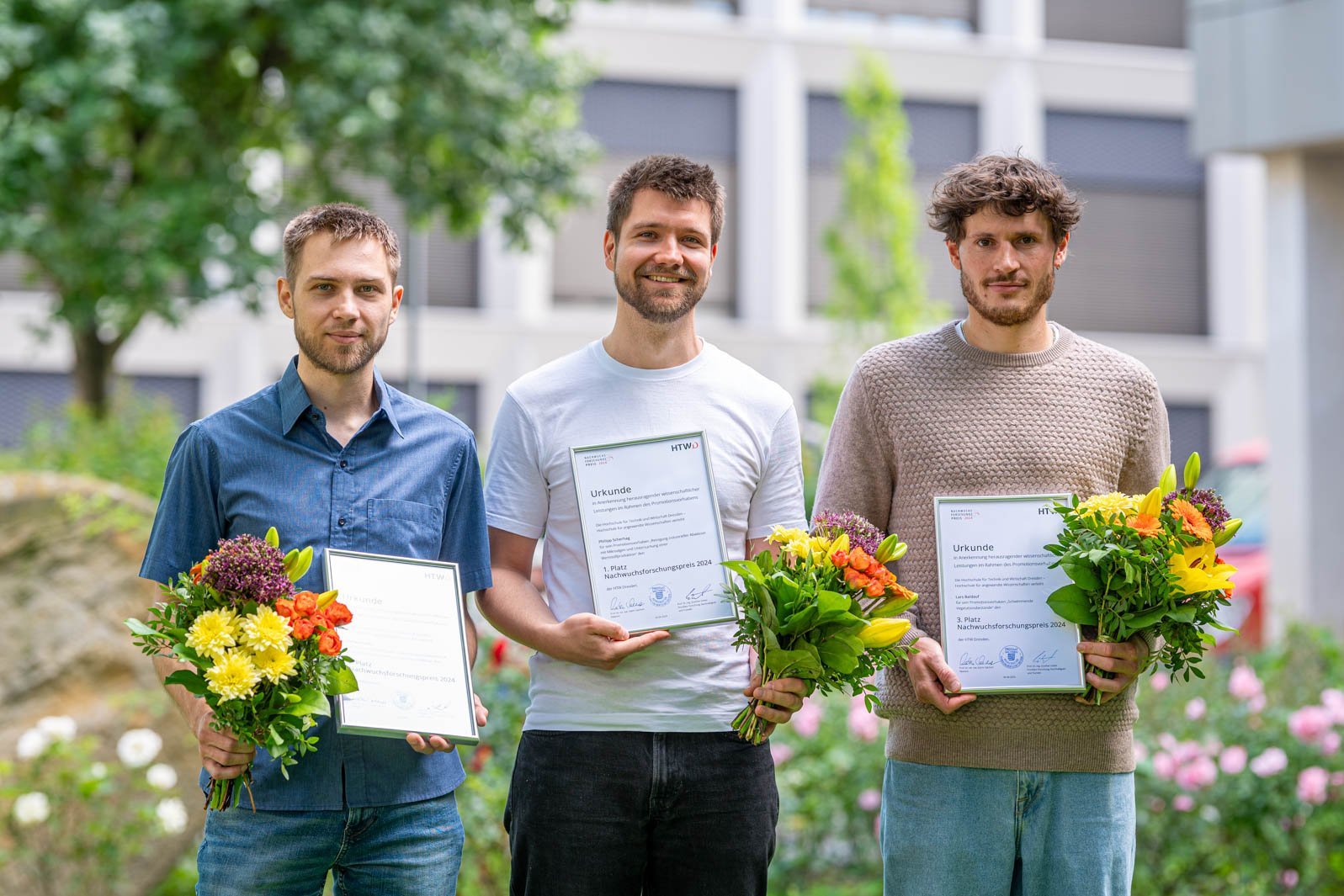
Microalgae as helpers for sustainable management: The best young researchers 2024
07.06.2024The award-winning research topic In the fight against climate change and with the aim of utilising resources more efficiently, the concept of the circular economy is seen as a solution. Waste streams are utilised as raw materials for new production processes. In his approach, Mr Scherhag uses microalgae to convert nutrients from wastewater into useful products. Specifically, he uses the extremophilic red algae Galdieria sulphuraria, which can live in extreme environments such as acidic or hot water. This alga can absorb sugars from wastewater and at the same time produce a valuable blue dye called phycocyanin (PC), which is used in the food, cosmetics and medical industries. Mr Scherhag's research aims to use the process to produce valuable biomass during the purification of wastewater in the food industry. With his contribution to optimising the use of resources, the chemical engineer was able to convince the jury in both evaluation rounds. At the Young Scientists Symposium, he presented a functioning bioreactor to illustrate his research topic to the audience. „The young researchers and their doctoral theses at our university are an important part of our innovative strength. Their tireless dedication and creativity not only drive progress in their respective disciplines, but also make a significant contribution to solving global challenges. I would like to express my sincere thanks for this,“ said Professor Göbel, Vice-Rector for Research, Sustainability and Transfer, in recognition of the finalists’ contributions. The second and third-placed entries Florian Franke qualified in second place with his doctoral project on Spatial temporal dynamics of fluids and tissues: discrete vs continuous modelling . In his work, Mr Franke develops and optimises mathematical models for the simulation of biofluids - a variety of cells that act like liquids. With the help of these models, the mathematician can, for example, make more realistic predictions about the growth of tumours, which enables doctors to treat cancer more efficiently. He received the prize of 500 euros for his work. Third place went to Lars Baldauf from the faculty of Agriculture/Environment/Chemistry. In his doctoral project on Floating vegetation stands , he is investigating which alternative and ecologically compatible materials can be used to create floating bodies for floating islands. These floating vegetation structures are modular solutions that enable the renaturalisation of a body of water even under limited spatial conditions. The award ceremony took place for the tenth time at HTW Dresden. The winners were honoured by Professor Salchert and Professor Göbel during the Dies Academicus on 5th June 2024. On the evening before, the young researchers answered questions from an interested audience at the Young Scientists Symposium. Young Scientists Award of the HTW Dresden The Young Scientists Award recognises outstanding achievements at HTW Dresden in the field of applied research. Researchers at HTW Dresden and ZAFT e.V. who have started a doctoral project or whose doctorate was completed no more than one year ago are eligible to apply. The jury consists of members of the HTW Dresden Senate Commission for Research.
-
New cooperation with India in the Electrical Engineering degree programme
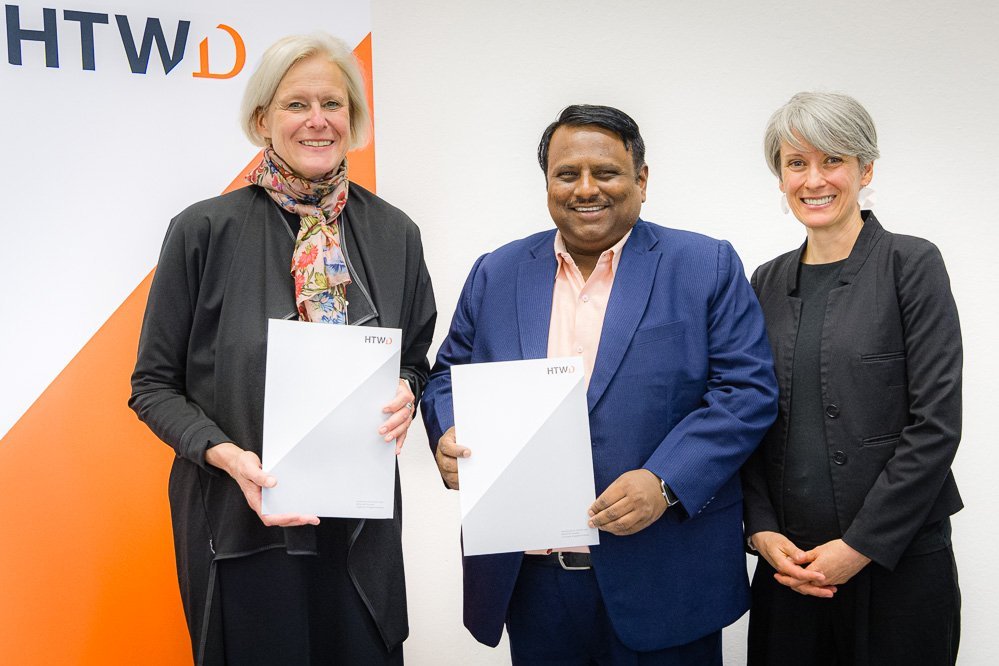
03.06.2024As part of the visit by Prof. Jagulur Rajasekharaiah Nataraj, the representative of the RV College of Engineering, to the HTWD, the official signing of the cooperation agreement on future collaboration between the two universities with the aim of providing binational education for international students took place. The signing by the Rector of HTWD, Prof. Katrin Salchert and the Dean of the Faculty of Electrical Engineering, Prof. Ralf Collmann marks the beginning of an official partnership. In the binational programme, Indian students will be specifically prepared for continuing their studies in the bachelor programme Electrical Engineering at HTWD. After completing their first year of study in India, the students transfer to HTWD. The concluded agreement provides a framework for recruiting international students as future skilled workers for the Saxon labour market. About RV College of Engineering Founded in 1963, the RV College of Engineering is located in the Indian metropolis of Bangalore and offers a variety of Bachelor's and Master's degree programmes in the disciplines of electrical engineering, mechanical engineering and civil engineering. About the study programme Electrical Engineering (B.Eng.) The Electrical Engineering degree programme is aimed at international students who wish to combine a solid electrical engineering education with parallel training in the German language in order to gain a position as an electrical engineer on the German labour market after graduation. For this reason, a specially adapted curriculum has been developed that enables students to learn the technical basics (in English, semesters 1-4) and German language skills at the same time. The language of instruction is then subsequently shifted to German in the main study programme (semesters 5-8).