-
Apply now: Funding for exchange semester in Chile, India, Taiwan und Vietnam
30.01.2026The application period for stays beginning on 1 July 2026 started on 15 January. Applications will be accepted until 15 March 2026. Students from all Saxon universities enrolled in bachelor's, master's, diploma and state examination programmes, as well as enrolled doctoral students, are eligible to apply. The programme is interdisciplinary. Students can apply from their first semester onwards. Application requirements: good to very good academic performance English language skills of at least B2 level Enrolment at a Saxon university (applicants must be enrolled at a host university and at their home university for the entire duration of their study visit) How much funding is available? For a long-term stay: €850/month (calculated on a daily basis) For a short-term stay: Days 1–14: €79/day Day 15 – 30: €56/day One-off travel allowance: €2,250 for Chile, €2,125 for Taiwan €1,425 for India, €2,025 for Vietnam Social top-up (if required): €250/month (calculated on a daily basis) Applications are open to first-time academics, students with children, students with disabilities or chronic illnesses, and working students. The host university always refers to universities in the programme's partner countries: Chile, India, Vietnam and Taiwan. More information: https://tu-dresden.de/internationales/foerdermoeglichkeiten/saxon-student-mobility-program-saxon-science-ambassador-program-indien-taiwan?set_language=en Contact und Consultation: Lina Bräu Projektkoordinatorin „Saxon Student Mobility Program“ & „Saxon Science Ambassador Program“ lina.braeu@tu-dresden.de +49 351 463 41186

-
Well informed about the HIT: Around 875 prospective students immersed themselves in university life at the HTWD
19.01.2026All of the university's degree programmes presented themselves with lectures, open labs and workshops. The greenhouses at the Pillnitz campus also opened their doors. Visitors were able to ask questions and gain an insight into everyday life at the university in personal discussions with students and professors. The HIT once again focussed on the principle of "joining in instead of watching". Numerous interactive offers, including experiments with virtual reality, the multi-sensory interaction room and a Rube Goldberg machine, invited visitors to try things out and experience teamwork. The programme was complemented by portfolio advice from the Faculty of Design, offers from the Student Advisory Service and information from Studentenwerk Dresden on financing and housing. Students acted as study guides on campus, sharing their experiences and pointing out important contact points. A campus rally also enabled guests to explore the university campus in a fun way and win prizes. The Pillnitz campus offered its own programme for the Agriculture, Horticulture, Environmental Monitoring and Landscape Development courses. Further dates to get to know the HTWD CareerStart fair If you missed the HIT, you can visit the HTWD stand at the CareerStart fair from 23 to 25 January. Further information: Detail page: HTW Dresden Winterwerkschau Design For all those interested in studying design at HTWD, the Faculty of Design's winter exhibition on 6 and 7 February offers a good insight. Further information: Design: HTW Dresden Campus Day on 9 May Further information: Study orientation: HTW Dresden All offers for study orientation All dates at a glance: https://www.htw-dresden.de/studium/vor-dem-studium/angebote-zur-studienorientierung

-
Nature now available at the HTWD
19.01.2026Read one of the world's leading scientific journals with Nature ? This is possible at the HTWD since this year!

-
MBrace: New generation of scoliosis orthoses for greater freedom of movement and comfort
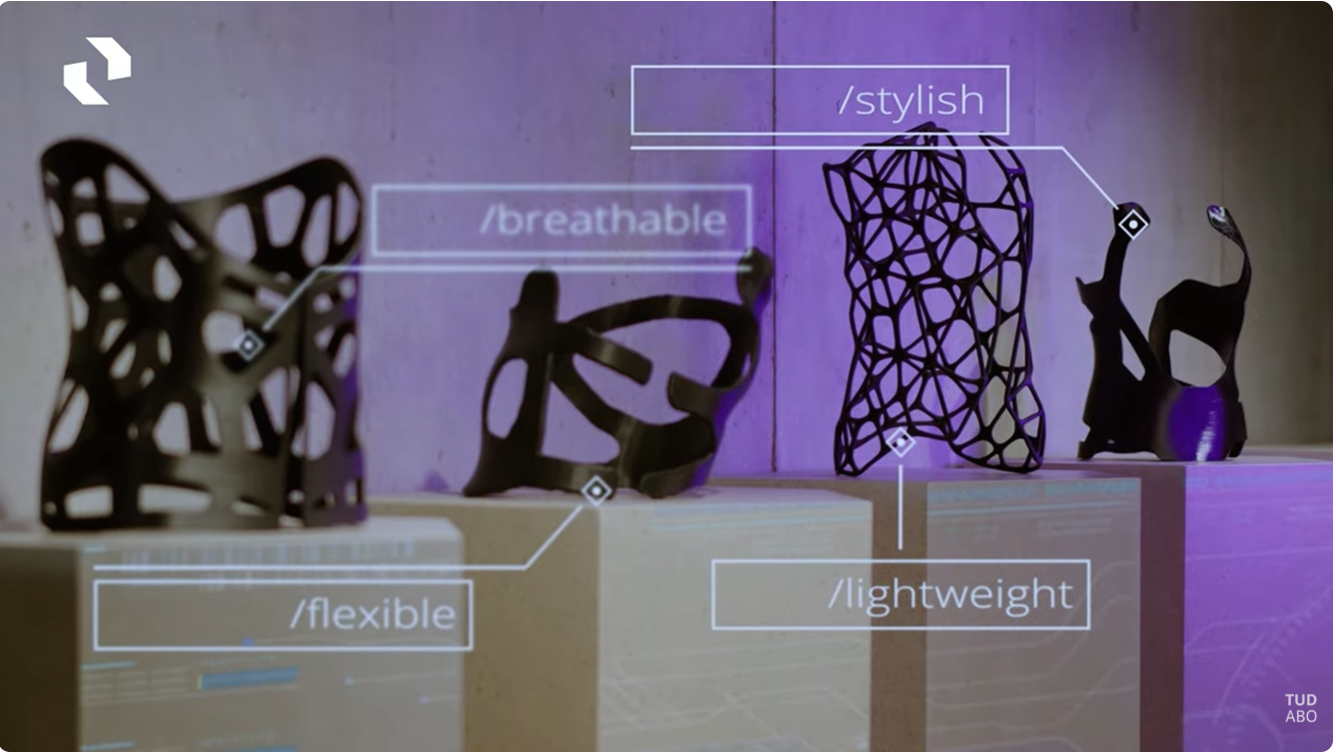
12.01.2026Scoliosis is a lateral curvature of the spine. In children and adolescents, it can be corrected with an orthosis. Conventional scoliosis orthoses are rigid and restrict natural movement, but must be worn for up to 23 hours a day. This makes it particularly difficult for young patients to continue their treatment. The European joint project MBrace, in which the TU Dresden, the Leibniz Institute of Polymer Research Dresden (IPF), the University of Kielce (Poland), research institutes in Belgium and the HTW Dresden were involved, has set itself the goal of changing this. The researchers developed a corset made from modern composite materials. By combining multi-matrix composites, modern high-performance fibres, AI-supported monitoring and fashion-conscious design, MBrace transforms orthoses into lighter, more flexible and more comfortable support aids, thereby improving mobility, well-being and therapy compliance. User-centred design from the Faculty of Design at HTWD The corset not only offers improved wearing comfort, but is also more orientated towards the needs of adolescent patients. The HTWD designers were responsible for the design of the corset. It was not just about the purely aesthetic aspect. The challenge was to integrate the different ways of thinking and research findings of the partners while keeping the needs of those affected in mind. The project was funded by M-ERA.NET. The European network supports research in the field of material and battery technologies in order to promote the European Green Deal.
-
Find what you're looking for faster? Discover more than you expected?
12.01.2026This is possible with our faculty-specific offers!
-
Saxon Hydrogen Union: Paths to climate-neutral industry
07.01.2026On 7 January 2026, a strategy meeting on the further development of the Saxon Hydrogen Union took place at TU Dresden. In addition to the Minister President (MP) of the Free State of Saxony, Michael Kretschmer, representatives of the Technical Universities in Dresden (TUD), Chemnitz (TUC) and Freiberg (TUBAF) as well as the HTW Dresden - University of Applied Sciences (HTWD) took part in the meeting. The focus was on the joint project " Hy²Cycle ", which was recently successfully acquired as part of the European Regional Development Fund (ERDF) and in which the three universities and the HTWD are involved. The joint project is a flagship project for application- and cycle-oriented hydrogen research, which is being realised as part of the Saxon Hydrogen Union . Michael Kretschmer, Minister President of the Free State of Saxony: " Hydrogen is and will remain an energy source of the future and a central building block for the climate-neutral transformation. The strong cooperation in the Saxon Hydrogen Union ensures technological progress, regional value creation and competitiveness on a European and global scale. Despite the current high energy prices, scarce availability and challenging European framework conditions, we are consistently working with the federal government to ensure that the hydrogen strategies take full effect." Resource-saving hydrogen production - contribution to the energy transition Hy²Cycle addresses key future issues of the energy transition: Recyclable electrolyser and fuel cell components are being developed, in particular for alkaline high-pressure electrolysis. This process makes the energy-intensive production of hydrogen more efficient and thus saves energy and costs. The aim is to enable energy-efficient, resource-saving and reusable fuel cell systems along the entire value chain. Sub-projects at the HTWD include the development and production of recyclable pressurised alkaline electrolysis cells (DAE), the digitalisation of the process chain and scalable component production and assembly. The chairs of Forming and Separation Technology (Prof. Dr Matthias Jäckel), Production Planning and Assembly (Prof. Dr Uwe Kühsel) and Product Development/CAD (Prof. Dr Wolf Georgi) of the Faculty of Mechanical Engineering are involved. Prof Dr Ingo Gestring, Rector of the HTWD: " The HTW Dresden stands for application and transfer. This is where we contribute our special expertise and further develop technologies so that regional companies can use them." Sustainable energy - the drive and value creation of tomorrow In addition, the representatives of the participating universities and the HTWD discussed further contributions to the further development of the Saxon Hydrogen Union and the establishment of a hydrogen-based circular economy in Saxony together with the MP. Background: Saxon Hydrogen Union The Saxon Hydrogen Union was founded in 2022 by the three Saxon technical universities TUD, TUD and TUBAF to pool expertise in research, teaching and transfer and to position Saxony as an internationally visible hydrogen location. Since then, numerous joint projects have been acquired that combine basic and applied research with industrial transfer. With the acquisition and realisation of "Hy²Cycle", the partners, together with the HTWD, are now taking another important step towards a cycle-oriented, sustainable hydrogen economy in Saxony, which will bring together diverse and regional partners from business and industry in addition to the scientific players.

-
This tool makes researching child's play!
05.01.2026Full text with just one click? Your library makes it possible with the "LibKey" tool! Try it out for yourself!
-
Christmas greetings from the Rectorate
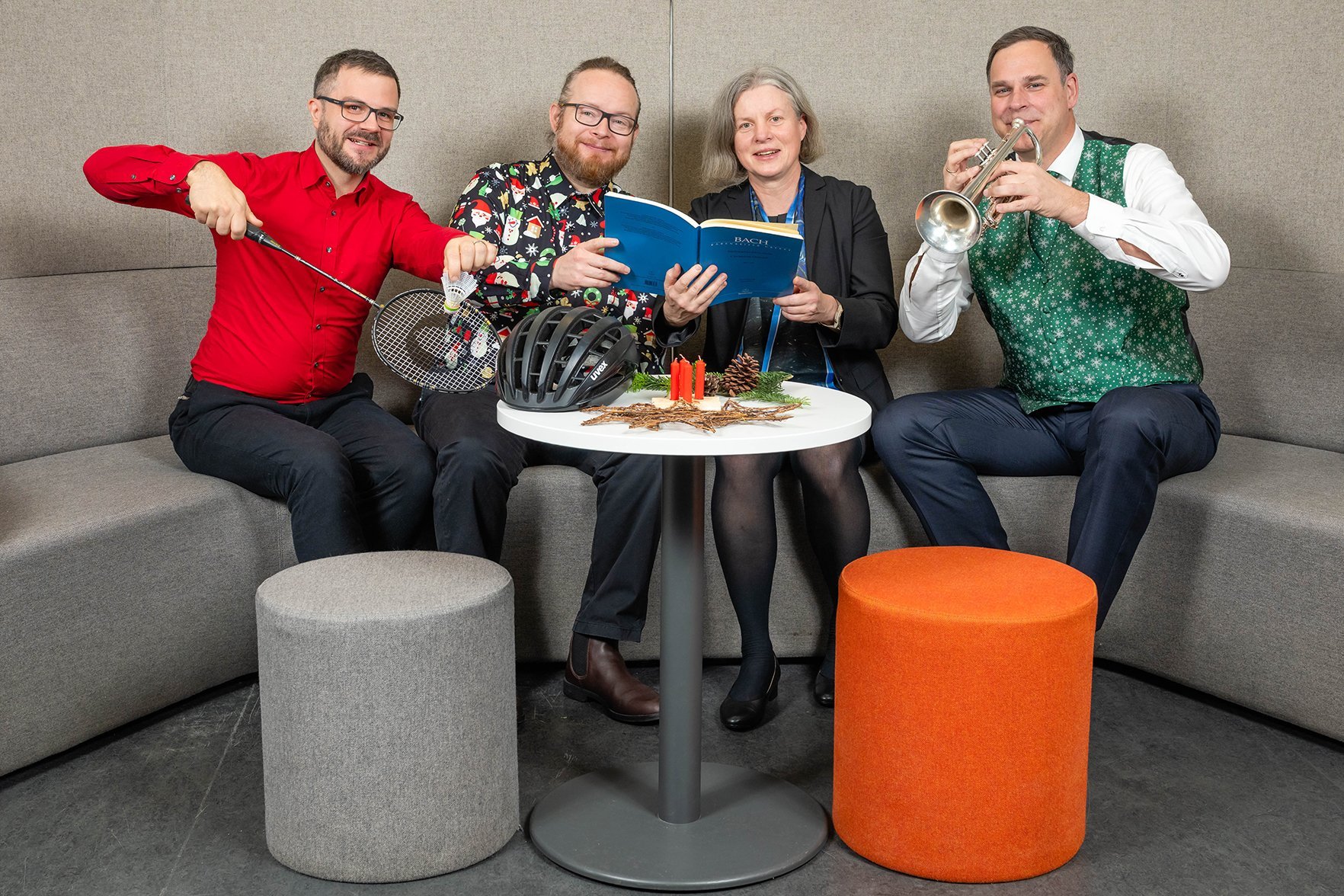
18.12.20252025 was another successful year for our university. We welcomed more than 1,400 new students in the winter semester. Our research performance remained at a consistently high level and continues to be well above the national average for universities of applied sciences. Here in Saxony, we are reliable partners to regional companies, associations and institutions. With our new sustainability strategy, we are committed to responsible development and contribute to the Sustainable Development Goals of the United Nations. HTWD has also set an important course internationally. We deepened existing partnerships, for example with the successful extension of our cooperation with the German-Mongolian University of Applied Sciences for Natural Resources and Technology (GMIT). We also made progress in digitalisation: the integration of the PitFM software and the new Campuscard simplify central processes. However, a review of the year also includes the tasks that continue to occupy us. These include new processes and structures, a tense personnel situation, limited financial room for manoeuvre and questions regarding our strategic direction. Despite these challenges, we see a university that continues to develop under its own steam and remains open to change. We would like to thank all members of the university for helping to shape HTWD with their commitment and enjoyment of working together. Every single person contributes to the progress of our university and the growth of our community. The Christmas period and the days between the years offer an opportunity to pause for a moment, to calm down or to focus on things that are often neglected in everyday life. This includes personal interests, hobbies, encounters or simply moments of silence. We wish you a relaxing festive season and a confident start to the new year. The entire Rectorate is looking forward to welcoming all university members back in 2026. Best regards Prof Ingo Gestring, Rector Alexander E. Müller, Chancellor Prof Kathrin Harre, Vice-Rector for Research, Sustainability and Transfer Prof Andreas Franze, Vice-Rector for Teaching and Studies
-
Working together for sustainable entrepreneurship: HTW Dresden strengthens cooperation in Uzbekistan
16.12.2025As part of the iCCiEE5 - intercultural Co-Creation for international Entrepreneurship Education project funded by the German Academic Exchange Service (DAAD), a project team from HTW Dresden travelled to Uzbekistan together with partners from the German Jordanian University. The host was the New Uzbekistan University in Tashkent. The aim of the ten-day visit was to consolidate the university partnership and work together on the further development of an international Master's degree programme in the field of entrepreneurship education. Entrepreneurship Education Lab with a focus on sustainability A highlight of the programme was the renewed implementation of the Entrepreneurship Education Lab. Following the successful premiere at HTW Dresden in September 2025, the lab was now held for the first time at New Uzbekistan University. The focus was on green and sustainable entrepreneurship. Together with local stakeholders, the students discussed current developments in entrepreneurship education. Innovation Challenge promotes entrepreneurial thinking The programme was supplemented by an Innovation Challenge lasting several days at the partner university. In international and interdisciplinary teams, students developed business ideas for current social and ecological challenges. A jury assessed the results. The winning team received an invitation to the final workshop of the iCCiEE5 project in Germany in 2026 to further develop the idea. Insights into Uzbekistan as a centre of innovation In addition, the students and teachers from the project team visited the new campus of New Uzbekistan University in New Tashkent and the IT Park Tashkent, a hub for start-ups and international companies. The programme also included joint excursions, a visit to Tashkent's largest bazaar and learning about regional cuisine. From the students' point of view, the stay was a win-win situation. Moritz, a student on the Master's degree programme in Business Administration and Engineering at HTW Dresden: "The study trip to Uzbekistan was a valuable experience, both professionally and culturally. I particularly enjoyed working together on the innovation project."

-
BMFTR network meeting: experiments, dialogue and long-term impact
16.12.2025Selected projects presented their work in a moderated round, followed by short sprint exchanges in the audience. Despite the compact format, it became clear that more time would have been desirable for direct dialogue. The demonstrators we brought along - including our OSH hoover, the OpenCyclone - made it easier to start discussions and at the same time showed the potential of open source hardware, aroused curiosity and made results visible. The most intensive format was the problem-solving islands: 12 initiatives, 12 tables, 10 minutes per round. Here it became clear that despite different professional backgrounds, similar challenges often arise. The difficulty of finding new partners, especially SMEs, and ways of transferring ideas to society, such as start-ups, associations, collaborations or synergy potential with other initiatives, was a recurring theme. In many discussions, it also became clear that open source is still not well established in many disciplines. At the same time, the principle offers the opportunity to make results permanently accessible - but there is often a lack of didactic preparation for a broad public. This means that we in the OSHOP project are facing similar questions to many other initiatives: How can perpetuation and long-term provision succeed? The accompanying research emphasised that the transition to teaching and existing organisations are also forms of transfer. This perspective opens up additional ways of anchoring project results in the long term, as already demonstrated by our model factory, the IIoT testbed of the Chair of Information Management at HTW Dresden. Overall, the network meeting lived up to its claim: intensive discussions, concrete connection opportunities and visible synergies. The majority were clearly in favour of repeating the event; only the lack of daylight was criticised. Further news at: https://www.oshop-network.de/news/