-
Look behind the paywall with WISO
21.05.2025Free access to hundreds of paid newspapers, specialist journals and much more with wiso-net.de.
-
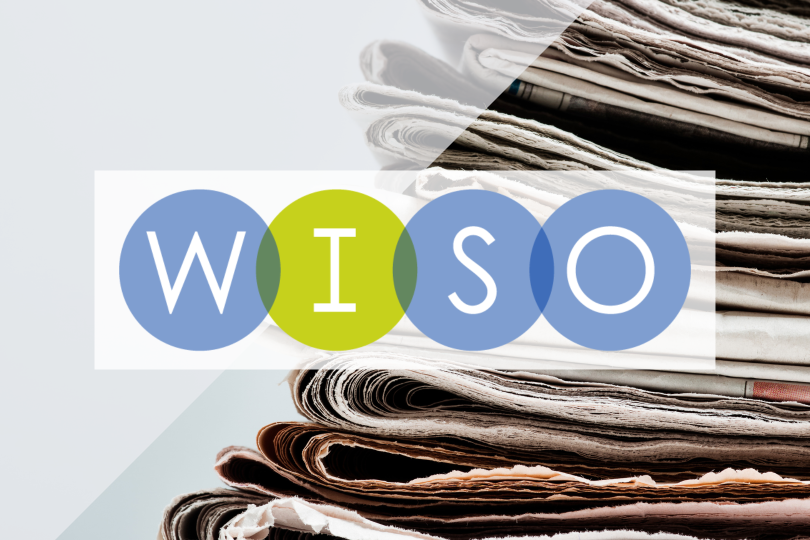
Portrait of doctoral candidates: Hedvika Maxová
19.05.2025HTW Dresden supports doctoral candidates in financing their cooperative doctoral project, for example with an ESF PLUS doctoral scholarship as part of the “Kooperative Landesinnovationspromotionen” programme. In 2025, five young researchers have already started their doctoral project at the university as part of the programme. One of them is Hedvika Maxová, who is supervised by Prof. Dr.-Ing.Uwe Kühsel (Faculty of Mechanical Engineering). We asked her a few questions to find out more about her and her research work. Tell us briefly about your PhD topic. My PhD topic “Development of modular microsystems for long-term tissue culture and strategies for the digital production of these microsystems” is a continuation of my diploma thesis. I wrote this at the Fraunhofer Institute for Material and Beam Technology IWS and it deals with the development of microsystems. My doctoral thesis is now about the further development of microsystems and their production. How did you come up with the idea of doing a doctorate and what motivated you to do it? My employer actually came up with the idea and showed me the ESF PLUS programme. He said: ‘Look, there are scholarships that you can use to do a doctorate’. I was very interested in the topic I was researching as part of my diploma thesis, but it wasn't possible to stay employed at Fraunhofer. The doctorate was therefore an opportunity to continue working on my topic. What resources and networks help you the most during your doctoral studies and research? My colleagues at the Fraunhofer IWS help me professionally and the HTWD supports me organisationally. For example, there are numerous offers from the Graduate Service of the HTW, which I use to further my education and to take the courses required in my doctoral contract. I also use the resources of the HTWD library for research. What does your typical day look like at the moment? I officially started in February this year and have organised my week so that I do my mini-job one or two days a week. Then I spend one or two days at Fraunhofer. There I discuss the topic with my colleagues or work practically on my doctoral project. I'm currently writing a paper, for example. The rest of the time I'm in the library. What would you have liked to have known earlier or before the doctorate? Above all, I would have liked to know more about the whole procedure, because it is a cooperative doctorate and therefore has to go through both the HTWD and a university, in my case the TU Dresden. This means that I have to fill out all the forms twice and there is a lot of documentation. do you already know what you want to do afterwards? Well, first I have to see that the doctorate works out and only then will everything become clear. I would prefer to work on a similar topic in the industry near Dresden. I've grown fond of the city over the years of my degree programme. About the ESF PLUS doctoral programm The EU and the Free State of Saxony use the ESF PlUS programme to fund projects in areas such as doctoral studies. The aim of the ESF doctoral scholarships is to utilise the individual educational potential of academic specialists, especially women, by expanding their skills with regard to a stable, green, sustainable and digital economy in the Free State of Saxony. Eligible projects are state innovation doctorates, industrial doctorates, projects to reconcile family and academic career, combination of industrial doctorates and projects to reconcile family and academic career with a duration of up to four years. A basic scholarship, for example, is funded with 1,700.00 euros.
-
Study programme and internship in Taiwan - apply now for STIPT!
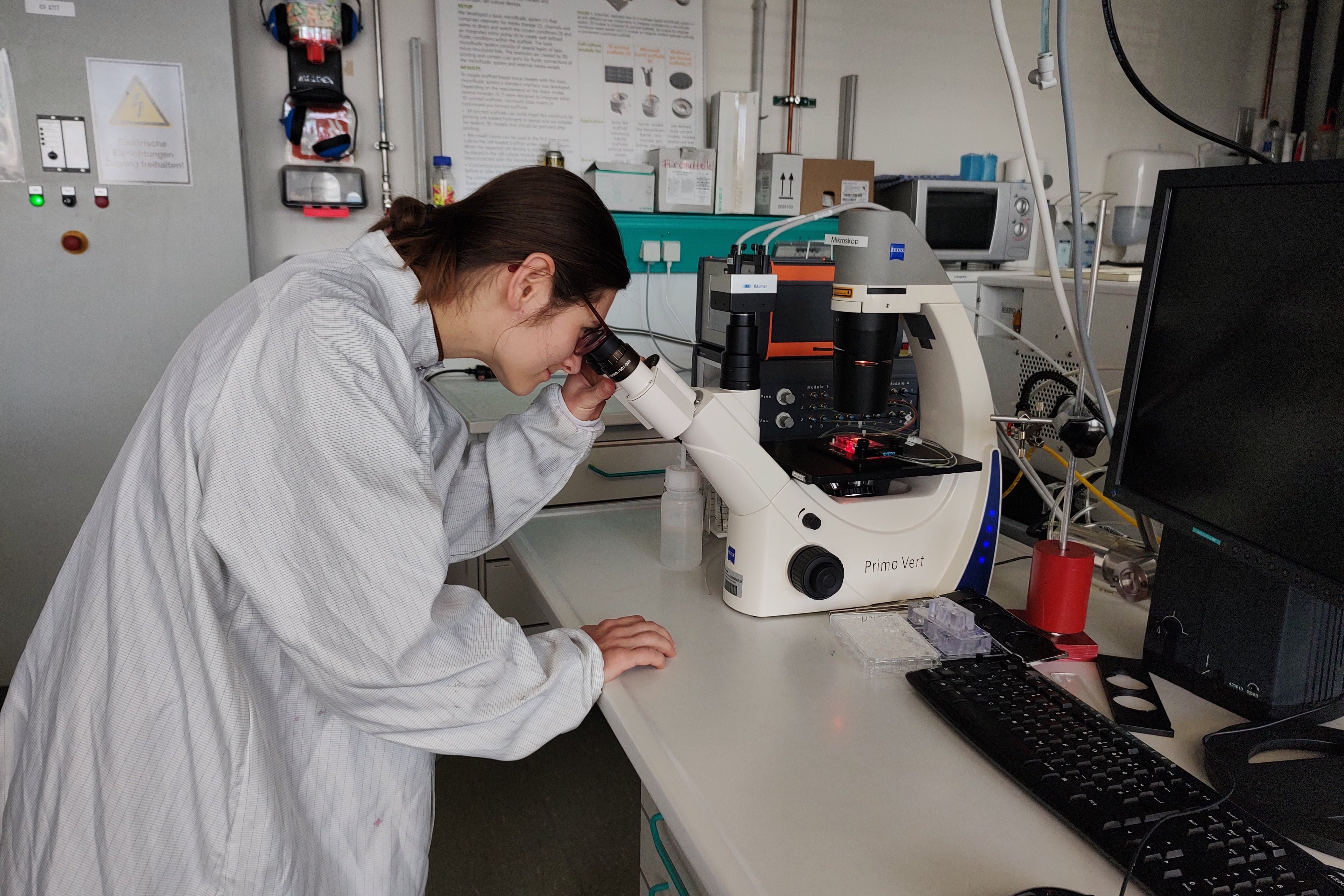
14.05.2025Applications for the ‘Semiconductor Talent Incubation Programme’ (STIPT) in Taiwan for the summer semester 2026 are open until 30 May. The Saxon-Taiwanese programme is a joint initiative of the Free State of Saxony (SMWK), TU Dresden and TSMC. The six-month Semiconductor Talent Incubation Programme Taiwan combines a study programme in the semiconductor sector with practical training at TSMC. From March to June 2026, the programme participants will study a course programme designed by TSMC at the National Taiwan University. This will be followed by two months of practical training at the Newcomer Training Centre & Fab at TSMC (Taichung). Up to 28 ECTS credits can be credited for the entire programme. The selected candidates will receive a living allowance in addition to the tuition and programme fees. This programme is open to students who are pursuing a degree in a STEM subject and are enrolled in full-time studies at the participating Saxon universities: from the 4th semester of a BA programme in an MA programme in a diploma programme (half of the study period must have been completed) Application deadline: 31 May 2025 Further information and application: https://www.leo.tu-dresden.de/?page_id=10929
-
Follow-up funding secured: iCCiEE enters second round
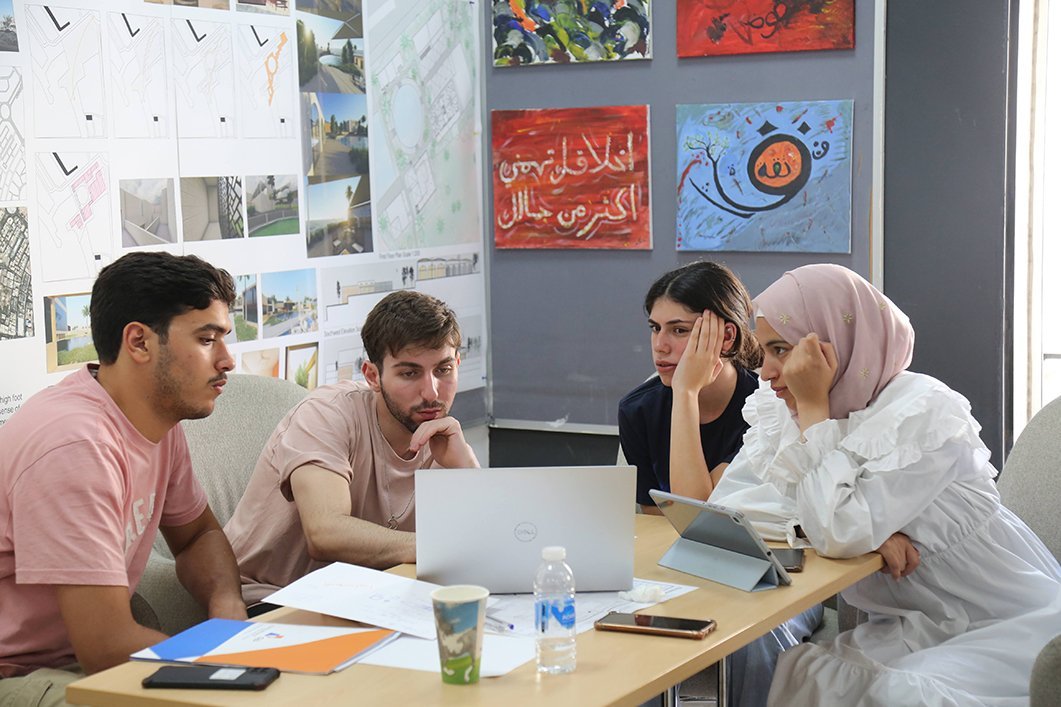
24.04.2025The project team at the HTW Dresden, Faculty of Business and Economics, is continuing to work closely with New Uzbekistan University and the German-Jordanian University. The aim is to develop an internationally oriented Master's programme for modern entrepreneurship education - practical, intercultural and future-oriented. In the first phase of the project, the programme was developed in a co-creation process together with students, lecturers and young academics from Germany, Jordan and Uzbekistan. Workshops in Dresden, Amman and Tashkent provided the framework for interdisciplinary and international exchange. The programme is designed to optimally prepare students for the regional and global challenges in the start-up world. The knowledge gained will now be incorporated into the follow-up project iCCiEE5 in order to further expand the topic of entrepreneurship education and strengthen the trilateral partnership in the long term. About the iCCiEE project As part of the DAAD programme ‘Higher Education Dialogue with the Islamic World’, HTW Dresden is developing an international graduate programme for entrepreneurship education together with its partner institutes in Uzbekistan and Jordan. The aim is to prepare students for entrepreneurial challenges in a globalised world through an intercultural, practice-oriented curriculum. Stays in Dresden (June 2025), Uzbekistan (autumn 2025) and Jordan (spring 2026) are planned for the second project period. The developed curriculum will be trialled and further developed there. A particular focus will be on establishing contacts with non-university stakeholders in the respective regional innovation ecosystems and exchanging knowledge on entrepreneurship education. The programme will conclude with an international Global Hackathon in Munich at the end of 2026. The event is supported by TUM International GmbH as a partner with many years of expertise in promoting innovation and start-ups and includes workshops, mentoring and a wide range of networking opportunities.
-
-
Delegation from the British Columbia Institute of Technology (BCIT) visits HTW Dresden
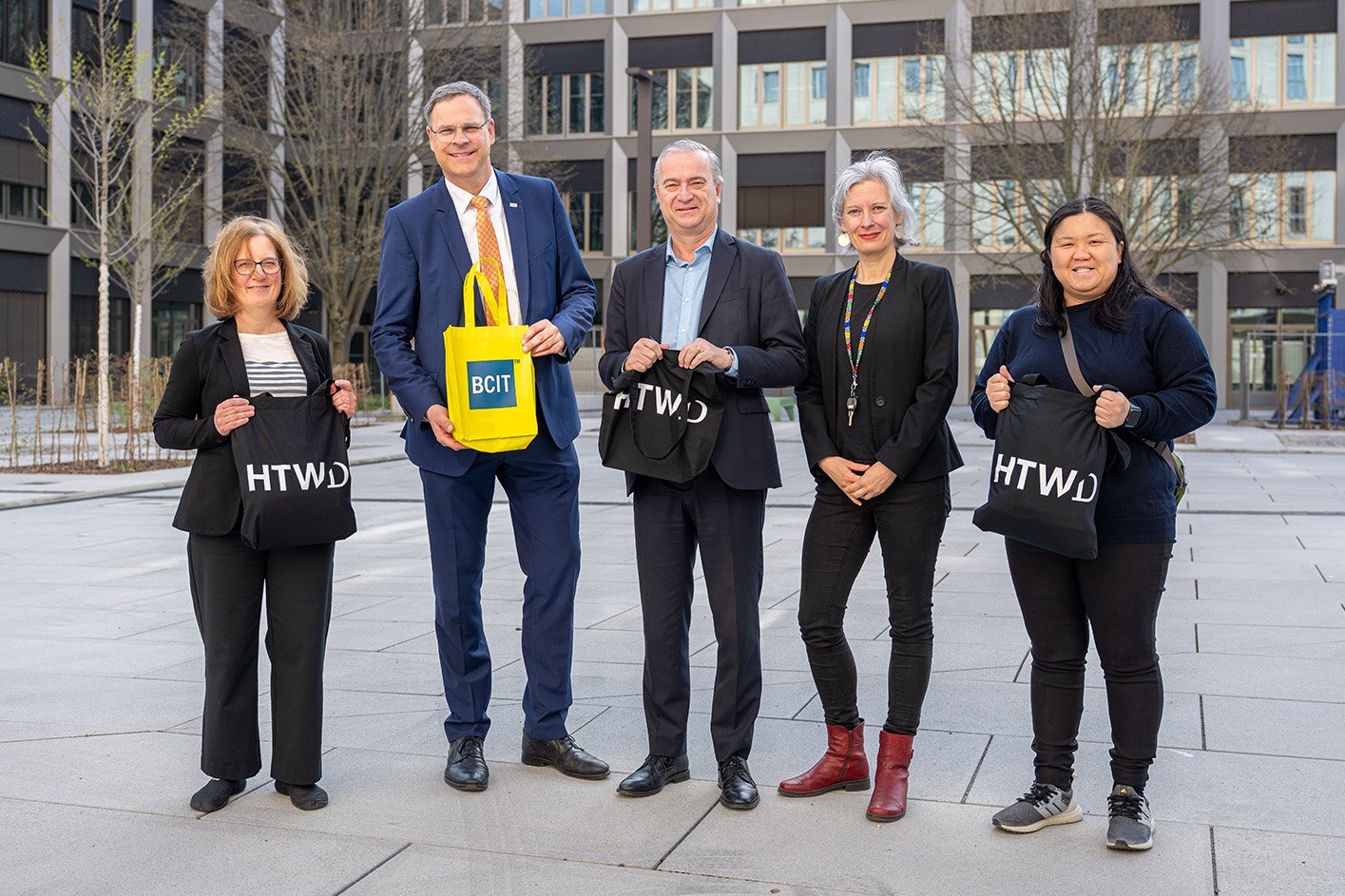
09.04.2025The British Columbia Institute of Technology (BCIT) is a leading polytechnic institution in Canada known for its hands-on, applied education. The School of Energy provides education and research that focuses on increasing energy efficiencies in industrial processes and the development of cost-effective alternative energy sources. The delegation, led by Dr Jeff Zabudsky (President BCIT), Dr Andrea Frisque (Dean School of Energy) and Jeanie Chan (Interim Associate Dean Mechanical Engineering), took part in the HTWD campus day, visited the company XENON in Dresden as well as the TU Dresden and the Leibniz Institute for Solid State and Materials Research (IFW). A particular highlight was the signing of a Memorandum of Understanding (MoU) on 8 April. This lays the foundation for joint study programmes, research projects and a long-term partnership. ‘The cooperation with BCIT is an important step for the internationalisation of our faculty and our research in the field of renewable energy systems,’ said Prof. Gunther Stehr, international representative at the Faculty of Mechanical Engineering at HTWD.
-
Inauguration of the new Rector of HTW Dresden
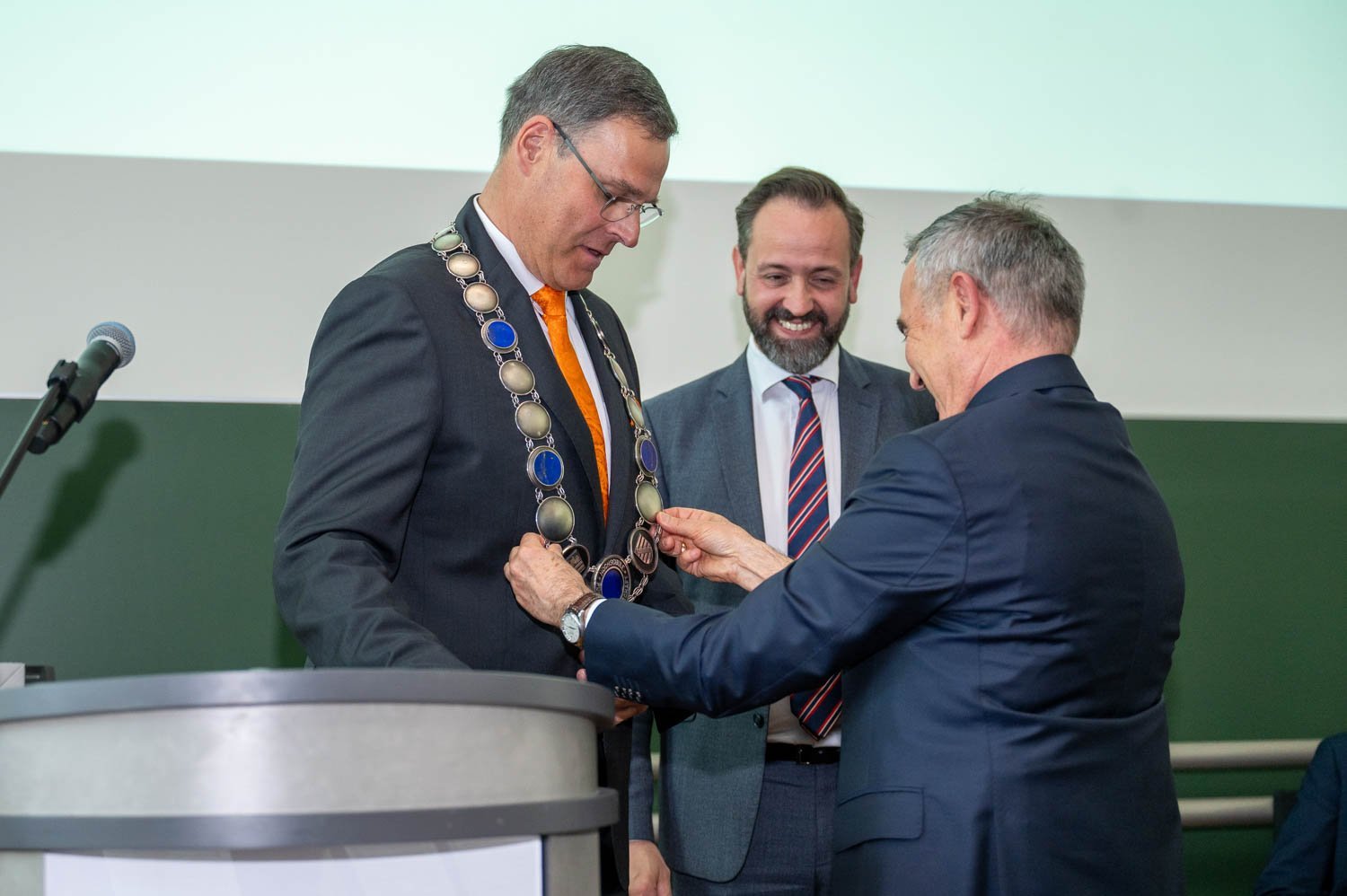
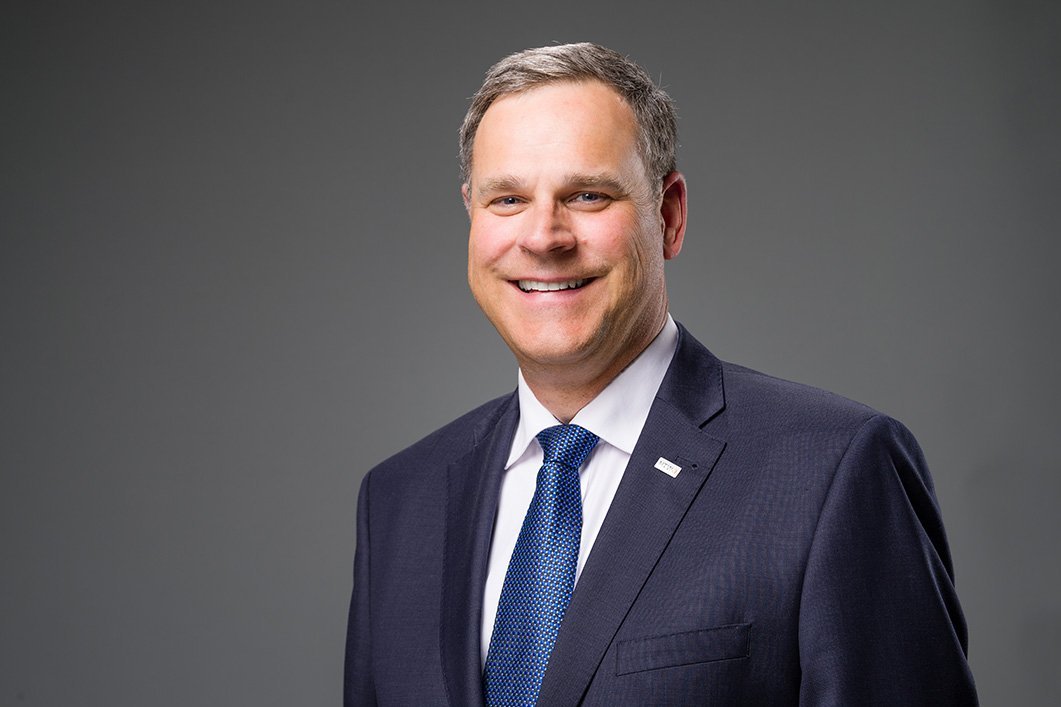
01.04.2025Prof. Dr.-Ing. Ingo Gestring will take up his post as Rector of the Dresden University of Applied Sciences (HTWD). On 27 March 2025, he was officially appointed as the new Rector of the HTW Dresden by the Saxon State Minister for Science, Sebastian Gemkow. The extended senate of the university elected Professor Ingo Gestring on 30 April 2024. His term of office is five years. Professor Ingo Gestring has more than 20 years of leadership experience in university management and business. He spent several years in senior positions in the automotive industry, most recently as Head of Production and Logistics at Volkswagen's Transparent Factory in Dresden. He studied mechanical engineering at the University of Hannover until 1998, where he obtained his doctorate in 2002. In 2009, he was appointed Professor of Materials Management and Production Logistics at the HTWD. From 2015 to 2021, he was Dean of the Faculty of Economics. In 2022 and 2024, the professor was awarded the HTWD prize for good teaching. Ingo Gestring is very well networked in Saxony and Germany, as well as internationally. „The core tasks of a university are teaching and research. In future, I will focus even more on these. I feel committed to the Humboldtian ideal of education complemented by practical relevance and employability. The university is a community of teachers, researchers, staff and, above all, students. Together, we want to create a familiar environment in which all members can develop and in which change is courageously tackled. I want our university to be one of the best and most efficient universities of applied sciences in eastern Germany and to set standards in teaching, research and transfer," says the new Rector, summing up his ambitions for the position. In the future, the university will have an even greater impact on society as a driving force and will be a reliable partner for the economy, especially for SMEs. In addition to strong application-oriented research, these are essential prerequisites for making teaching fit for the future, Gestring emphasises. He sees a strong university community, which needs to be fostered, as the basis for the university's success. Professor Ingo Gestring succeeds Professor Katrin Salchert, who has headed the university since 2020.
-
Research and training cooperation for sustainable water management with the MENA region enters its fifth year
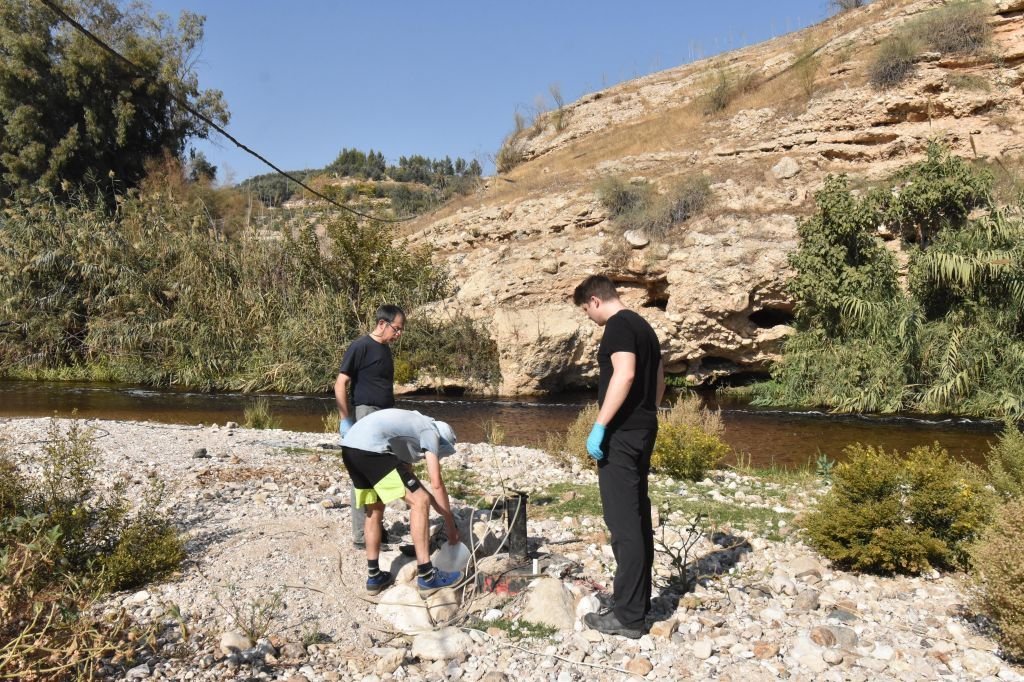
28.01.2025INNOVATIVE APPROACHES TO GROUNDWATER RECHARGE AND INTERNATIONAL COOPERATION The Middle East and North Africa (MENA) are among the most water-scarce regions in the world. The aim is to achieve sustainable management of scarce water resources. The Department of Water Management at the Dresden University of Applied Sciences (HTW Dresden/HTWD) and other German and MENA partners are working on research and implementation activities for groundwater recharge using the Managed Aquifer Recharge (MAR) process. MAR comprises various techniques, including the application of the natural purification process of bank filtration (UF), also known as riverbank filtration. Teaching and research staff at universities and other institutions in the MENA region are being trained for this purpose. Under the coordination of the HTWD, these activities will take place from 2021 as part of two projects: FEMAR, funded as part of the ‘Middle East Regional Water Research Cooperation Programme’ (MEWAC) of the Federal Ministry of Education and Research (2021-2024) and MENAWAT, funded as part of the ‘Ta'ziz Scientific Cooperation’ (2023-2025) of the German Academic Exchange Service (DAAD) with funds from the Federal Foreign Office. The results of the FEMAR project were presented to representatives from science, international organisations, authorities and farmers at the ‘Symposium on MAR in the Middle East’ in Amman on 19 November 2024. Studies by the American University of Beirut (AUB, Groundwater Hydrology Group) in the upper Litani River Valley in Lebanon have shown that it is technically feasible to store excess spring water in the aquifer in winter for use in the dry season. In Syria, the University of Aleppo (UAS, Department of Field Crops) recommends pre-treatment of the Quaiq river water for irrigation in order to increase crop yields, improve fodder quality and reduce soil pollution. Studies by the Institute of Groundwater Management at the Technical University of Dresden (TUD) in collaboration with Lebanese and Syrian partners on numerical groundwater flow modelling have improved the hydrogeological understanding of their study areas. TUD developed an automated, generalisable and scalable multi-model framework based on open-source tools to model complex hydrogeological conditions such as karst systems. In the FEMAR project, joint research work was carried out by the Royal Scientific Society (RSS, Emerging Pollutants Research Group), HTWD and Umweltbüro GmbH Vogtland (UBV, Weischlitz) on a constructed bank filtration measurement profile on the heavily polluted Zarqa River in Jordan. It was shown that the use of bank filtration can provide water for irrigation even in shallow fluvial aquifers and that the risk to plants and the food chain from waterborne pathogens and organic trace substances can be significantly reduced. The MENAWAT project is expanding educational and research cooperation in the field of MAR and UF with universities and non-university institutions in Jordan and Morocco. To expand the skills of engineering students, engineering and entrepreneurial aspects with regional relevance were discussed at the MENAWAT workshop ‘German-Jordanian Interdisciplinary Workshop on Higher Education in Natural Resources Management & Entrepreneurship’ on 3 July 2024 in Dresden. A delegation from the School of Natural Resources Engineering and Management (SNREM) at the German Jordanian University (GJU) took part in this workshop. The workshop also included contributions from the Faculties of Economics (Professors R. Baierl and R. Thamm) and Agriculture/Environment/Chemistry (Dr G. Lux). Ms K. Tomecko presented the DAAD-funded project ‘Intercultural Co-Creation for International Entrepreneurship Education’, which deals with the need to innovatively design entrepreneurial education in different cultural contexts and to combine intercultural competences with entrepreneurial skills in students. Dr Lux organised an interesting excursion to the Agri-Photovoltaic Test Site of the Faculty of Agriculture. 27 people, including 16 Bachelor's and Master's students and doctoral candidates from Jordan, Tunisia and Germany, took part in the ‘Managed Aquifer Recharge Autumn School’ in Amman on 20 and 21 November 2024. The Autumn School was organised by SNREM and HTWD as a further training measure as part of the MENAWAT project. Experts from TUD and UBV (Germany), Yarmouk University (Jordan), the Tunisian Ecole Nationale d'Ingénieurs in Sfax, GJU and HTWD covered topics such as hydraulics, water quality, numerical groundwater modelling, well construction as well as site investigation, monitoring and assessment methods including the application of remote sensing methods. The autumn school concluded with practical field work on 22 November, during which the participants recorded water levels and water quality parameters and took water and soil samples from a UF measurement profile on the Zarqa River. The next summer school on MAR will be organised by the HTWD in Dresden in August/September 2025. The projects with the MENA partners are in line with the HTWD's internationalisation strategy. The collaboration was only possible thanks to the support of the Central Project Administration (ZPA) in the HTWD's Vice-Rectorate for Research, Sustainability and Technology Transfer. The projects with the MENA partners are in line with HTWD's internationalisation strategy. On the one hand, the cooperation was only possible thanks to the support of the Central Project Administration (ZPA) in the Vice-Rectorate for Research, Sustainability and Technology Transfer at HTWD; on the other hand, the ZPA has gained valuable experience in managing international projects outside the European Economic Area.
-
‘Virtual Museum of the Orkhon Valley’ officially opened in Ulaanbaatar
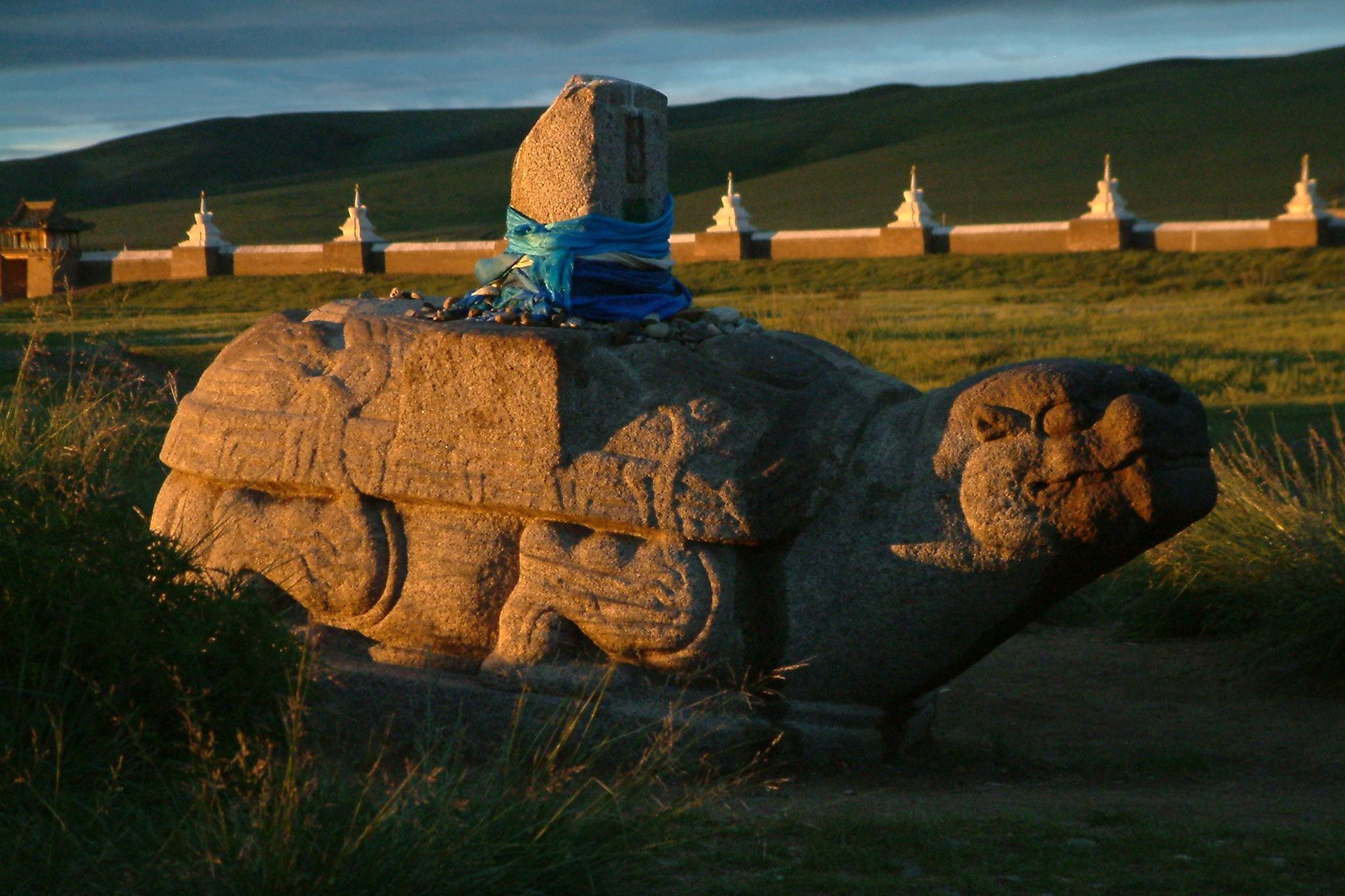
13.12.2024The Mongolian Academy of Sciences, the National University of Ulaanbaatar and the German Archaeological Institute have been conducting scientific research on archaeology and history in Mongolia for more than 20 years. At the beginning of December, the ‘Virtual Museum of the Orkon Valley’, which documents the projects, was officially opened during a ceremony at the Genghis Khan Museum in the Mongolian capital Ulaanbaatar. For more than 20 years, the Mongolian Academy of Sciences, the National University of Ulaanbaatar and the German Archaeological Institute have been conducting joint research on archaeology and history in Mongolia. The investigations focus on the two medieval city complexes of Karabalgasun from the 8th/9th century and the old Mongolian capital Karakorum from the 13th/14th century in the valley of the Orkhon River. Since 2018, the HTW Dresden has also been involved in the project, for example with the ‘ArchaeoCopter’ project (Prof. Block-Berlitz) and the use of georadar (Prof. Oczipka). As part of the Future.East project (2020-2023), there was an intensive exchange with the National University of Mongolia (NUM). This programme also included excursions by students from Dresden to Mongolia and from Mongolia to Dresden. The central topic was ‘archaeoinformatics’, i.e. the application of techniques and methods from computer science and geoinformation in archaeology. In order to present the results of many years of research to the public independently of a visit to the site, a web portal was developed as the ‘Digital Museum of the Orkhon Valley’ to mark the 50th anniversary of diplomatic relations between the Federal Republic of Germany and Mongolia. In this digital museum, a multimedia approach and a trilingual version (Mongolian/German/English) are used to create various access points to the history and archaeology of the region. In this way, the scientific findings that have been developed over many years are made publicly available in a generally understandable language and appealing design. The conception and development was supported by the visiting professor for Archaeoinformatics (Dr Hendrik Rohland) at the HTW Dresden. Thus, the results of the work of HTW Dresden students on excursions to Mongolia were also incorporated into the development of the content. In addition to communicating archaeological results, the virtual museum will in future provide a platform for presenting new projects and results related to the Orkhon Valley World Heritage Site, including, for example, future projects by students and researchers at the HTW Dresden. The development was financed by the German Federal Foreign Office and the Mongolian Ministry of Culture, Sports, Tourism and Youth.
-
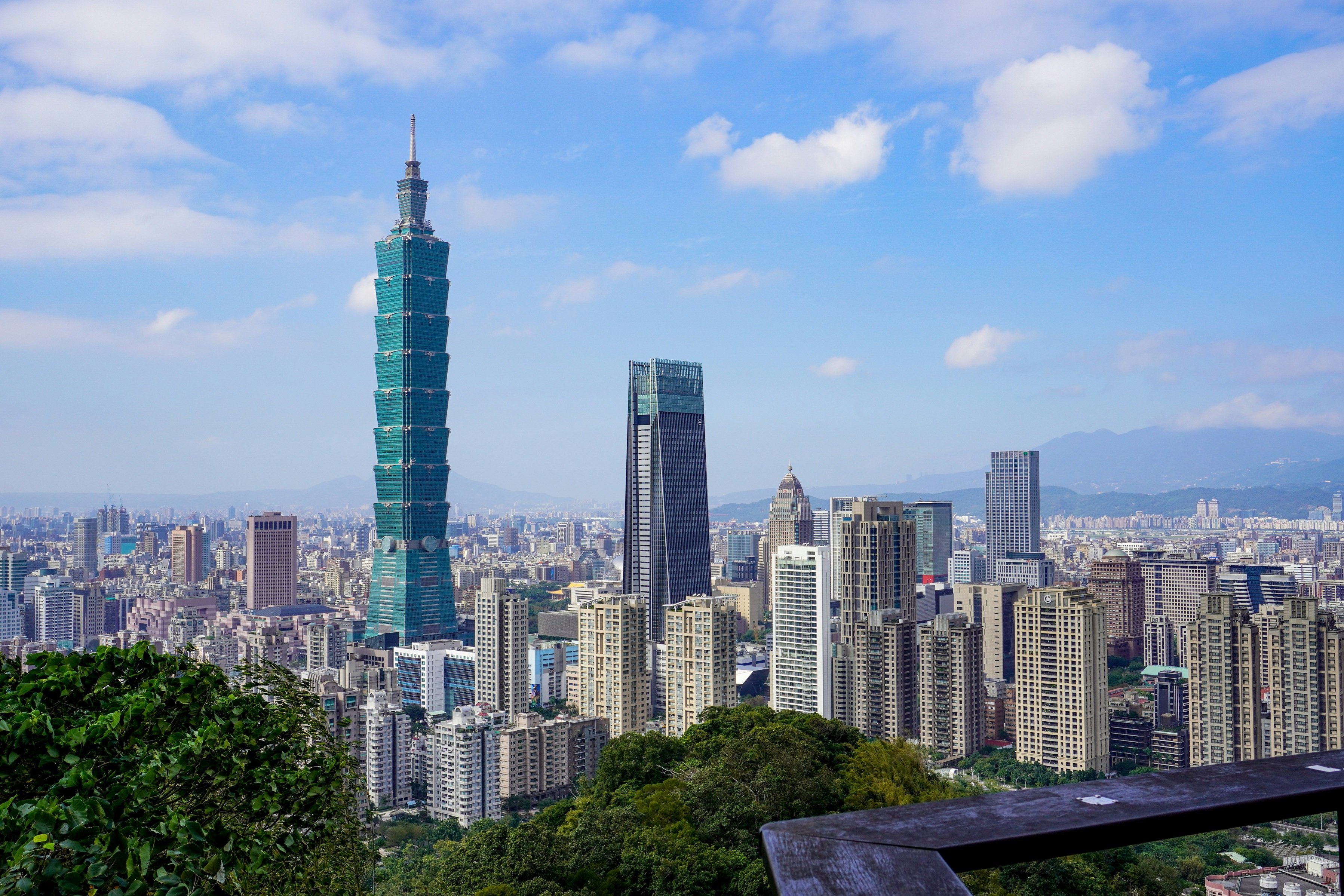
Delegation of Taiwanese universities at the HTWD
08.11.2024In addition to talks with the university management and faculty programme managers, the guests were given a tour of some of the laboratories at HTWD. The exchange aims to intensify cooperation between HTWD and its Taiwanese partners - particularly with regard to student and teacher mobility and the organisation of internships, summer schools and laboratory collaborations. In future, the exchange of students is to be intensified and cooperation in the field of research expanded. ‘With the relocation of the Taiwanese chip manufacturer TSMC, there will be a great need for well-trained and internationally experienced specialists in the semiconductor industry in Dresden. The HTWD is an important partner here. That is why we want to intensify our cooperation with the Taiwanese universities in teaching and research,’ says Rector Prof Katrin Salchert. Funded exchange programme for students There are special scholarship programmes for students from the Free State of Bavaria that promote exchanges with Taiwan. HTW Dresden students already took part in this programme last summer semester. Students from the Faculties of Mechanical Engineering, Electrical Engineering and Informatics/Mathematics will also spend a semester at Taiwanese universities in the coming year. More information about the scholarship programme STIPT: https://www.leo.tu-dresden.de/?page_id=10929&lang=en Cooperation between German HAW and Taiwanese universities Since 2017, the six German universities of applied sciences (HAW) Berlin University of Applied Sciences, Darmstadt University of Applied Sciences, Dresden University of Applied Sciences, Esslingen University of Applied Sciences and Karlsruhe University of Applied Sciences have been cooperating with the six Taiwanese universities National Taiwan University of Science and Technology (Taiwan Tech), National Taipei University of Technology (Taipei Tech), National Chin-Yi University of Technology (NCUT), National Yunlin University of Science and Technology (YunTech), National Formosa University and National Kaohsiung University of Science and Technology (NKUST) in the HAWtech-TAItech alliance.