-
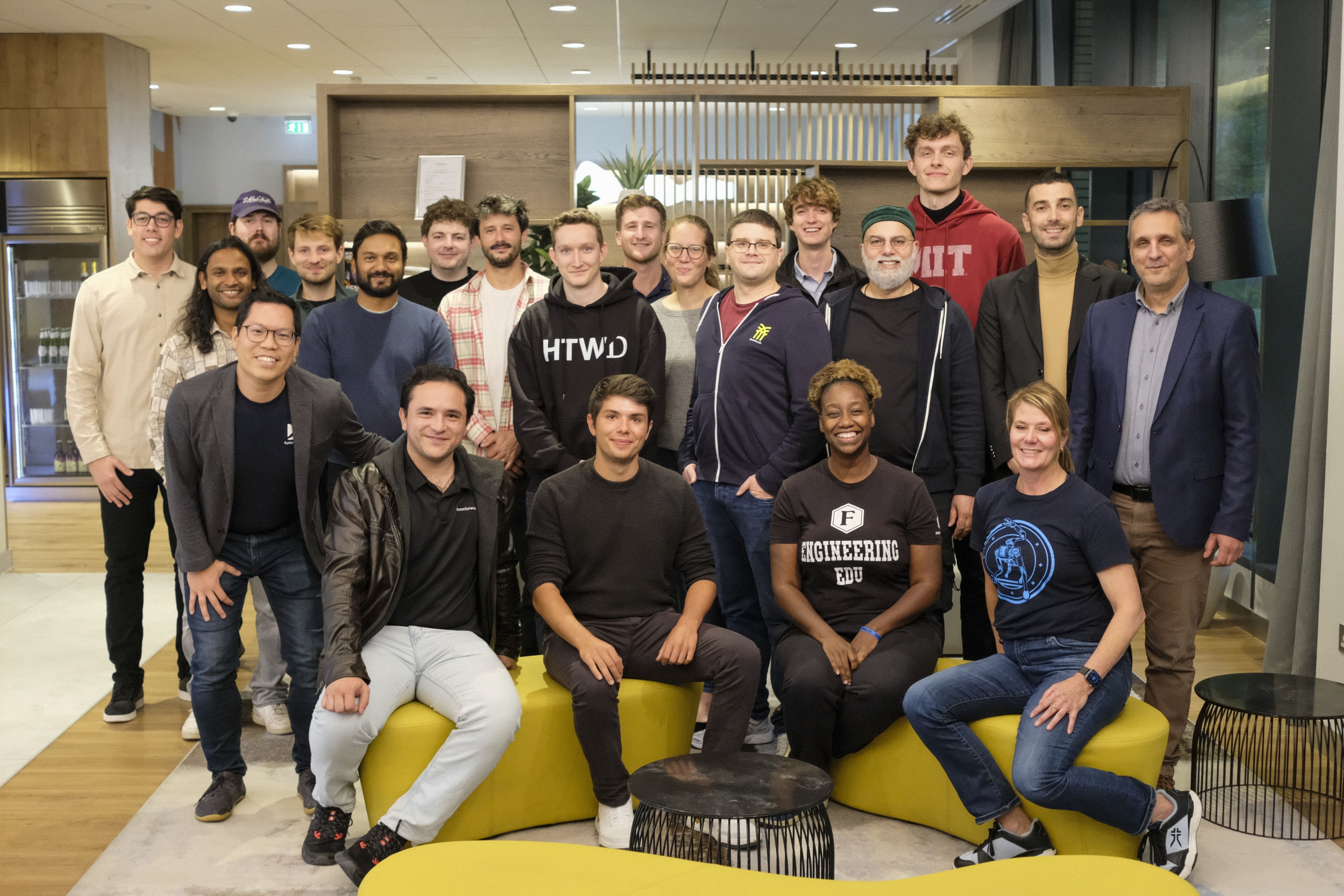
New perspectives for human-robot interaction: Boston Dynamics EDU User Forum 2025
23.10.2025Felix Fritzsche from the Chair of Information Management was on site and gained exciting insights into the latest research approaches and practical applications. A particular highlight was a VR demonstration in which Spot was controlled in a virtual environment while his movements were simultaneously realised on an outdoor test site. This impressive combination of the virtual and real worlds shows how immersive technologies can take intuitive control and interaction with robotic systems to a new level. The forum also provided an excellent platform for exchanging views on current developments and future research perspectives with international colleagues and the Spot development team.
-
HTWD and GMIT extend partnership until 2030
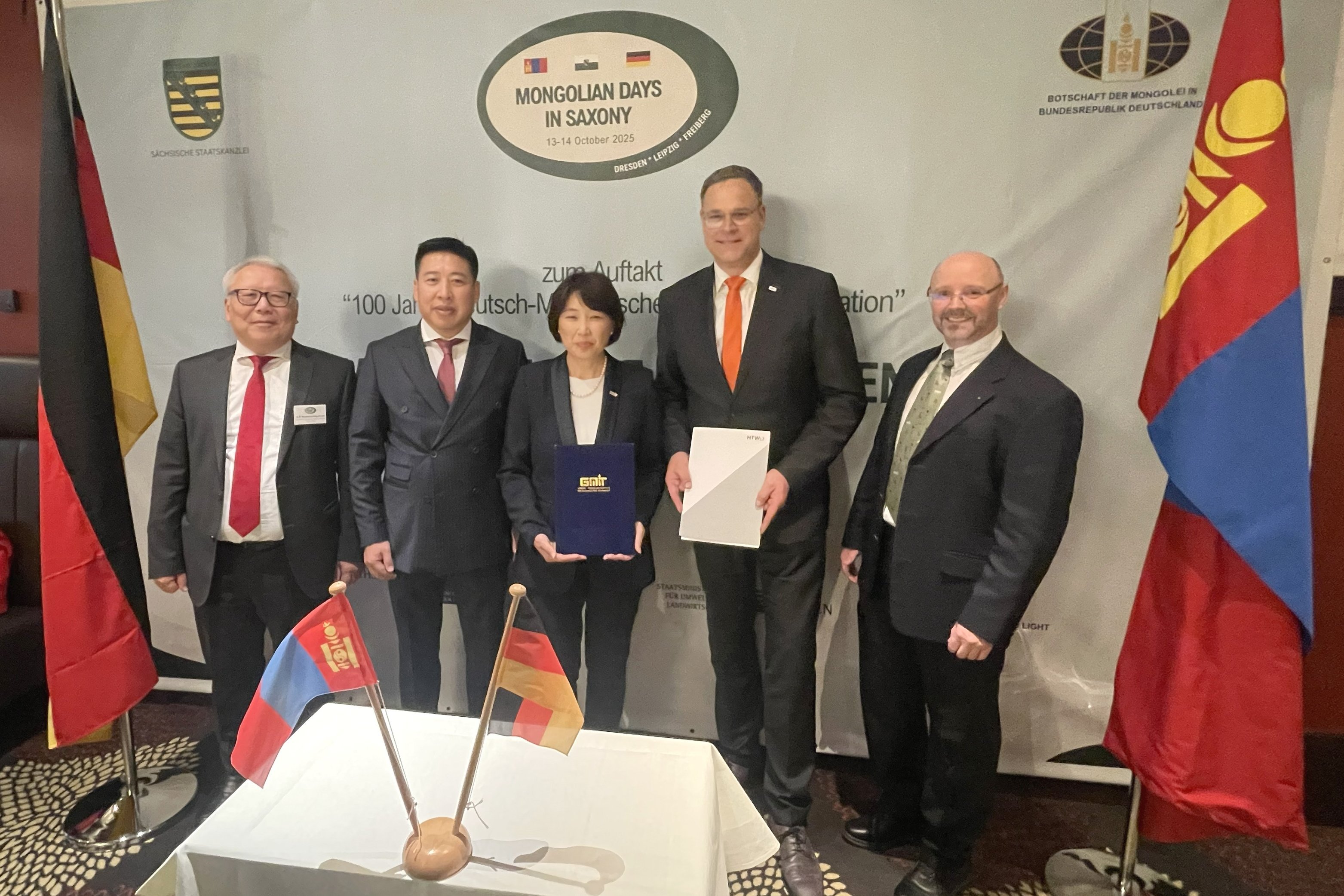
20.10.2025HTW Dresden and the German-Mongolian Institute for Resources and Technology (GMIT) are continuing their close cooperation. As part of the Saxon Mongolia Days 2025, Rector Dr Battsengel Baatar (GMIT) and Rector Prof. Ingo Gestring (HTWD) signed the extension of the existing framework agreement. They thus sealed another five years of joint projects until 2030. The signing ceremony took place in the presence of high-ranking guests, including the Head of the State Chancellery Dr Andreas Handschuh, the State Secretary of the Mongolian Ministry of Education Batjargal Khandjav and His Excellency Mandakhbileg Birvaa, Ambassador of Mongolia to Germany. Focus on exchange, teaching and research The cooperation focuses on the exchange of students and lecturers, joint teaching and study programme developments as well as projects in applied research and technology transfer. Prof Gunther C. Stehr coordinates the cooperation in Mechanical Engineering. Links with Mongolia are also firmly anchored in the Faculty of Informatics/Mathematics. Regular summer schools and excursions promote scientific exchange. The new Master's degree programme "Computer and Geoscience in Archaeology", supervised by Prof. Marco Block-Berlitz and Prof. Martin Oczipka, further deepens this international focus. Relations between Saxony and Mongolia have a long tradition: bilateral educational cooperation has existed for 100 years. This anniversary was celebrated as part of the Saxon Mongolia Days on 13 and 14 October 2025 in Dresden, Leipzig and Freiberg.
-
Research on Europe's last wild river: HTWD summer school on the Vjosa
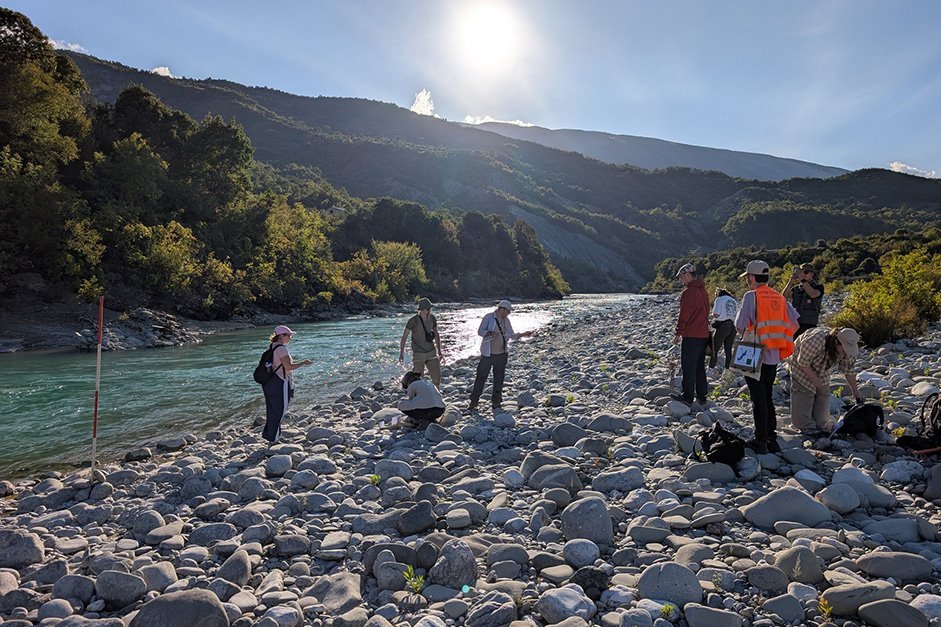
14.10.2025This year's summer school of the Faculty of Agriculture/Environment/Chemistry took an interdisciplinary team led by Professor Kathrin Harre and Professor Arne Cierjacks (HTWD) to the Vjosa together with partners from the University of Tirana led by Professor Sajmir Beqiraj. The aim was to conduct one of the most comprehensive studies to date on the monitoring and protection of this extraordinary river ecosystem. The focus was on questions relating to the connection between biodiversity and plastic pollution. Students, doctoral students and professors from Dresden and Tirana worked together in the field, carried out mapping and collected samples of micro- and macroplastics. A total of 240 kilograms of material was collected, which is now being processed and analysed for its microplastic content. The summer school was supplemented by drone flights and the creation of high-resolution digital terrain models under the direction of Prof Dr Danilo Schneider, Professor of Photogrammetry at the HTWD. International cooperation and global nature conservation The excursion took place at a time of significant global progress: With the publication of DIN EN ISO 24187:2023, a standard for measuring microplastics in drinking water was introduced for the first time - an important step for research and water quality assurance. At the same time, the Vjosa Valley was included in the UNESCO "Man and the Biosphere" programme and is now under international protection. "The Vjosa is not only associated with a unique ecosystem, but also with the major issues of our time: plastic pollution and the impact of microplastics on the environment. We have built up in-depth expertise in this area at the HTWD in recent years. The cooperation with our partners in Albania shows how science takes responsibility across borders," emphasised Prof. Harre, Vice-Rector of the HTWD. "The Vjosa is a textbook example of the dynamics of floodplains. It clearly shows how closely biodiversity, water quality and human intervention are linked. It was impressive for us to see how scientific work and global nature conservation intertwine," added Prof Cierjacks, Dean of the Faculty of Agriculture/Environment/Chemistry. Commitment, curiosity and team spirit The summer school demonstrates how practical teaching, research and international cooperation intertwine. With great curiosity, scientific precision and tangible team spirit, the participating doctoral students made a decisive contribution to data collection and analysis. For many, the excursion was not only a formative professional experience, but also an example of how joint learning across national borders can strengthen the protection of natural habitats. The project was funded by Erasmus+ in cooperation with the Leonardo office.
-
HTWD students successful in the Taiwan Scholarship Programme
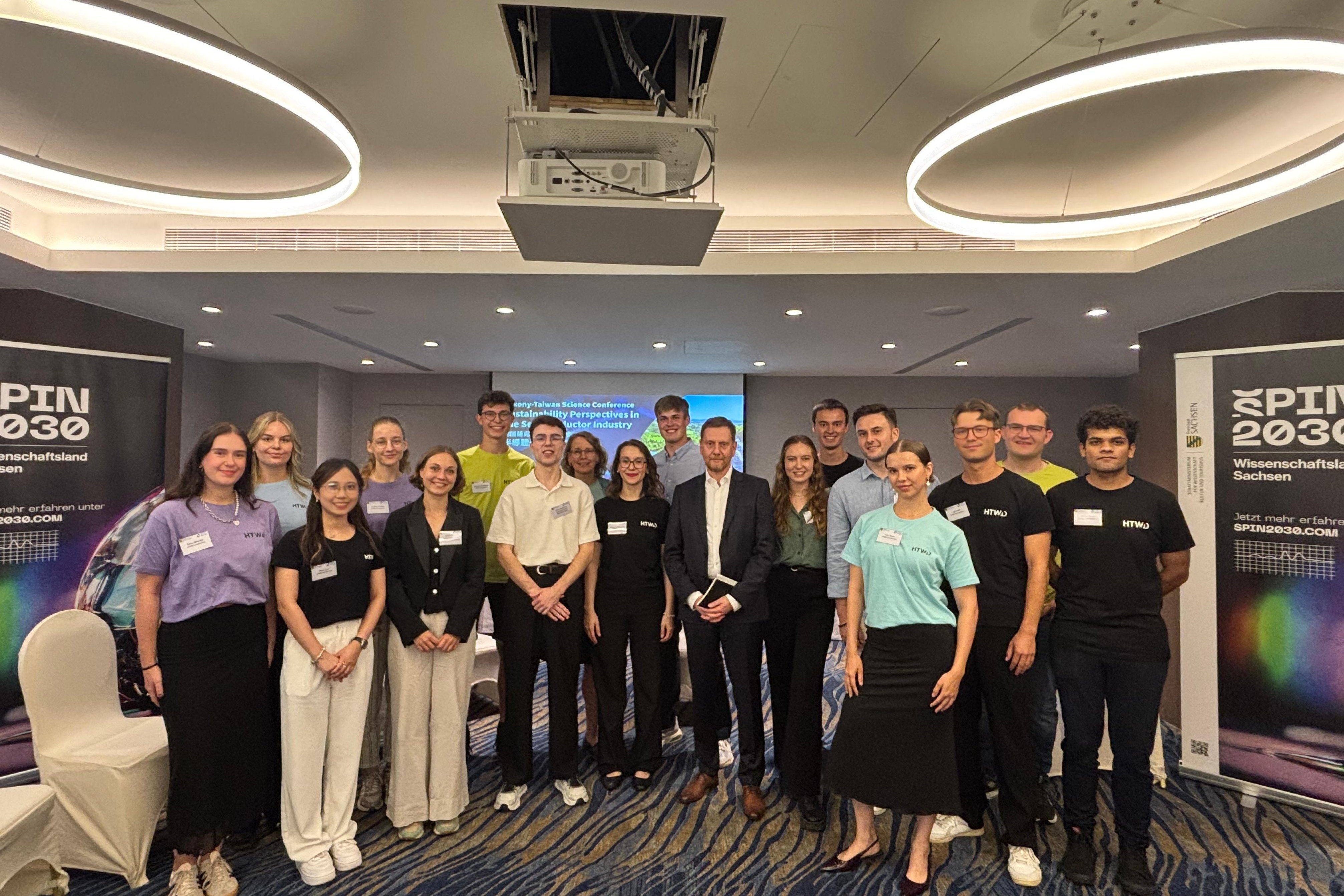
13.10.2025Michael Kretschmer, Prime Minister of Saxony and HTWD alumnus, was quite astonished: "HTW Dresden is well represented here!" he remarked appreciatively during his meeting with Saxon students in Taipei on the sidelines of a conference on Saxon-Taiwanese university cooperation. The HTWD students had received a travel grant from the Free State of Saxony for Taiwan. Two of them are taking part in the Semiconductor Talent Incubation Programme, which lasts several months and consists of a research stay at a Taiwanese university and an industrial internship. A further eleven students from seven Faculties travelled to Taiwan with Professor Anne-Katrin Haubold at the end of September as part of the Saxon Student Mobility Programme. The group attended a five-day introductory course in the Chinese language and culture, visited several partner universities and took part in an exchange with HR managers from the Taiwanese semiconductor manufacturer TSMC. Michael Kretschmer heard nothing but positive feedback from the students about the Saxon scholarship programme for Taiwan. The most important wish: "Please continue to fund the scholarship programme!". By the way: Saxon students can still apply for a travel scholarship to Taiwan for 2026 via the TU Dresden website until 30 October.
-
GSP 2025 - Collaborative exchange with Japan
03.10.2025Entitled "Challenges of World Heritage Sites in Germany and Japan ", the course took place between April and September in the form of several meetings both online and on-site in Chiba. Mixed German and Japanese teams discussed issues relating to UNESCO World Heritage, focussing on the example of the Ore Mountains. This exchange of ideas is part of Chiba University's Global Study Programme (GSP) and aims to encourage participants to "approach a task from different perspectives [through] interdisciplinarity, critical thinking and multicultural understanding". The programme has existed since 2016, with the Chiba and Dresden venues alternating annually. Anyone interested in the GSP 2026, including an organised visit to Chiba, is encouraged and invited to get in touch with the HTWD contacts listed below.

-
DAAD Prize for Thi Thu Ha Le
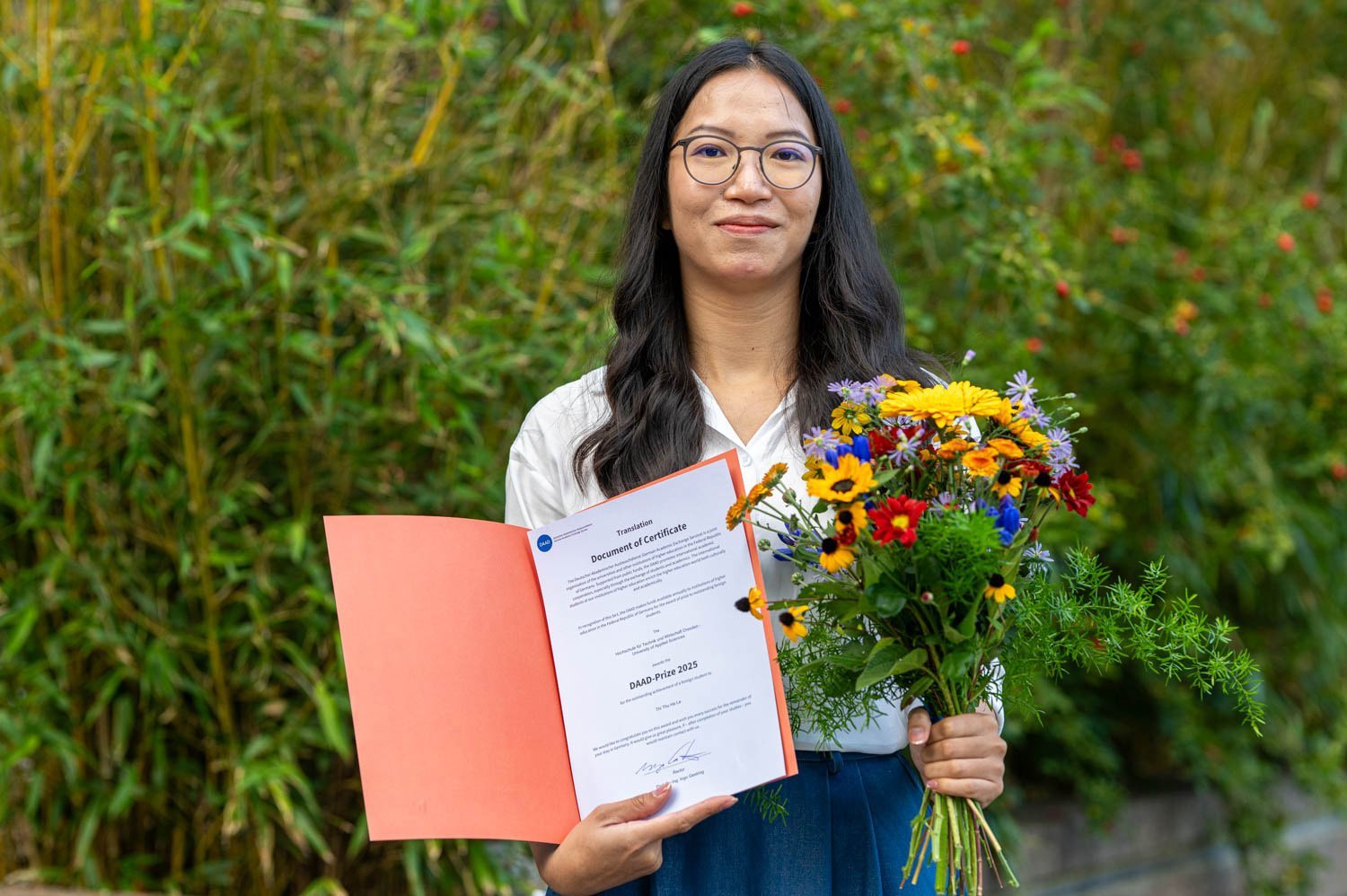
01.10.2025Ms Ha Le has been studying Media Informatics at HTWD since 2022. Even in her first semesters, she stood out for her good preparation, active participation and willingness to help, although her German language skills were still developing at the time. Her top grade (1.0) in Mathematics II is particularly noteworthy. Commitment beyond her studies In addition to her studies, Thi Thu Ha Le is involved in many different ways. She worked as a volunteer at Lebenshilfe Zittau. She was a maths tutor at HTWD and is currently involved in AIESEC, the world's largest student organisation promoting international exchange and intercultural understanding. There she organises information events, designs posters and helps with social projects, most recently with a rubbish collection campaign on the River Elbe. Personal background and motivation When asked why she decided to study at HTW Dresden, Thi Thu Ha Le emphasises the practical relevance and family atmosphere: "I am very grateful that I chose HTW Dresden. I can ask my professors for advice at any time, even after the lectures. The university also offers me many opportunities to develop myself further, for example through my work as a student assistant. Thanks to scholarships abroad, I was able to take part in various excursions. Last year, I was in Taiwan with a study group." What the student particularly appreciates about Dresden is the combination of tradition and modernity, the diverse cultural scene and the proximity to nature. But there are also things she misses. What she misses most in Germany are her family, friends and the fresh Vietnamese cuisine. After completing her Bachelor's degree, Thi Thu Ha Le plans to study for a Master's degree - perhaps at the HTWD.
-
Start of the semester and matriculation ceremony
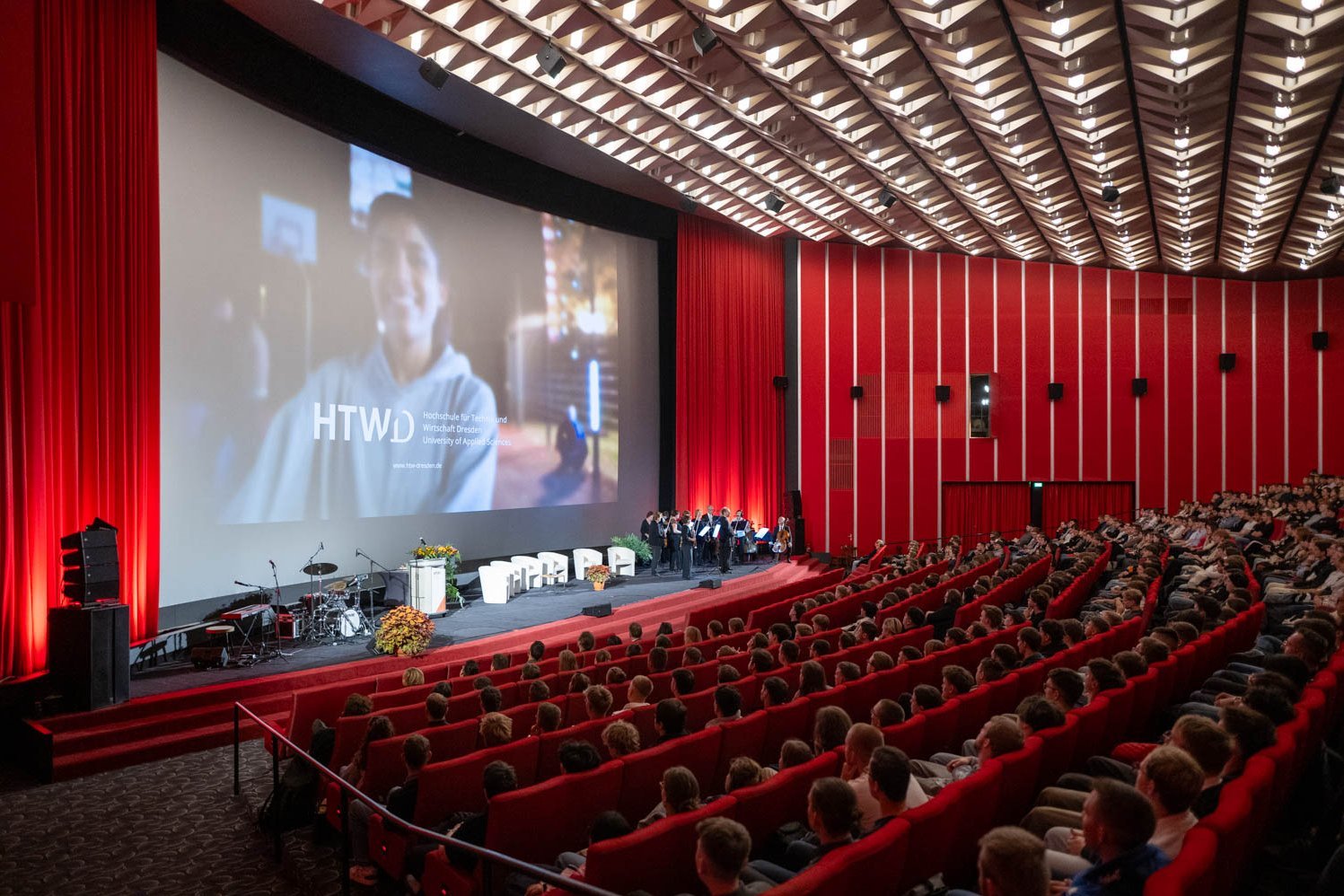
30.09.2025The welcome week for new students at the Dresden University of Applied Sciences (HTWD) began on Monday. More than 1,440 first-year students are starting their studies at HTW Dresden at the beginning of the semester. The first-semester students were welcomed at the beginning of the week in the Rundkino Dresden cinema with the official enrolment ceremony and welcomed into the university's academic community. They were welcomed by the Rector, Professor Ingo Gestring, the Chairman of the HTWD University Council, Dr Hartmut Freitag, and Jan Pratzka, Mayor of Dresden. The Prime Minister of Saxony, Michael Kretschmer, himself a graduate of the HTWD, sent a video message. Studying, a journey "Studying is like travelling. You have already bought your ticket - for a journey that will not only change you professionally, but also personally. On this journey, you will discover new things, make friends, sometimes take detours - and in the end, you will move on with a rucksack full of knowledge, experience and opportunities," said Professor Ingo Gestring in his matriculation speech. Dresden is a good starting point for the journey, said Gestring. On the one hand, there are excellent study conditions here: "Our university is practical, manageable and at the same time excellently networked with business, research and society." Secondly, according to the Happy City Index 2025, Dresden is one of the most liveable cities in the world.
-
Explore the university, get to know the library & get your HTWD hoodie!
29.09.2025The library is part of the HTWD discovery tour. We explain how to get a stamp here!
-
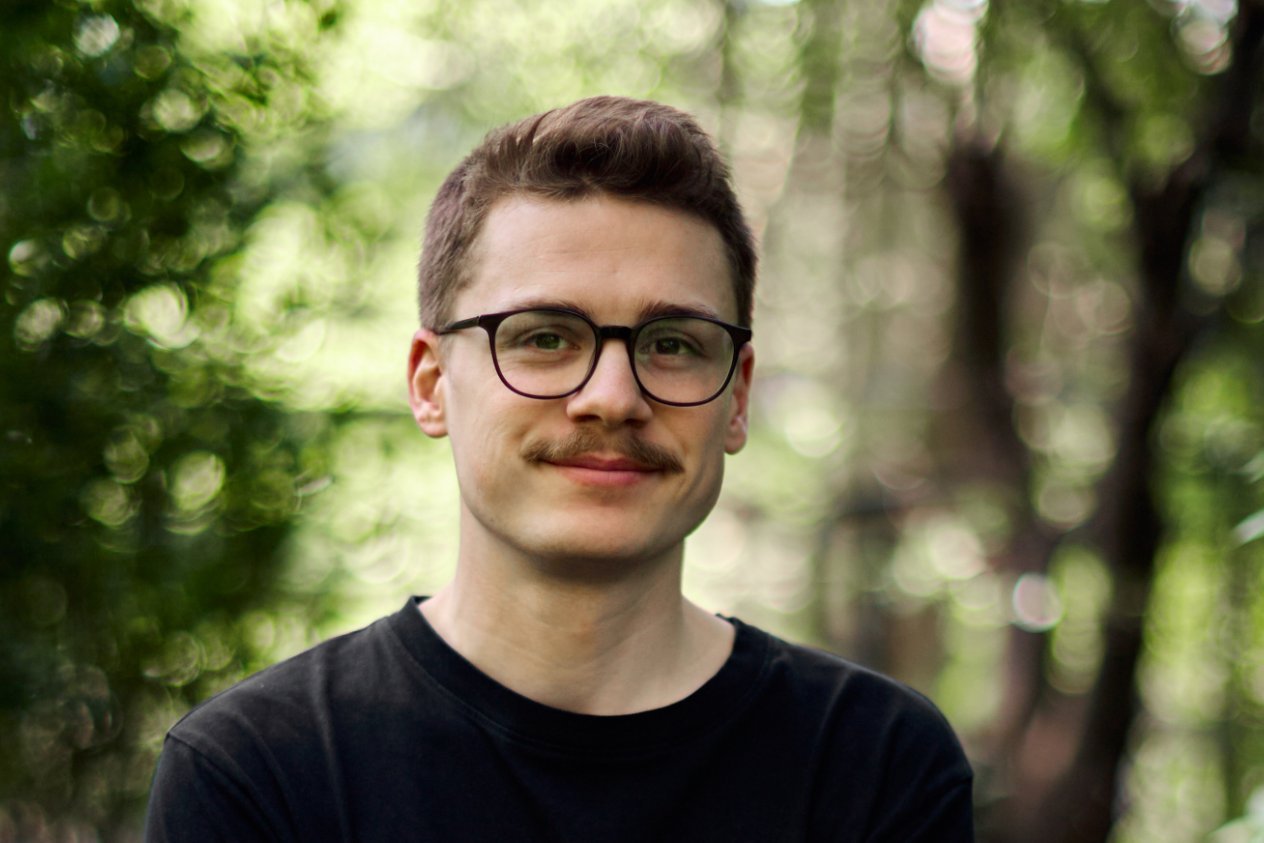
Portrait of doctoral candidates: Felix Hoffmann
22.09.2025In 2025, five young researchers began their doctorates at HTW Dresden with the support of the ESF Plus doctoral scholarship. One of them is Felix Hoffmann, supervised by Prof. Joanna Maria Dauner (Faculty of Design). In this interview, he tells us more about himself and his research. Tell us briefly about your PhD topic. I studied design at the HTW Dresden in the Bachelor's and Master's programmes and have been doing my doctorate since January as part of a cooperative doctoral project at the HTW Dresden and TU Dresden. In my doctorate, I'm researching the topic of ‘Designing innovative concepts for the participatory design of urban water areas and noise protection solutions’. How did you come up with the idea of doing a doctorate and what motivated you to do it? The suggestion to do a doctorate actually came from a teacher at the Faculty of Design at HTW Dresden. They drew my attention to the ESF doctoral scholarship, which specifically supports young researchers in Saxony. Without this impulse, I probably wouldn't have embarked on this path straight away, which is why I am very grateful for this recommendation. As the HTW Dresden itself does not have the right to award doctorates, cooperation with a university institution was necessary. With the Chair of Technical Design at the Faculty of Mechanical Engineering at TU Dresden, I found a very experienced and open research team and thus the perfect co-operative institution. They have a lot of experience with doctorates in various fields of design research. What resources and networks help you the most during your doctoral studies and research? The regular dialogue with my supervisors - both at the HTWD and the TU Dresden - is key for me. The interdisciplinary perspective that results from this provides many exciting impulses. Another great added value is the doctoral round table at the Technical Design department: doctoral students from different phases of their doctorate meet there to give each other feedback, share experiences and reflect on challenges together. This informal exchange at eye level is particularly valuable for me. In addition, the research coordinators at HTWD and TUD offer helpful information, e.g. on funding, qualification programmes or events. What does your typical day look like at the moment? A typical working day for me usually starts at around 8am in the office. In the current phase, I spend a lot of time researching the literature, gathering theoretical foundations and structuring my research design. As I am still relatively new to this, my everyday life is strongly characterised by reflection, conception and planning. As part of a teaching contract at the HTWD, I have also taken on a module this semester in which I introduce students to modelling. I teach practical skills and support the students in implementing their own modelling projects. In addition to pure research work, my funding also includes qualification programmes. This means that I regularly take part in workshops, training courses and events - e.g. on academic writing, gender equality or good teaching. These formats not only expand my knowledge, but also help me to develop as a researcher and teacher. Of course, research is also communication: attending conferences, networking with colleagues and exchanging ideas with practice partners are also part of my everyday life, albeit less frequently. Do you already know what you want to do afterwards? As I'm still at the beginning of my doctorate, it's difficult to formulate a specific career path. However, I would like to use the doctoral period to consciously gain experience in the areas of teaching, research and business. The doctorate offers me the opportunity to specialise in content and expand my network at the same time. In the long term, I can imagine working at the interface between design, society and technology. About the ESF PLUS doctoral programm The EU and the Free State of Saxony use the ESF PlUS programme to fund projects in areas such as doctoral studies. The aim of the ESF doctoral scholarships is to utilise the individual educational potential of academic specialists, especially women, by expanding their skills with regard to a stable, green, sustainable and digital economy in the Free State of Saxony. Eligible projects are state innovation doctorates, industrial doctorates, projects to reconcile family and academic career, combination of industrial doctorates and projects to reconcile family and academic career with a duration of up to four years. A basic scholarship, for example, is funded with 1,700.00 euros.
-
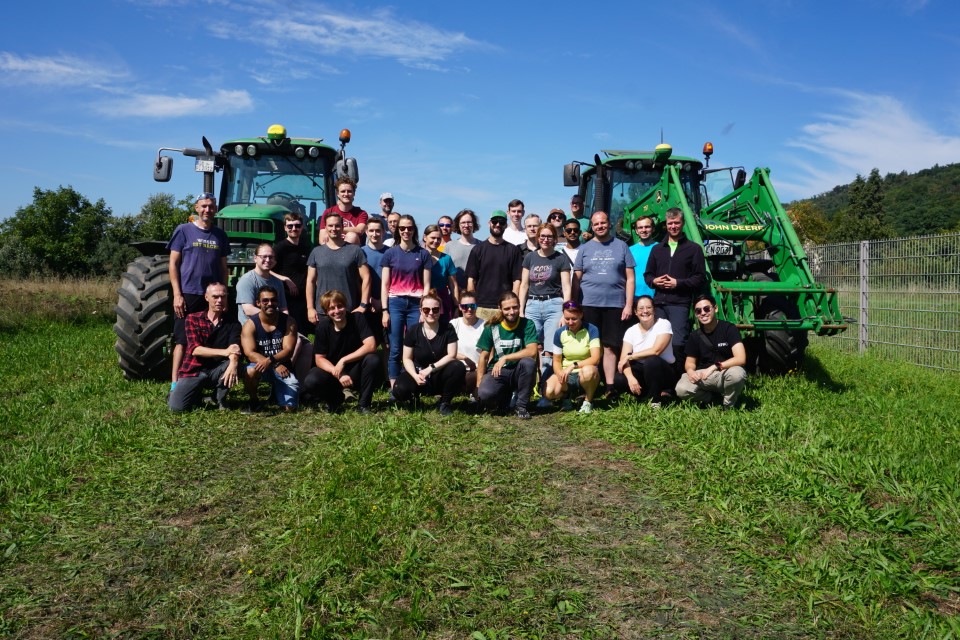
Broadening horizons: A visit to the AEC Faculty in Pillnitz
08.09.2025A particular focus was placed on intelligent and autonomous systems in agriculture , which combine innovative approaches from Informatics, Mechanical Engineering and Agriculture to increase efficiency and precision in land cultivation. It quickly became clear that by combining the various competences of our university, many of the challenges for modern and highly automated agriculture can be solved together. Afterwards, we went out into the field together on our bikes. A special experience awaited us there: anyone who wanted to was allowed to take a ride in a tractor on the paths of the HTWD's test fields and experience agriculture from a completely new perspective, namely from the driver's cab. The final highlight was the guided tour of the HTWD greenhouses. Manuela Haase, head of the greenhouses, explained the management, technical processes and challenges of modern greenhouse cultivation as well as the associated teaching content for students and trainees. A nice side effect: while cycling together as a team, we were able to collect the first kilometres for the HTWD team (PIM) in this year's "City Cycling".