-
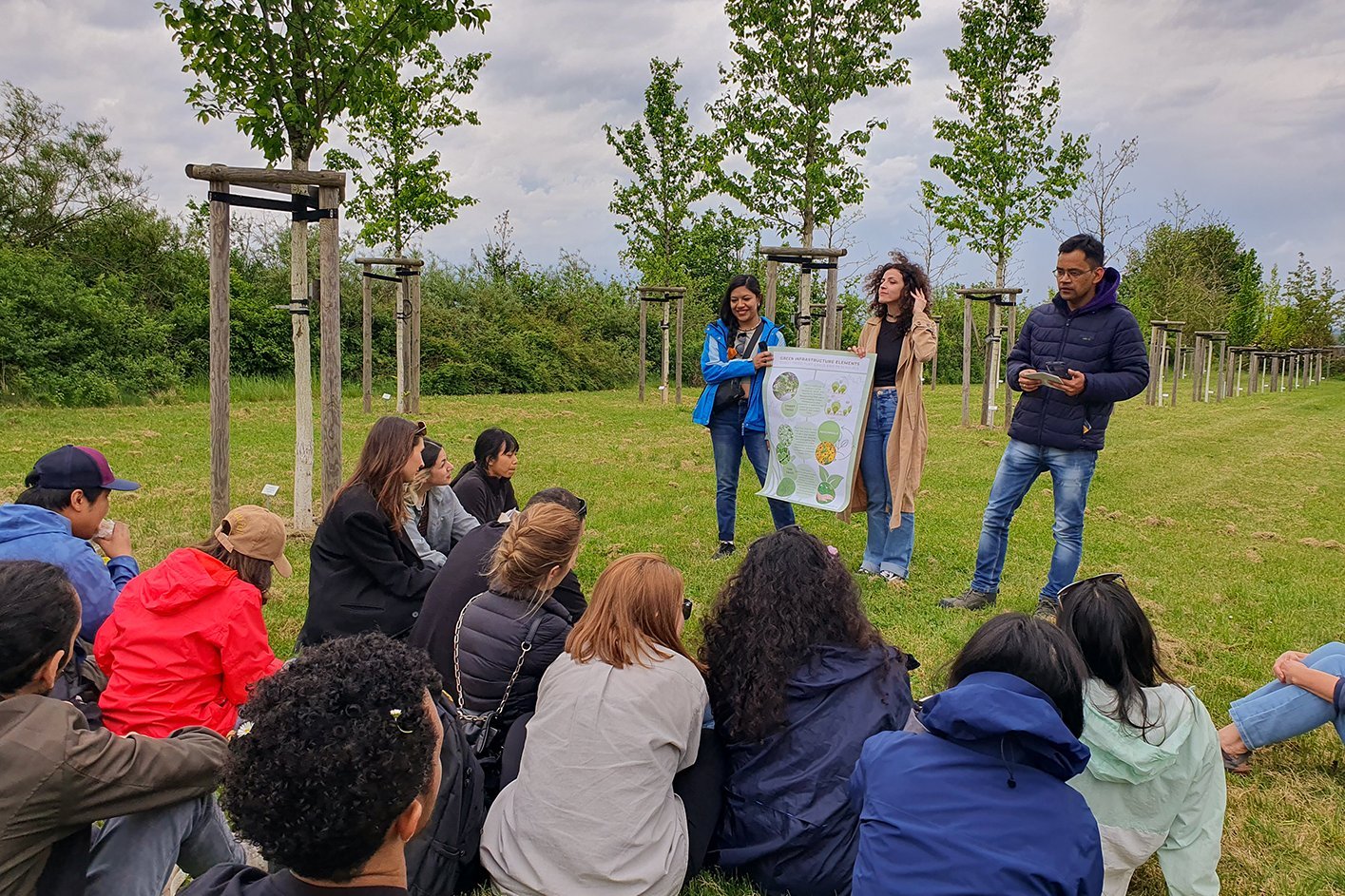
Students from all over the world research the importance of soil, water and vegetation for climate-orientated and sustainable urban developm
31.05.2024The intensive programme is part of the Erasmus Mundus study programme ‘Master of Science in Urban Climate and Sustainability - MUrCS+1.5’, in which the HTWD has been involved since 2020. Urban Ecosystems and Nature-Based Solutions The ‘Urban Ecosystems and Nature-Based Solutions’ module at HTW Dresden ended in mid-May 2024 with the students' final presentation. The module is taught jointly with Laht University of Applied Sciences (Finland), with the first part of the module taking place in Finland and the second as an intensive programme in Dresden. Research, teaching and practice for climate-conscious, sustainable cities The intensive programme with lectures and seminars, practical work in the field and in laboratories of the Faculty of Civil Engineering and the Faculty of Agriculture/Environment/Chemistry was supplemented by excursions and expert discussions with partners from science and practice in Dresden and Leipzig. The Leibniz Institute of Ecological Urban and Regional Development (IÖR), the Saxon State Office for the Environment, Agriculture and Geology (LfULG), the Environmental Research Centre in Leipzig (UFZ), a landfill operator and planning offices provided insights into ongoing research and planning projects. Green-blue infrastructure with ‘nature-based solutions’ For the final presentation, the students demonstrated methods and innovative solutions for sustainable urban development in interdisciplinary working groups. Knowledge of ecological-technical synergies and an understanding of how soil, water and vegetation interact were demonstrated. Nature-based solutions can be used to create urban green-blue infrastructures that take climate change into account, retain rainwater, prevent flooding, promote biodiversity and enable exercise, play and recreation in green spaces. Joint interdisciplinary and internationally orientated teaching and exchange of experience The ‘Research Methods’ module also took place in Dresden: It is taught jointly by colleagues from the MUrCS partner universities in Glasgow (UK), Lahti (Finland) and Huelva (Spain). The basic idea of joint international teaching programmes for a ‘Joint Master’ has thus been successfully implemented. At a meeting with the university management, the international faculty of the four partner universities discussed the possible prospects for further cooperation in the future. The MUrCS Master's in the EU's Erasmus Mundus programme As part of the Erasmus Mundus programme, the EU funds Master's degree programmes for highly qualified students with a double, multiple or joint academic degree. The EU Commission selected 40 projects from 97 applications submitted in 2020. German universities are involved as partners in twelve of the programmes. HTWD is one of three universities of applied sciences in the MUrCS programme. The two-year Master's programme is offered jointly with Glasgow Caledonian University, the LAB University of Applied Sciences in Lahti and the Universidad de Huelva and aims to train future leaders in the field of urban climate and sustainability. The 22 Master's students in 2023/24 bring a wide range of professional backgrounds and several years of professional experience (including in urban and transport planning, environmental sciences, civil engineering, architecture or landscape architecture), which leads to interesting discussions, a well-founded exchange of opinions and innovative proposals for solutions. More information: www.murcs.eu
-
For a respectful society
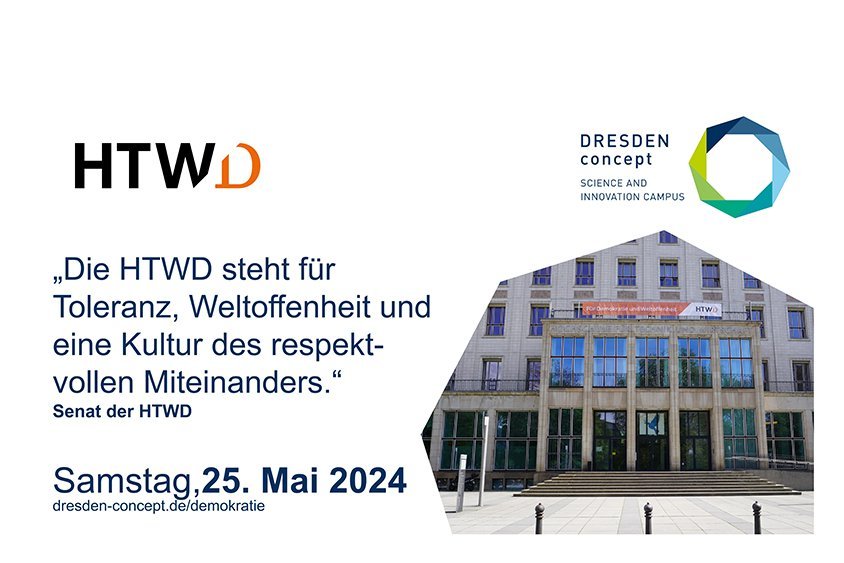
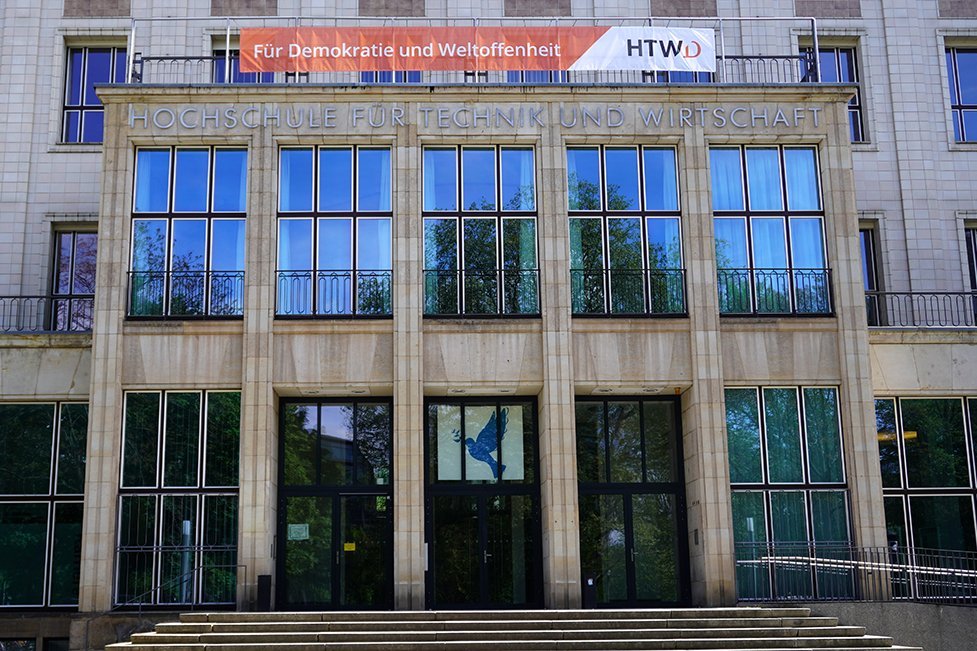
15.05.2024At its meeting yesterday, the Senate agreed on the following statement: ‘The Senate emphasises that the HTWD stands for tolerance, open-mindedness and a culture of respectful coexistence. Therefore we call on the university community to send a clear signal in favour of democracy and for democracy and our fundamental rights. On 25 May, the Dresden scientific and cultural institutions of DRESDEN-concept and the alliance Weltoffenes Dresden invite you to a festival of democracy. The HTWD supports this initiative and is part of one of the four star marches to the Altmarkt, where a stage programme will take place. We will meet at 1.30 pm at Fritz-Förster-Platz and then walk together to the Altmarkt. Please come and feel free to bring friends and relatives with you. We want to show that there are many people who are in favour of a constructive political discourse.’ More Information: https://dresden-concept.de/demokratie/?lang=en
-
Opening of HTWD's new teaching and laboratory building
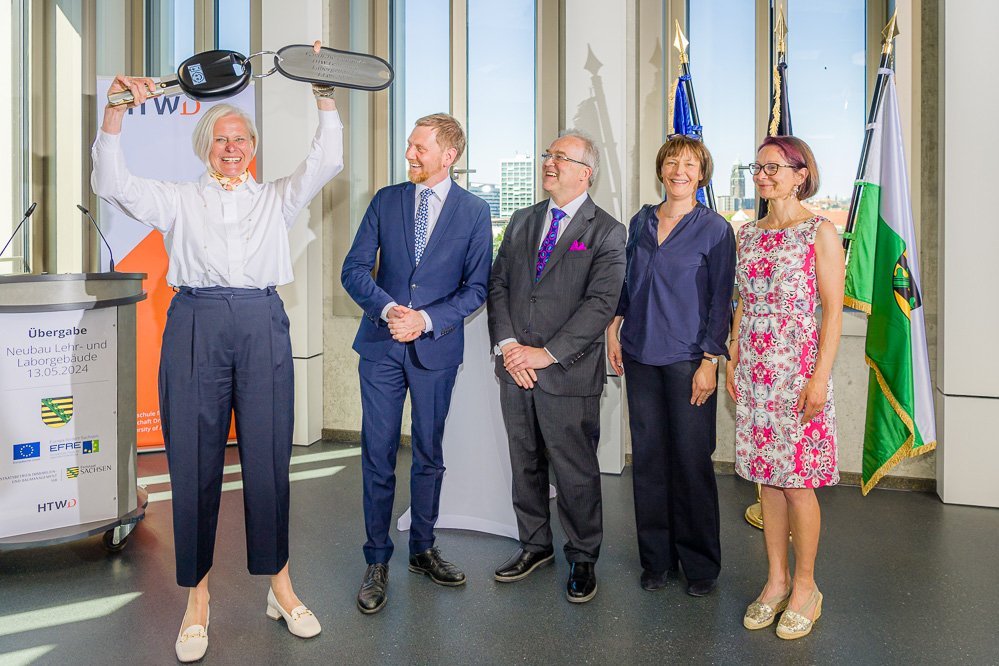
14.05.2024Yesterday, the new teaching and laboratory building at HTWD was inaugurated in the presence of numerous guests from politics, science and the university community. With the symbolic handover of the key by Saxony's Minister President Michael Kretschmer to Rector Professor Katrin Salchert, the university is now officially moving into its new home. Covering an area of more than 8,000 square metres, the new facilities include a building materials technology centre with state-of-the-art laboratories for concrete technology, geotechnics, traffic engineering and hydraulic engineering as well as teaching cabinets and PC pools for computer science and mathematics. The building also houses offices, teaching and workshop areas for the Faculty of Design and a creative centre. The relocation work is currently underway. The building will be available for teaching and research from the 2024/2025 winter semester. Minister President Michael Kretschmer congratulated the university on its new building. ‘The HTWD is a role model for sustainable building in Saxon university construction. The new teaching and laboratory building improves the conditions for study and research at the university. Qualified civil engineers are more important than ever: more serial and modular construction and more digitalisation are needed to reduce the housing shortage and cut costs. Thanks to the practice-orientated, interdisciplinary approach, HTWD students are ideally trained to shape the future of Saxony as a business location.’ Professor Katrin Salchert: ‘This beautiful and functional building completes our city centre campus. The spatial expansion and the installation of modern laboratories not only improves the teaching, learning and working conditions; the spatial concentration of practice-orientated teaching and applied research in one central location will also promote interdisciplinary work. I am convinced that the new building will give our university another good basis in the competition for the best minds.’ Practicals can now be carried out even more extensively and clearly in the new laboratories. One special feature, for example, is the well in the laboratory for hydraulic engineering, where students can practise installing a submersible motor pump with a crane and inspecting wells with a well camera. On the roof, for example, there are test areas for trialling technologies and measures to design the built and natural environment in cities in such a way that it is prepared for the extreme weather conditions caused by climate change. Focusing transfer Many employees from research and externally funded projects will also use the new premises. The four current interdisciplinary ESF junior research groups with a total of 23 researchers will work in the U-building and use the laboratories. The Rector sees many opportunities for the university and Dresden as a centre for science and business thanks to the close connection between active research and transfer activities: ‘Bringing the teams from the start-up incubator and the Saxony5 research network closer together will enable transfer topics to be bundled even better and will result in synergy effects.’ In the planned creative centre, students, teachers and researchers from all disciplines will have the opportunity to develop and implement ideas together. It will also be a place where the university can network with the regional economy, other scientific institutions and Dresden's creative and start-up scene. The start-up incubator teams can work on their projects in two large co-working spaces. Pilot project for sustainable construction The ‘BNB Gold Standard’ certification is the highest standard in the federal government's sustainable building assessment system. BNB-certified buildings must, among many other factors, have a high energy standard and cover a large proportion of their energy supply with renewable energies. Among other things, the new HTWD building has a high-quality thermal building envelope and a photovoltaic system on the roof (whose electricity is consumed by the HTWD itself). Drinking water is saved by collecting rainwater via the flat roofs in a cistern located in the building (capacity approx. 60,000 litres). This is used, among other things, for the toilet facilities and for watering the outdoor areas. Low-emission and less energy-intensive building materials were used during construction. Every product used was tested by a pollutant expert. In addition, 300 new bicycle parking spaces were created on the building as part of the BNB certification, which should help to increase the use of bicycles. ‘We are delighted that the building project has been awarded Gold Standard certification for sustainable construction. We at HTWD have set ourselves the goal of becoming a ‘sustainable campus’ by 2030 and operating in a largely climate-neutral manner. The new building sets standards for this and is an important building block on the way there,’ says Professor Katrin Salchert. Art on the building ‘work in progress’ A wall relief entitled ‘work in progress’ by Dresden artist Roland Fuhrmann has been installed at the main entrance to the new building. It shows a wall-filling motif, designed on the basis of a photograph, which depicts the scaffolding of the ceiling formwork during the construction phase at exactly this point. Funding from the EU The construction costs for the new teaching and laboratory building amount to around 69 million euros. The construction project is being co-financed by tax revenue on the basis of the budget approved by the Saxon state parliament. 18.4 million euros come from the European Regional Development Fund (ERD)
-
-
Development of an international Master's degree programme
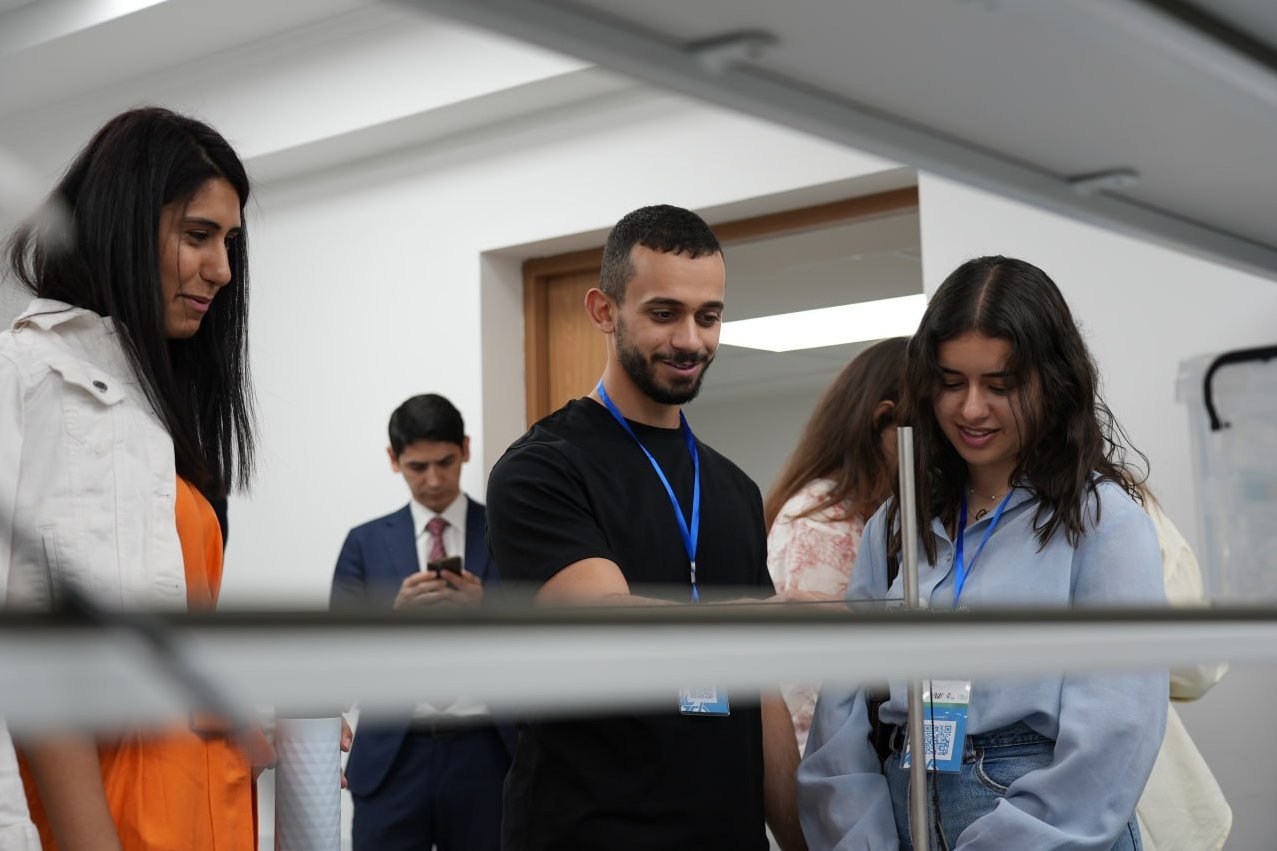
06.05.2024The series of workshops on the international Master's degree programme in Entrepreneurship at the partner university New Uzbekistan University (NUU) in Tashkent, Uzbekistan, was successfully completed on 30 April 2024. The participants from HTWD, the German-Jordanian University and NUU used the week to work together on the further development of the programme and gain valuable insights into local entrepreneurship. The content of the module handbook was jointly developed and clear learning outcomes and appealing teaching formats were defined for each module. Networking with local entrepreneurship in Uzbekistan was also an important part of the workshop series. Participants took part in discussions with local start-ups and entrepreneurs. In this way, they gained valuable insights into the challenges and opportunities of entrepreneurship in Uzbekistan and were able to incorporate these findings into the further development of the Master's programme. In addition to academic work, the programme also included intercultural exchange. The participants explored Uzbekistan's diverse history and culture and deepened their connections with each other. The intercultural dialogue not only promoted understanding and awareness, but also enriched the entire co-creation process for the further development of the Master's programme. About the research project The project is funded by the DAAD with funds from the Federal Foreign Office as part of the "Higher Education Dialogue with the Islamic World 2023 - 2024" programme. HTW Dresden is cooperating with the German-Jordanian University in Amman (Jordan) and the New Uzbekistan University in Tashkent (Uzbekistan) under the project management of Professors Baierl and Thamm and is supported by TUM International GmbH. More information about the project can be found at https://ogy.de/iCCiEE
-
Science needs democracy and cosmopolitanism
18.04.2024These values are set out in our mission statement and - like the freedom of teaching and research - are sacrosanct for us. Education, science and research require openness and diversity. New scientific findings and innovations can only emerge in a liberal and pluralistic society in which there is room for discourse and other ways of life and opinions are not only accepted and tolerated, but also viewed and included as beneficial factors. A culture of co-operation and exchange has always been a matter of course at our university. People from many different countries study, teach and research at HTWD. They are all part of the university community. At the same time, many of our students and academics are welcomed in other countries. This exchange constantly provides new impetus and enriches our work. Xenophobia, violence and right-wing extremism must have no place in our minds or in our actions. This is what we stand for as a university. As a university, we educate the next generation of academics in our society. As such, we also have the responsibility and the legal mandate to enable responsible behaviour in a liberal, democratic and social constitutional state through teaching and studying. After all, democracy can only succeed if people play an active and broad-based role in shaping it. The HTWD thus expressly endorses the statement of the German Rectors' Conference "Science needs liberal democracy and the rule of law". Together with 350 other academic institutions, the HTWD has also taken part in the nationwide media campaign "#Zusammenland - Vielfalt macht uns stark" (#Together - Diversity makes us strong) to send a signal in favour of freedom, diversity and a welcoming culture. On 25 May 2024, a joint event of art and science institutions will take place in Dresden under the motto "Together for democracy - Dresden's science and culture invites you". The HTWD will also be taking part. Further information: https://dresden-concept.de/demokratie/
-
Bioluminescence - the natural glow
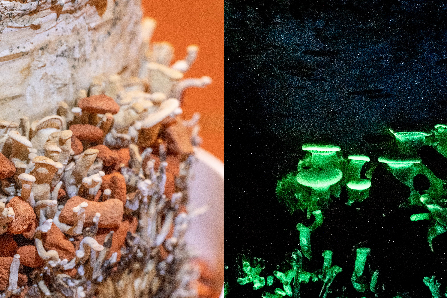
18.04.2024Dresden, 17.04.2024 - Bioluminescence is the emission of light as a result of chemical reactions in living organisms. The phenomenon exists in over 3500 different species worldwide - whether fireflies in native meadows, bioluminescent fungi in the Brazilian rainforest or glowing squid, sharks and bacteria in the deep sea. Bioluminescence has developed independently more than 50 times in evolution and fulfills a variety of different functions, for example it is used for communication, foraging and defense against enemies.However, the underlying chemistry in many different bioluminescent organisms is based on only a small number of chemical molecules. This is a remarkable example of convergent evolution, meaning that the organisms are not related to each other but use similar chemical reactions and molecules to produce light. The molecules are extremely efficient and help organisms to successfully survive and reproduce within evolution. Researchers are already using this property in medicine - particularly in the bioanalytical and biomedical sector. As the light is generated within a chemical reaction, the method does not require any excitation light compared to similar technologies such as fluorescence. In combination with modern detectors, analytical detection limits in the single molecule range can be achieved. Such sensitivity is not possible with any other technique. Various research groups have therefore developed highly sensitive assays on this basis that enable the early diagnosis of diseases such as HIV, cancer and coronavirus. In his article "Bioluminescence - The Vibrant Glow of Nature and its Chemical Mechanisms", recently published in the journal "ChemBioChem", Prof. Dr. Stefan Schramm, Professor of Applied Organic Chemistry at the Dresden University of Applied Sciences (HTWD), summarizes the current state of research. The aim of the review article is to provide researchers and students with an easy-to-understand introduction to the topic. It is based on two articles that appeared in German in "Chemie in unserer Zeit" in 2022 and 2023. Inspired by nature for industrial application In the future, Professor Schramm's team will investigate how natural molecules that have developed and optimized over more than 120 million years of evolution can be improved for use in organic electronics and photocatalysis. The idea is to develop so-called BiOLEMs (Biologically Inspired Organic Light Emitting Molecules). With their application, OLEDs (organic light-emitting diodes), for example, which are currently installed in billions of smartphones and contain toxic and very environmentally harmful heavy metal complexes, can be replaced by biological molecules that are purely organic and ideally also completely biodegradable in the environment. The second field of application concerns photocatalysis, a key technology for promoting sustainability in the chemical industry. High-quality photocatalysts are required for efficient photocatalysis. Biologically inspired Organic Light Emitting Molecules (BiOLEMs) can also be used for this purpose. Future of Teaching: the practice and theory of chemistry Dr. Stefan Schramm has been teaching at the Faculty of Agriculture/Environment/Chemistry (LUC) at HTWD since March 2024. In his view, organic chemistry in particular offers students a fascinating and practical perspective. In the lecture "Organic chemistry based on renewable raw materials", for example, he discusses natural substances and their industrial use. Particular attention is paid to bioluminescence, chemiluminescence and organic light-emitting diodes, which inspire students with their impressive light phenomena and have a wide range of applications in the chemical industry. "These topics are not only instructive, but also open doors for students to companies in the bioanalytical field and to research institutions in Dresden and the surrounding area that deal with organic electronics," says Schramm.
-
HTWD and New Uzbekistan University seal partnership
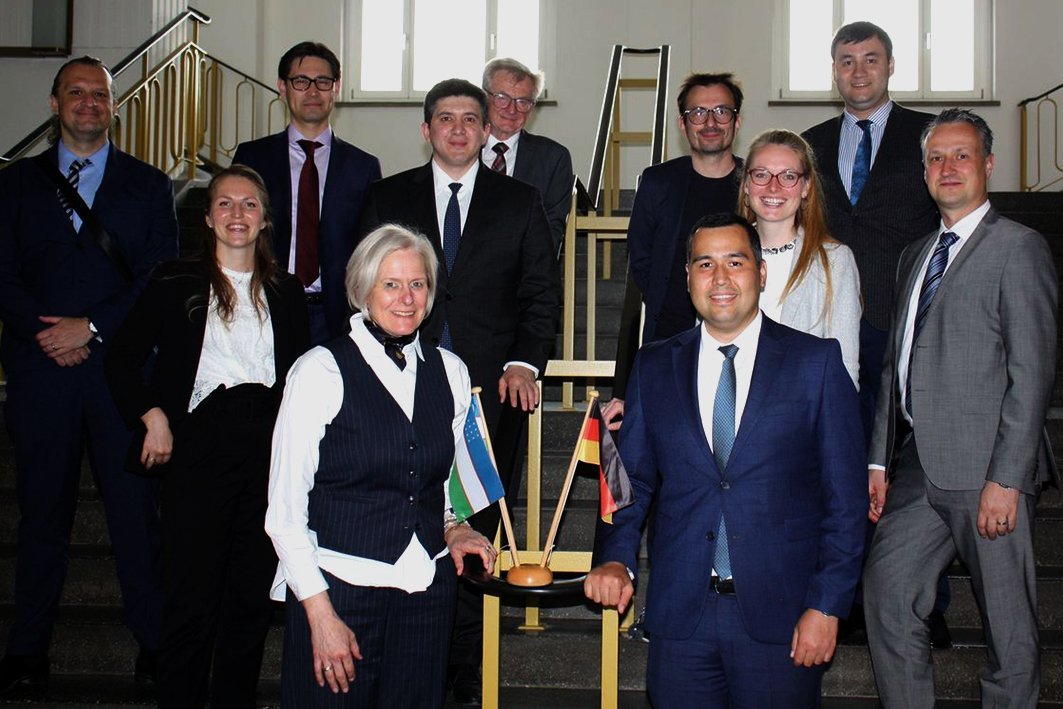
10.04.2024HTWD and New Uzbekistan University seal partnershipA delegation from New Uzbekistan University (NewUU), led by Vice-Rector Bakhtiyor Yuldashev Gayradjonovich, visited HTWD at the beginning of the week. During the visit, a Memorandum of Understanding (MoU) was signed, marking the beginning of an official partnership between the two universities. The MoU was signed by the Rector of HTWD, Professor Kathrin Salchert (HTWD), and the Rector of NewUU, Bakhtiyor Yuldashev Gayradjonovich. The MoU outlines the cornerstones of the future collaboration, which includes joint research projects, the exchange of students and lecturers and the development of innovative teaching and learning formats. HTWD and NewUU are already linked by a joint project. Since the beginning of 2023, the two universities have been working together as part of a project funded by the German Academic Exchange Service (DAAD). The signing of the MoU underlines the desire of both universities to intensify their collaboration and put it on a broader footing. Prof Kathrin Salchert: "We are delighted to have such a promising partner at our side in New Uzbekistan University. The signing of the MoU is an important milestone in the development of our relationship and I am convinced that the cooperation will be of great benefit to both sides." Bakhtiyor Yuldashev Gayradjonovich, Vice-Rector Innovation and Research at NewUU: "HTWD is a renowned university and we are proud to partner with them. The cooperation with HTWD will help us to further develop our academic excellence and provide our students with the best possible education." About the New Uzbekistan University New Uzbekistan University (NewUU) was founded in 2020 and is one of the leading universities in Uzbekistan. The university offers a wide range of study programmes in the fields of engineering, natural sciences, humanities and social sciences. NewUU has set itself the goal of becoming an internationally recognised research university that contributes to the development of Uzbekistan.
-
-
New international degree programme "Computer and Geoscience in Archaeology"
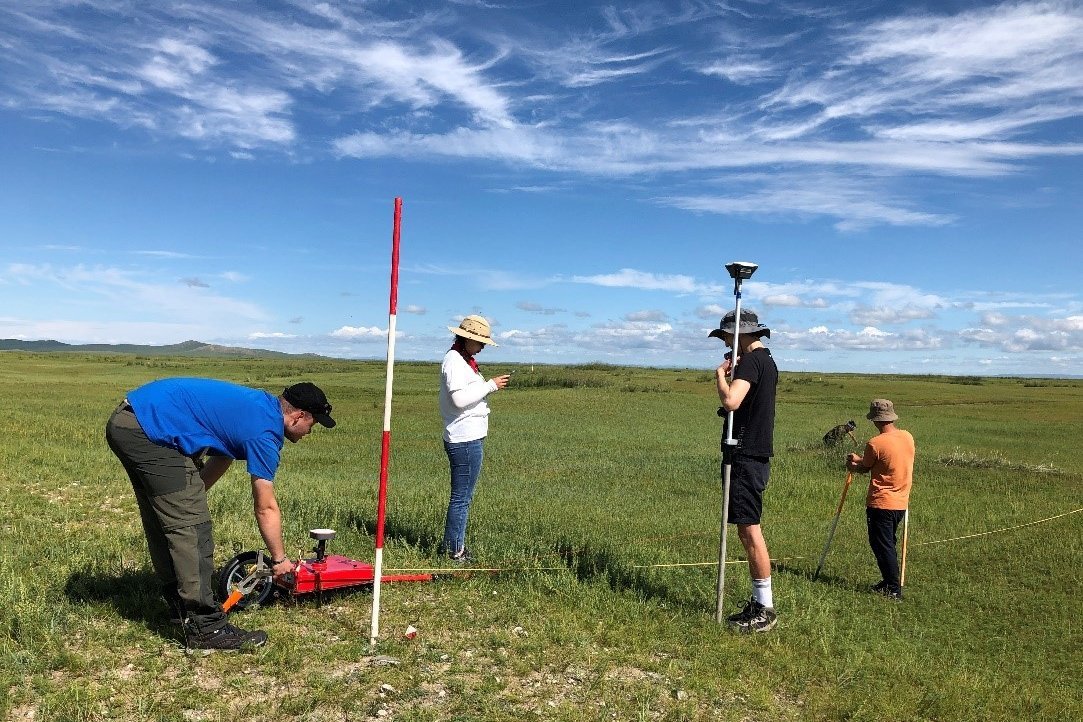
25.03.2024Interdisciplinary training for the use of modern technologies in archaeology The programme is aimed at graduates of a Bachelor's degree in Archaeology who wish to acquire technological and engineering knowledge and skills. This should enable them to use state-of-the-art technologies for the research and protection of archaeological cultural heritage. "The programme is based on three pillars," explains Dr Marco Block-Berlitz, Professor of Computer Graphics and Dean of Studies for the new programme. The students gain an insight into important fundamentals of computer science and geoinformation, such as mathematics, programming, surveying and remote sensing. The third pillar of the programme is archaeology, in which the skills acquired will be applied. Dr Hendrik Rohland, Visiting Professor of Archaeoinformatics at the HTWD, notes that the digital transformation is opening up previously unimaginable possibilities for archaeology. Thanks to developments in computer technology, sensor technology and robotics, precise data can now be recorded and analysed to gain insights into the history of mankind. However, it is essential to have specialised knowledge of the history and material remains of a region or epoch. In archaeology, broad methodological expertise is required in order to utilise all the possibilities available to us today in collaboration with other scientific disciplines. Tim Karberg, also a visiting professor of archaeoinformatics at the HTWD, emphasises: Especially in today's turbulent times, the archaeological heritage in many countries is threatened by civil wars and other conflicts. At the same time, this severely restricts the possibilities for working on site. Many digital methods, especially in the field of remote sensing, offer alternatives - not only for scientific research, but also for the monitoring of acutely threatened cultural heritage. English-language degree programme opens up international perspectives The programme is aimed at German and foreign students and is therefore offered entirely in English. Compared to other disciplines, archaeology is a small subject in terms of numbers. However, we are one of the few to offer such a programme. With the English-language degree programme, we would like to make an offer to students from all over Europe and beyond. In recent years and decades, numerous projects on archaeological cultural heritage have been carried out at the university, including the Faculty of Geoinformation, which is also involved in the programme. Dr Martin Oczipka, Professor of Remote Sensing and Digital Image Processing, has gained extensive experience in this field. In archaeology, two questions often take centre stage: when and where? The 'where' in particular is the domain of geoinformation. There is a long tradition of cooperation with archaeological institutions such as the State Office for Archaeology and the German Archaeological Institute. In future, these co-operations are to be further expanded to train the next generation of archaeologists. Summer academies, excursions and exchange programmes offer further opportunities to promote training.