-
Interim Library closed: We are here to help via email and telephone until we reopen!
27.08.2026From 31 August, the service desk in the Z Building will be closed whilst preparations are made for the library’s reopening.

-
Changed opening hours during the semester break
20.07.2026Please note our revised opening hours between 27 July and 25 September.

-
New book return box now available in Pillnitz
20.07.2026You can now return items to our branch library at any time, even outside opening hours!

-
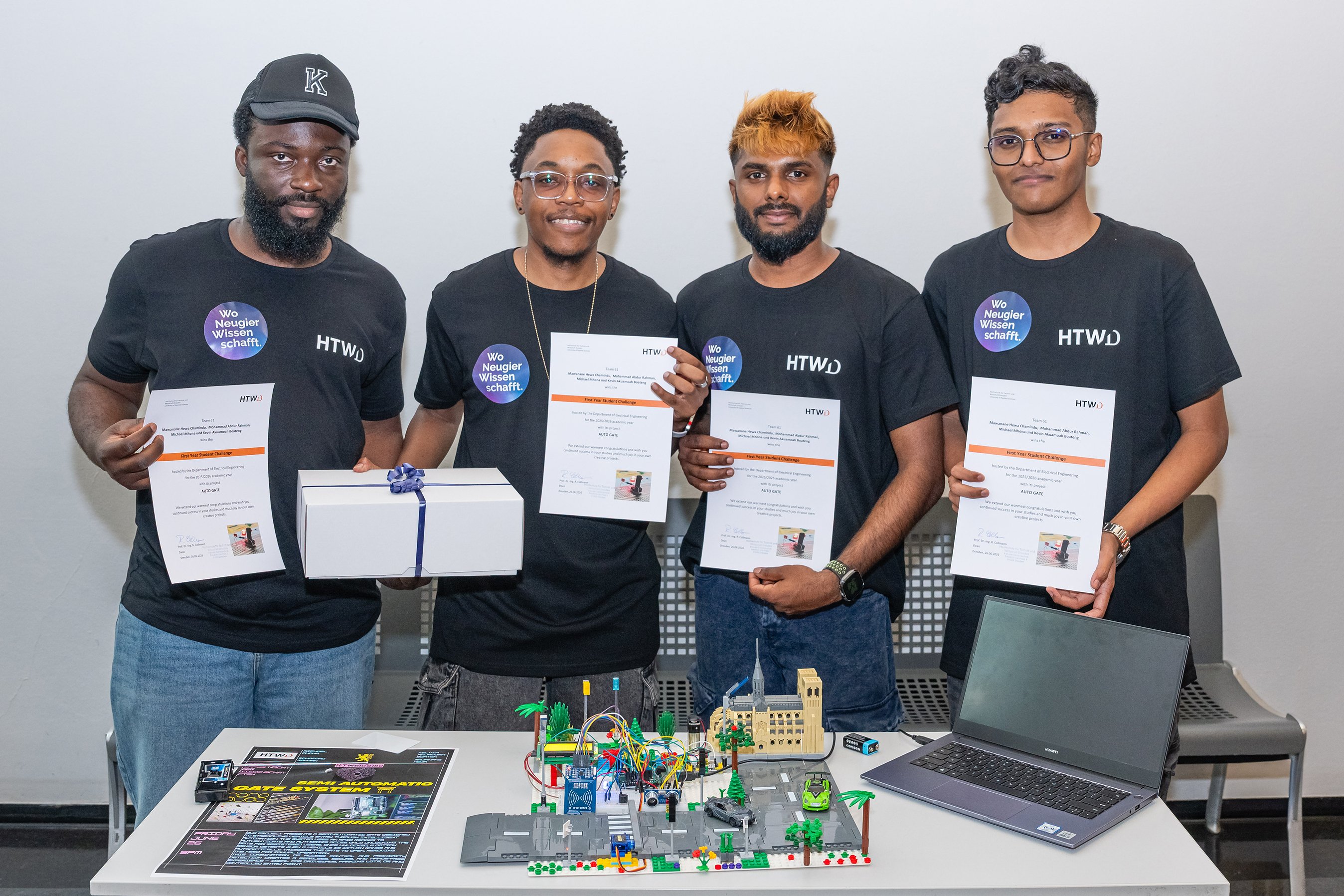
Students win the First Year Student Challenge with their ‘Semi-Automatic Gate System’
15.07.2026The parking barrier developed can be opened for parking using registered NFC tokens. When the vehicle leaves the space, an ultrasonic sensor detects it and opens the barrier automatically. In addition, the ‘barrier open’ and ‘barrier closed’ operating modes can be set manually. For the presentation, the team integrated their project into a richly detailed LEGO landscape, which attracted numerous visitors. “I was impressed by the dedication with which the students Mawanane Hewa Chamindu, Mohammad Abdur Rahman, Michael Mhona and Kevin Akuamoah Boateng presented their project at the Long Night of Science. Although German is not their mother tongue, they presented their development to a wide audience, answered numerous questions and engaged in conversation with visitors. This impressively demonstrates how motivation, team spirit and academic curiosity contribute to a successful degree project,” says Programme Director Professor Julia Engelbrecht. Hardware development and programming in the first year of study The foundations for the winning project were laid as early as the first semester. In the ‘First Year Project and Study Skills’ module, students on the international Bachelor’s programme acquire fundamental skills in hardware development and programming. Working in small teams, they carry out their first microcontroller project, thereby strengthening their ability to collaborate – an important prerequisite for a successful degree and their future careers. A similar course is also offered on the German-language Bachelor’s and Diplom programmes in Electrical Engineering/Information Technology. In the ‘First-Semester Project and Study Skills’ module, students pursue the same objectives and gain practical experience in the development of technical systems at an early stage. Personal project in the First Year Student Challenge The First Year Student Challenge builds on these courses. It invites all first-year students to further develop their projects from the First Year Project or the First-Semester Project throughout their first year of study and to submit them to an internal faculty competition. The Challenge promotes independent work, creativity and the application of theoretical knowledge to practical situations. Support from industry partners The best projects were honoured during the Long Night of Science. The winning team received a hardware package donated by PLS Programmierbare Logik & Systeme GmbH, comprising a high-performance microcontroller and various sensors. “The support of our industry partners is a key component of the First Year Student Challenge. It not only enables us to offer attractive prizes to the participating teams, but also provides our students with valuable contacts to potential employers at an early stage. Our special thanks go to PLS Programmierbare Logik & Systeme GmbH, which has provided significant support for the challenge through its commitment and the donation of the hardware package,” said Professor Kristina Kelber, who supervises the First Year Student Challenge.

-
From an Erasmus semester to a DAAD prize
10.07.2026When Lea Koncekova came to the HTW Dresden on the Erasmus+ programme during the 2024/25 winter semester, she had planned to stay for two semester. Two years later, the Master’s student from Slovakia has been awarded the 2026 DAAD Prize. With this award, the university honours students who excel academically whilst also demonstrating a commitment to their university or to society. After completing her Bachelor’s degree in the German-bilingual International Management programme at Comenius University in Bratislava, Lea Koncekova made a conscious decision to return to Dresden. She is now studying for a Master’s degree in German Business Culture and International Management. Why she returned to the HTWD “To be honest, the decision to return to Dresden was very easy for me,” says Lea Koncekova. She cites the personal atmosphere at the HTWD, the close supervision and the direct contact with lecturers as the decisive factors. “The lecturers make time for the students and treat you as an equal.” At the same time, she values the university’s international character and the programme’s strong practical focus. The fact that Dresden is not far from her family in Bratislava also played an important role. Even during her Erasmus placement, the student made a name for herself at the Centre for Foreign Languages (ZFS). As a research assistant, she organises the language lab, supports lecturers and students, develops teaching materials and prepares events. She also helps with the centre’s public relations work. Commitment that shines through Many prospective students first meet Lea Koncekova at Open Day, the Long Night of Science or the Dies Academicus. There, she answers questions about studying at the HTWD and shares her experiences as an international student. Since June 2025, she has served as a student representative on the Faculty Council of the Faculty of Business Administration, where she represents the views of all students in the faculty. In the jury’s view, Lea Koncekova combines outstanding academic achievement with intercultural engagement and a strong sense of responsibility towards the university community. The decisive factor for the award was not only her academic success, but also her commitment beyond her own studies – as a research assistant, in university communications and as a student member of the Faculty Council. Her career path demonstrates the potential that international mobility can unlock: within a short space of time, she went from being an Erasmus student to a Master’s student, a research assistant and a committed student representative. Receiving the DAAD Prize now came as a surprise to Lea Koncekova. “I never would have expected it,” she says. “For me, this prize is far more than just an award for academic achievement. It shows me that commitment, initiative and a willingness to play an active part in university life really do pay off.” She also sees the award as an incentive: “Having my commitment recognised in this way means a great deal to me and motivates me to continue on my path at the HTWD with just as much passion and dedication.”

-
Visit by KIIT founder Prof. Achyuta Samanta to HTW Dresden
11.06.2026The exchange focused on cooperation between the two universities. Prof. Samanta praised the existing ties and emphasised the potential for further strengthening the partnership. Since 2023, the Faculty of Business Administration at HTWD and the School of Management at KIIT have been linked by a cooperation agreement. Six KIIT students have already completed a semester abroad at HTWD since then. Both institutions plan to further expand academic exchange in the coming years. In addition to providing further opportunities for students, teaching staff are also to be more closely involved in joint activities and exchange programmes in future. With around 40,000 students, KIIT is one of India’s largest universities. It is located in the metropolis of Bhubaneswar, which is known for its significant temple landscape and is one of the country’s most dynamically growing cities. A further link between the two universities is provided by the international university network GE4, of which both KIIT and HTWD are members. This shared membership creates additional opportunities for international cooperation and mobility programmes.

-
HTWD professor elected president of the International Society for Bioluminescence and Chemiluminescence
08.06.2026Schramm thus takes the helm of a professional association that has been connecting researchers from academia and industry worldwide for more than three decades. The focus is on research into light generation from chemical and biological processes – a field whose applications range from medical diagnostics and bioelectronics to the study of luminous organisms such as fireflies, deep-sea fish and certain species of fungi. “I am delighted by this appointment. I also see it as recognition of the intensive work I have been carrying out with my group for over a decade on bioluminescence and chemiluminescence,” said Schramm. In his research group, the team develops new luminescent materials and translates fundamental scientific findings into application-oriented sensor technology. The group is currently involved, among other things, in the Biotronis research consortium, which focuses on transferring bioluminescent reactions to biosensor technology and bioelectronics. The eMatInnoHub consortium project is developing bioluminescent sensors for the detection of pathogens. The team is conducting basic research into the mechanism of bioluminescence in the marine firefly Cypridina hilgendorfii in cooperation with the Japanese research institute AIST. Further projects are in preparation or under application. As President, Schramm will, together with the Council, coordinate the activities of the international professional association, represent the research field to politicians, industry and the public, and shape the strategic direction of the ISBC. The focus of his two-year term will be on recruiting new members – particularly from the next generation of researchers – building bridges between science and industry, and raising public awareness of the subject. “The applications of bioluminescent and chemiluminescent phenomena range from medical diagnostics to novel materials for bioelectronics. Highlighting this social and economic significance is a particular priority for me, especially as a researcher at a university of applied sciences,” said Schramm. For HTW Dresden, Schramm’s election as President of the ISBC provides an additional international platform. The university is thus clearly positioning itself within a dynamic field of research at the interface of chemistry, biology, materials science and bioelectronics. Schramm’s network and his international mandate open up new opportunities for collaborations, joint research proposals and professional exchange with institutions and industry partners worldwide. About the Schramm Lab at HTW Dresden Prof. Schramm’s research group at HTW Dresden investigates bioluminescent and chemiluminescent phenomena and develops new luminescent organic materials. A particular focus is on translating this basic research into application-oriented sensor technology for biomedicine, environmental analysis and bioelectronics. The group is currently involved in several externally funded collaborative projects and cooperates internationally with institutions in Japan, the United States and Europe.

-
HTWD is expanding its university partnership with Nigeria
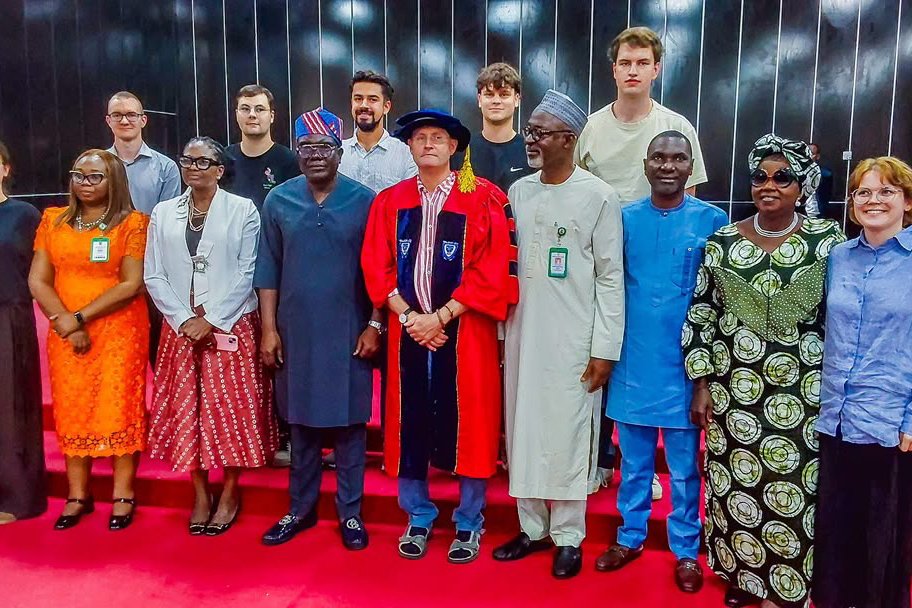
27.05.2026The visit focused on joint activities in teaching and research, as well as on further developing international opportunities for students and academic staff. During their stay, the guests led courses and gave lectures on their respective fields of research. The delegation included Professors Victoria Fatokun and Johnson Fatokun, as well as research staff members Deborah Aleburu and Samuel Ifeanyi Okoro. The visit was accompanied by Prof. Ralf-Dieter Rogler and Prof. Julia Engelbrecht, who coordinated the exchange together with the International Office at HTWD. The close partnership between the two universities is also evident in everyday student life: two Nigerian students are currently studying for a Bachelor’s degree in Electrical Engineering at HTW Dresden. A return visit by representatives from HTWD to Anchor University of Lagos is already planned for September 2026. The cooperation is supported and funded by the Leonardo Office Saxony.

-
Mongolian delegation visits HTWD: plans for collaboration on a binational degree programme
22.05.2026Representatives from the Mongolian Ministry of Education, the Ministry of Finance, the German-Mongolian Institute for Resources and Technology (GMIT) and the German Society for International Cooperation (GIZ) travelled to Dresden to explore opportunities for closer cooperation in higher education. Among the guests was Terbishdagva Dendev, former Deputy Prime Minister of Mongolia, former Ambassador of his country to Germany and long-standing Chair of the Mongolian-German Parliamentary Group in the Mongolian Parliament. Today, he advises the Mongolian Ministry of Education on matters of international educational cooperation and, in particular, supports projects with German partner institutions. The focus of the visit was the development of a German-language binational study programme, which is intended to enable students from Mongolia to study in Saxony in future. The project builds on the long-standing educational cooperation between Germany and Mongolia and aims to further strengthen academic exchange and the training of internationally qualified specialists. Expansion of international cooperation HTWD sees the project as a promising opportunity to expand its international focus and attract new target groups. “We are interested in high-quality growth in our student numbers and are structurally well-positioned to achieve this,” emphasised Rector Prof. Ingo Gestring during the visit. On this basis, concrete opportunities for cooperation were discussed jointly. Thanks to its long-standing experience with international study programmes and its close academic ties to the GMIT, the university is well-placed to implement such a project. In future, HTWD will contribute to the development of the planned programme through its Mechanical Engineering degree course. Financial support for Mongolian students during their period of study in Saxony is also planned. The next steps are to be finalised as early as September: HTWD will then take part in a return visit by a Saxon state delegation to Mongolia.

-
Water for tomorrow: HTW Dresden builds bridges between Saxony and India
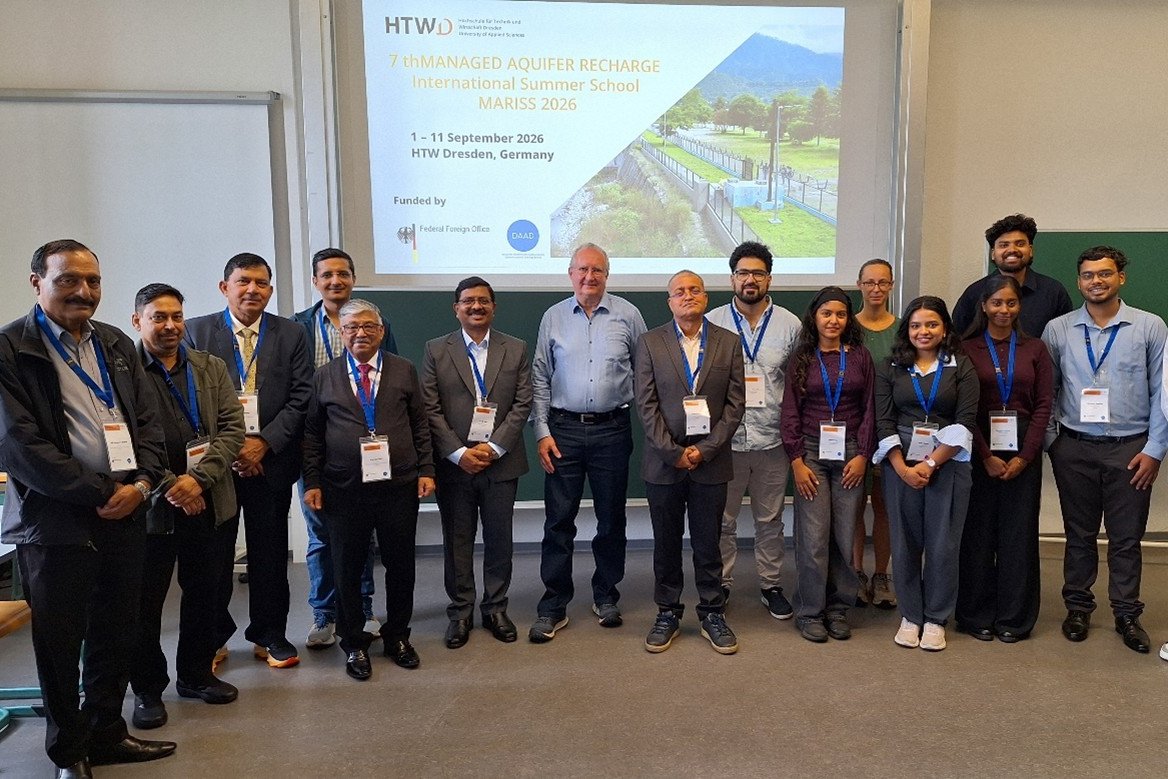
21.05.2026Nature-based solutions to water scarcity Hochschule für Technik und Wirtschaft Dresden - University of Applied Sciences (HTWD) is strengthening knowledge transfer with India on nature-based water treatment methods. Together with Indian partners, the HTWD organised four specialist events in Roorkee and Guwahati in February and March 2026. The focus was on methods for groundwater recharge and the management of water catchment areas within the so-called Water-Food Nexus. The term describes the close interconnection between water resources and agriculture. The aim is to manage water in such a way that agriculture, food security and environmental protection are safeguarded in the long term. Falling groundwater levels, drying-up springs and declining river flows are exacerbating water scarcity in many places. Arid and semi-arid regions are particularly affected. Arid areas are permanently dry and receive very little rainfall. Although semi-arid regions receive more rain, they regularly struggle with water scarcity and long periods of drought. In many places, this is compounded by high water abstraction for agricultural irrigation. Targeted groundwater recharge, known internationally as Managed Aquifer Recharge, is therefore becoming increasingly important. This involves the controlled replenishment of aquifers whilst simultaneously improving water quality. International teaching and research in Roorkee Against this backdrop, 41 postgraduate and doctoral students took part in a two-week specialist course at the Indian Institute of Technology Roorkee in February. The course focused on groundwater recharge and modelling the Water-Food Nexus. It was organised by Prof. Hemant Kumar from IIT Roorkee, as well as Dr Cornelius Sandhu and Prof. Thomas Grischek from the Department of Water Engineering at HTW Dresden. The course was part of the project ‘Integration of Managed Aquifer Recharge and the Water-Food Nexus into Higher Education’. The GIANT SPARC project is funded by the German Academic Exchange Service (DAAD) as part of the GIANT Programme of the Federal Foreign Office, and by the Indian Ministry of Education through the SPARC Programme. Also involved were experts from TU Dresden, the University of Tübingen, the National Institute of Hydrology in Roorkee and the water utility Uttarakhand Jal Sansthan. Highlights of the programme included a specialist session at the “Roorkee Water Conclave 2026”, a visit to a well construction site on the Ganges in Haridwar, and a workshop on bank seepage water harvesting for engineers from the Indian water utility. The course programme combined lectures, exercises and practical laboratory and field work. Topics included hydraulics, water quality, water hygiene, site investigations, irrigation control and numerical modelling. Shared perspectives for climate-resilient water management International exchange was also the focus in Guwahati in north-eastern India. There, 71 participants gathered for the “International Seminar on Nature-Based Solutions: Strengthening Research, Innovation and Climate-Resilient Systems”. The event was organised by Bineswar Brahma Engineering College in cooperation with HTW Dresden and the Directorate of Technical Education of Assam. In addition to universities, non-governmental organisations such as the SELCO Foundation, PRASARI, Social Apha, Sustain Plus, Tata Trusts and KABIL also took part. They presented projects on nature-based solutions for improving living conditions in rural areas. Dr Cornelius Sandhu highlighted examples of the practical integration of Managed Aquifer Recharge into university education and emphasised the importance of international cooperation. At the end, the participants signed the “Guwahati Water Declaration”. The aim is to achieve sustainable and climate-resilient water management in north-eastern India. The agreed measures include the promotion of nature-based solutions, the further development of catchment area management, new research and innovation partnerships, and greater involvement of local communities in water management. In September 2026, HTW Dresden will host the “7th International Summer School on Managed Aquifer Recharge – MARISS” in Dresden. This will be followed by a further workshop in India in February 2027. The summer school is open to interested parties from all over the world.